
Today We Fix the World (2022)
Story overview
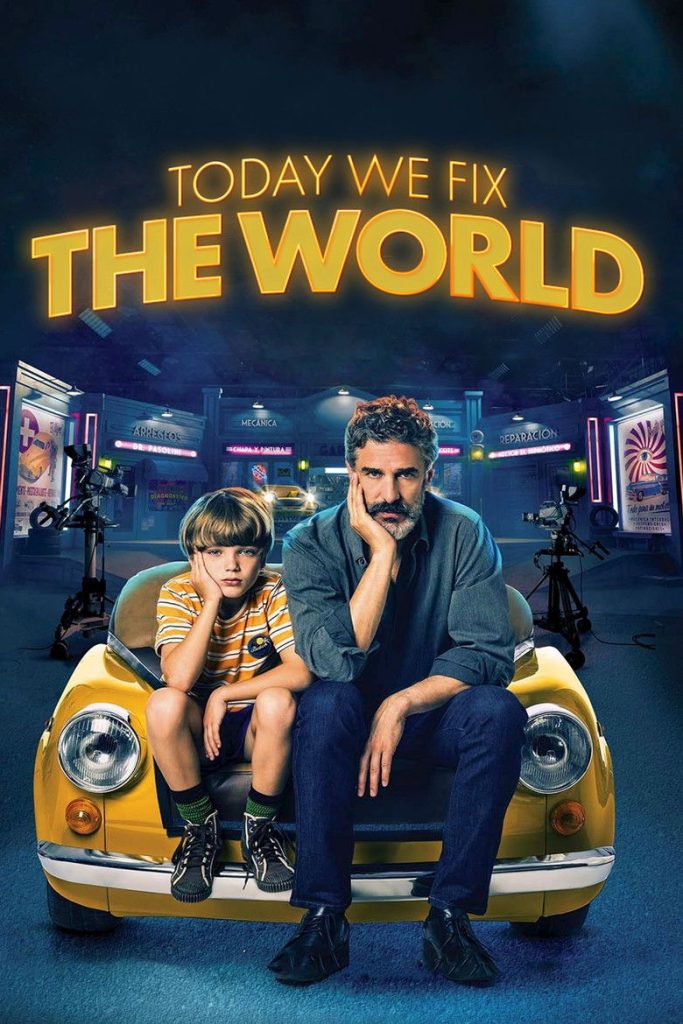
David Samaras, known as 'el Griego,' is the producer of a popular talk show called 'Today We Fix the World,' where everyday people resolve personal conflicts. His most important relationship is with his 9-year-old son, Benito, from a casual relationship. The story takes a dramatic turn when David discovers Benito is not his biological son. Their search for the real father leads them to confront deeper emotional and family issues than they initially expected, blending comedy and drama in a heartfelt exploration of parenthood and identity.
Parent Guide
A comedy-drama from Argentina rated TV-14, focusing on family and identity with mild mature themes. Suitable for ages 10 and up, as it involves emotional discussions about parenthood and relationships, but presented in an accessible, often humorous way. Positive messages about love and responsibility are emphasized.
Content breakdown
No physical violence or perilous situations; conflicts are emotional and verbal, resolved through dialogue.
Mildly disturbing due to emotional themes like paternity confusion and family disruption, but handled sensitively without intense scenes.
May include occasional mild language or colloquial expressions typical of a TV-14 rating, but no strong profanity.
References to casual relationships and adult themes, but no explicit sexual content or nudity; discussions are implied rather than shown.
No depiction of substance use; focus is on personal and family dynamics.
Moderate emotional intensity from themes of identity, family bonds, and personal revelations, balanced with comedic elements to lighten the mood.
Parent tips
This film deals with themes of family, identity, and unexpected parenthood, which may prompt discussions about relationships and honesty. It includes mild emotional conflicts and comedic situations typical of a TV-14 rating. Parents should be aware of some mature themes, such as casual relationships and paternity questions, but these are handled in a lighthearted, dramatic context. Suitable for pre-teens and up with guidance, as it offers positive messages about love and responsibility beyond biology.
Parent chat guide
Parent follow-up questions
- Who did Benito live with in the movie?
- What was the TV show about?
- How did David help Benito?
- Why was David surprised about Benito?
- How did they try to find Benito's real dad?
- What does it mean to be a family even if you're not related by blood?
- How did the talk show reflect real-life problems?
- What challenges did David face as a non-biological parent?
- What lessons about honesty and relationships did the characters learn?
- How does the film explore themes of identity and parenthood in modern society?
- What are the ethical implications of the paternity revelation?
- How do comedy and drama blend to address serious family issues?
🎭 Story Kernel
At its core, 'Today We Fix the World' is a sharp satire about the human compulsion to impose order on chaos, even when our methods are laughably inadequate. The film follows a group of government employees tasked with solving global problems through paperwork and meetings, revealing how bureaucracy becomes an end in itself. Characters are driven not by genuine altruism but by career ambitions, fear of irrelevance, and the comforting illusion of progress through procedure. The real tension emerges when their meticulously planned solutions collide with the messy, unpredictable reality they're trying to fix, exposing the vanity of believing complex human issues can be solved through checklists and flowcharts.
🎬 Visual Aesthetics
The film employs a deliberately bland visual palette dominated by grays, beiges, and fluorescent office lighting to mirror the soul-crushing bureaucracy it satirizes. Camera work is static and symmetrical during meetings, creating a claustrophobic sense of entrapment within institutional spaces. When 'solutions' are implemented in the real world, the cinematography shifts to handheld, chaotic shots with saturated colors, visually contrasting sterile theory with messy reality. Clever visual metaphors appear throughout, like a world map covered in sticky notes that eventually obscures the continents entirely, symbolizing how process overwhelms purpose.
🔍 Details & Easter Eggs
💡 Behind the Scenes
The film was shot almost entirely in a real government building scheduled for demolition, with production designers adding only minimal props to the existing bureaucratic environment. Several actors had previous experience in civil service jobs and improvised dialogue based on real bureaucratic jargon. The chaotic 'implementation' scenes were filmed guerrilla-style in actual public spaces with hidden cameras, capturing genuine public reactions to the absurd interventions. Director María Pérez deliberately cast actors who resembled mid-level managers rather than glamorous stars to enhance the film's authenticity.
Where to watch
Choose region:
- Netflix
- Netflix Standard with Ads