
Today We’ll Talk About That Day (2023)
Story overview
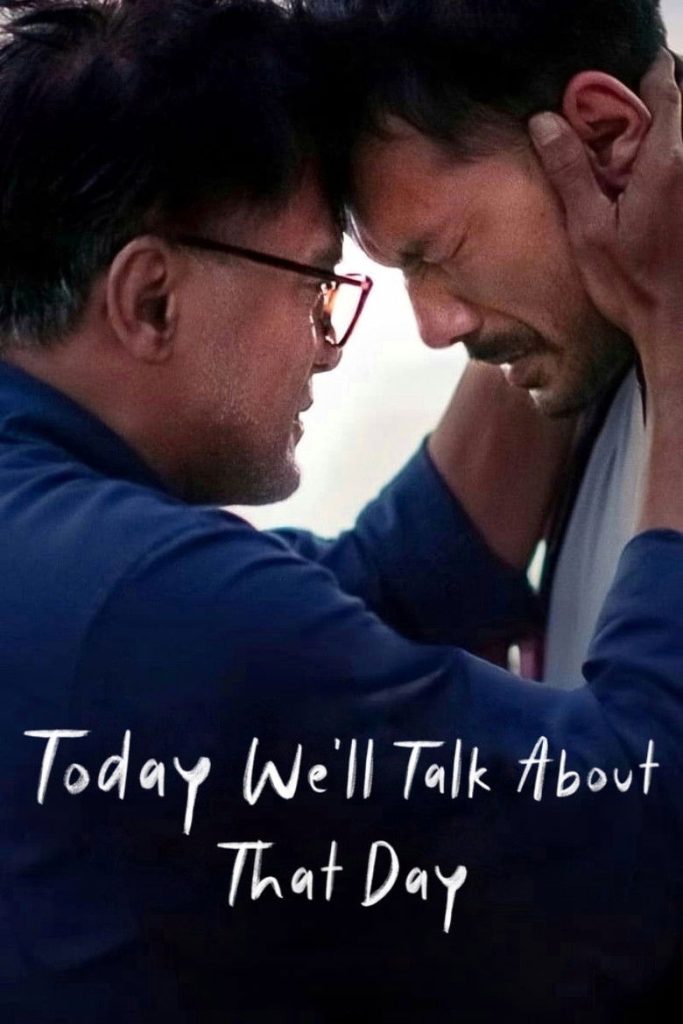
Today We'll Talk About That Day is a 2023 family drama with romantic elements that explores interpersonal relationships and emotional connections. The story likely centers on characters navigating significant life events or conversations that shape their understanding of themselves and others. As a TV-14 rated production, it addresses themes suitable for mature pre-teens and teenagers while maintaining a family-friendly approach.
Parent Guide
A family drama exploring emotional themes and relationship dynamics suitable for mature pre-teens and teenagers with parental guidance.
Content breakdown
No physical violence or perilous situations depicted.
May include emotionally intense conversations or mildly distressing relationship conflicts.
May contain occasional mild language appropriate for TV-14 rating.
May include mild romantic themes or discussions of relationships without explicit content.
No depiction of substance use.
Features emotional conversations and relationship dynamics that may be intense for younger viewers.
Parent tips
This TV-14 rated drama focuses on emotional themes and relationship dynamics that may resonate with older children and teenagers. Parents should be aware that the content explores mature interpersonal topics typical of family dramas, though without graphic elements. Consider previewing or watching together with children under 14 to discuss the emotional content appropriately.
Parent chat guide
Parent follow-up questions
- What was your favorite part of the movie?
- How did the characters show they cared about each other?
- What colors or sounds did you notice in the movie?
- Did any parts make you feel happy or sad?
- What would you do if you needed to talk about something important?
- How did the characters solve their problems in the movie?
- What did you learn about how families talk to each other?
- Which character did you relate to most and why?
- What would you do differently than the characters?
- How did the music help tell the story?
- What themes about relationships did you notice in the film?
- How did the characters grow or change throughout the story?
- What makes conversations about difficult topics challenging?
- How does this movie compare to other family dramas you've seen?
- What message do you think the filmmakers wanted to share?
- How does the film portray emotional maturity in relationships?
- What cultural or generational perspectives on communication did you observe?
- How might different family structures approach similar conversations?
- What cinematic techniques enhanced the emotional impact?
- How do media portrayals of family dynamics influence real-world expectations?
🎭 Story Kernel
The film serves as both a prequel and a parallel narrative, dissecting the foundational trauma and triumphs of the family patriarch, Narendra. It juxtaposes his 1987 struggle to win over Ajeng—a battle against class disparity and rigid social structures—with his son Angkasa’s contemporary struggle in London to sustain a crumbling marriage. The core theme is the cyclical nature of sacrifice and the realization that every generation must define its own version of "home." It deconstructs the myth of the perfect father by showing Narendra as a vulnerable young man, ultimately arguing that the "day" we finally talk about is the one where we see our parents as human beings rather than just authority figures who have all the answers.
🎬 Visual Aesthetics
Angga Dwimas Sasongko utilizes a distinct color palette to differentiate the two timelines. The 1987 Jakarta sequences are bathed in warm, sepia-toned ambers and grainy textures, evoking a sense of nostalgic grit and the heat of youthful passion. In contrast, the modern London scenes are characterized by cool blues, sharp lines, and a sterile atmosphere that mirrors Angkasa’s emotional isolation and the cold reality of his failing relationship. The cinematography often uses mirroring shots—such as Narendra and Angkasa sitting in similar positions or framed in similar doorways—to visually link their disparate experiences across decades. This visual language reinforces the idea that while the setting and era change, the internal emotional architecture of the men in this family remains strikingly similar.
🔍 Details & Easter Eggs
💡 Behind the Scenes
This film marks the third installment in the Nanti Kita Cerita Tentang Hari Ini (NKCTHI) cinematic universe, following the original 2020 film and the 2023 spin-off Jalan yang Jauh, Jangan Lupa Pulang. To maintain continuity, the production team meticulously recreated 1980s Jakarta, focusing on authentic props and fashion to ground the romance in a specific historical context. Jourdy Pranata and Yunita Siregar were specifically cast for their ability to capture the essence of the older actors, Donny Damara and Susan Bachtiar, while bringing a fresh, youthful energy to the roles of young Narendra and Ajeng.
Where to watch
Choose region:
- Netflix
- Netflix Standard with Ads
Trailer
Trailer playback is unavailable in your region.