
Toy Story 3 (2010)
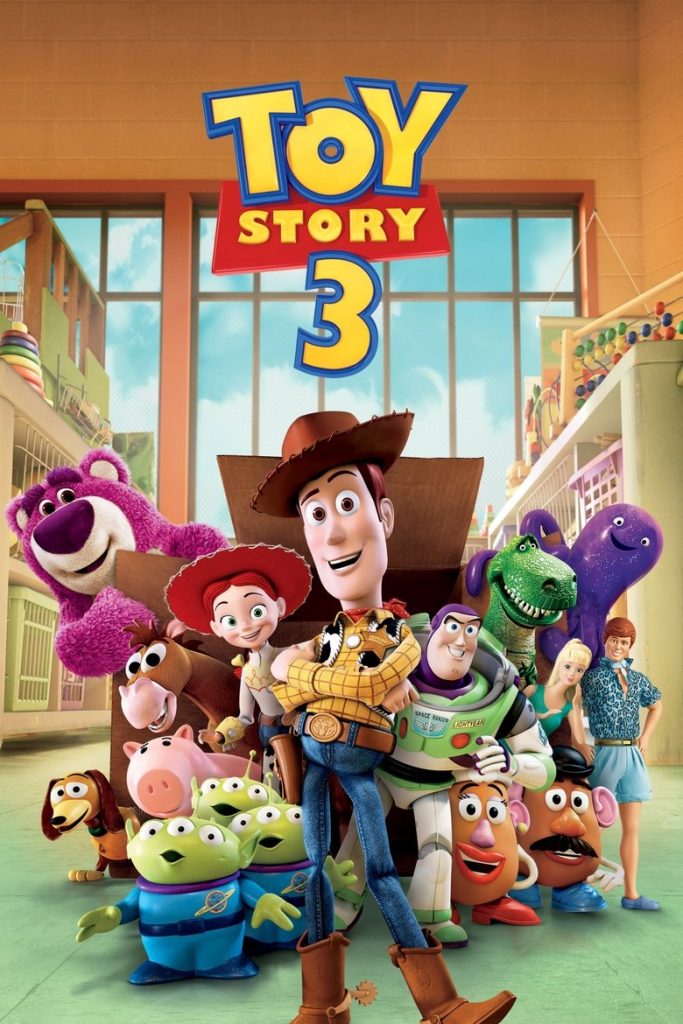
Story overview
In Toy Story 3, Woody, Buzz Lightyear, and their toy friends face an uncertain future as their owner Andy prepares to leave for college. When the toys are accidentally donated to a daycare center, they discover it's not the playful paradise they hoped for. The group must work together to escape from the daycare's strict rules and return to Andy before he leaves home forever.
Parent Guide
A family-friendly animated film with some intense moments and emotional themes about growing up and saying goodbye.
Content breakdown
Toys face perilous situations including being chased, trapped, and threatened. There's no human violence, but toys are in danger throughout their escape attempts.
Some scenes may be intense for young children, including a dramatic climax with fire and peril. The daycare setting has authoritarian elements that could be unsettling.
No offensive language or profanity.
No sexual content or nudity.
No substance use depicted.
Strong themes of separation, growing up, and saying goodbye. The ending is particularly emotional as characters face major life transitions.
Parent tips
Toy Story 3 explores themes of change, loyalty, and growing up that may resonate differently with children of various ages. The film contains some intense sequences where toys face peril, including a dramatic climax that might be frightening for sensitive viewers. While generally appropriate for most families, the emotional weight of saying goodbye and facing uncertain futures could prompt meaningful conversations about transitions in life.
Parent chat guide
Parent follow-up questions
- Which toy was your favorite?
- How did the toys help each other?
- What made you feel happy in the movie?
- How do you think the toys felt when they were at the new place?
- What would you do if you were one of the toys?
- Why do you think Andy's toys wanted to stay together?
- What made the daycare different from what the toys expected?
- How did the toys work as a team to solve problems?
- What does it mean to be a good friend like Woody?
- Have you ever had to say goodbye to something special?
- What does this movie say about growing up and moving on?
- How did different toys handle the uncertainty about their future?
- What qualities helped the toys overcome their challenges?
- Why is loyalty important in friendships?
- How might you handle a big change like starting middle school?
- How does the film explore the theme of obsolescence and purpose?
- What parallels exist between the toys' journey and human experiences of transition?
- How does the movie balance humor with serious themes of abandonment?
- What does the ending suggest about the cycle of childhood and adulthood?
- How might this story reflect on our relationships with material possessions?
🎭 Story Kernel
Toy Story 3 isn't about toys—it's about the terror of obsolescence and the painful transition from being needed to being remembered. The core tension isn't physical survival but existential dread: what happens when your purpose evaporates? Andy's impending departure for college mirrors our own cultural anxiety about aging out of usefulness. The toys' desperate clinging to relevance—whether through Lotso's authoritarian control or Buzz's factory reset—reveals how identity collapses when function disappears. The film's genius lies in making us feel the toys' panic about becoming artifacts rather than companions, asking whether being loved in memory is enough when you're built for play.
🎬 Visual Aesthetics
Pixar masterfully uses color psychology to track emotional arcs: Andy's room fades to muted blues and grays as childhood ends, while Sunnyside's initial bright yellows mask its prison-like reality. The incinerator sequence employs hellish oranges and oppressive shadows that feel genuinely apocalyptic—the first time CGI animation achieved true horror aesthetics. Camera work shifts dramatically: intimate close-ups during emotional moments contrast with sweeping, chaotic shots during escapes, mirroring the toys' loss of control. Notice how the framing often traps characters behind bars (crib slats, fence wires, dumpster gates), visually reinforcing their captivity long before Lotso reveals his tyranny.
🔍 Details & Easter Eggs
💡 Behind the Scenes
Tom Hanks recorded the incinerator scene in one take, his genuine panic preserved in the final cut. The Spanish Buzz sequence required entirely new animation as the character's physical comedy shifts to match his flamboyant personality. Pixar animators visited actual dumps to study trash movement for the climax—the terrifying realism comes from observing how objects interact in conveyor systems. Lotso's scent was created by combining strawberry, dirt, and baby powder smells in test screenings to achieve that 'lovingly neglected' aroma.
Where to watch
Choose region:
- Disney Plus
- Amazon Video
- Apple TV
- Google Play Movies
- YouTube
- Fandango At Home
Trailer
Trailer playback is unavailable in your region.