
Toy Story 4 (2019)
Story overview
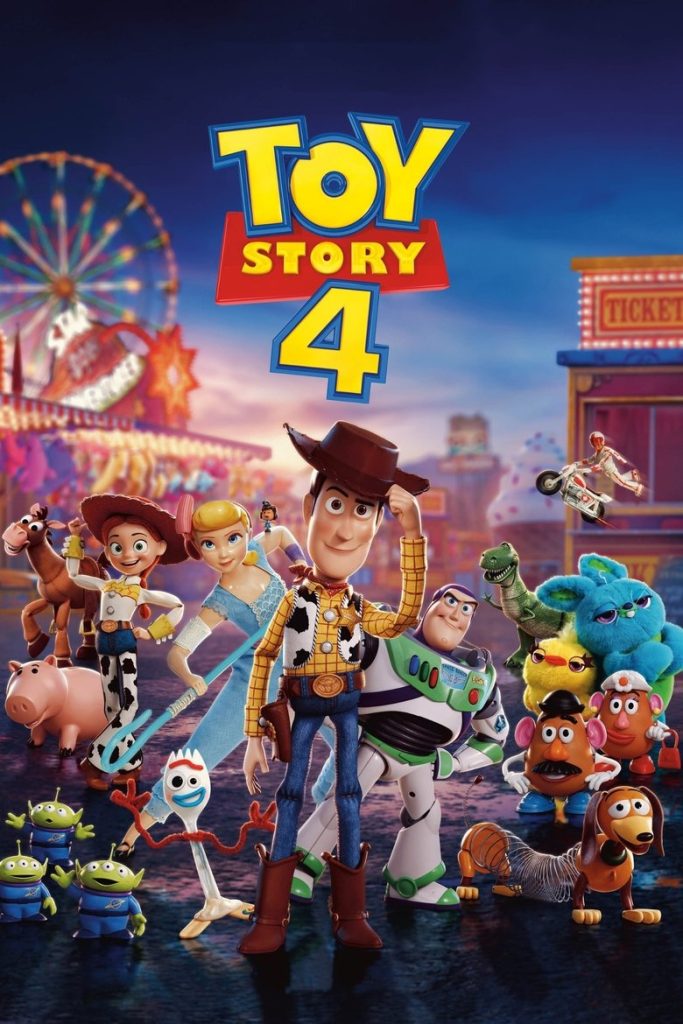
Toy Story 4 continues the beloved animated series with Woody and his toy friends embarking on a new adventure. When Bonnie creates a homemade toy named Forky who struggles with his identity, Woody takes on the responsibility of helping him adjust. Their journey leads them to unexpected places where they encounter both familiar faces and new characters, exploring themes of purpose, friendship, and finding one's place in the world. This heartwarming story combines humor, adventure, and emotional moments suitable for family viewing.
Parent Guide
A family-friendly animated adventure with positive messages about friendship and purpose, suitable for most children with mild emotional moments.
Content breakdown
Toys face perilous situations including falls, near-crushing, and chases, but no actual harm comes to characters. Action sequences are cartoonish and non-graphic.
Some scenes in dark antique shops and carnival settings might be slightly intense for very young children. Dolls with moving eyes and ventriloquist dummies appear briefly but are not truly frightening.
No offensive language or profanity. Characters use mild exclamations like 'oh boy' or 'wow'.
No sexual content, nudity, or romantic situations beyond brief, innocent interactions.
No depiction of alcohol, drugs, tobacco, or substance use of any kind.
Moments of separation anxiety and characters questioning their purpose may be emotionally resonant. The ending contains bittersweet elements about change and moving forward.
Parent tips
Toy Story 4 is rated G and is generally appropriate for all ages, though some scenes may be intense for very young children. The film contains mild peril with toys in dangerous situations, but no graphic violence. There are brief moments of emotional intensity as characters face separation and identity questions, which could prompt discussions about change and growing up. Parents should be aware that some scenes in antique shops and carnivals might be slightly spooky for sensitive preschoolers, though everything resolves positively.
Parent chat guide
Parent follow-up questions
- Which toy was your favorite and why?
- How did Woody help Forky feel better?
- What was the funniest part of the movie?
- How do you think the toys feel when they play together?
- What would you do if you found a toy like Forky?
- Why do you think Forky didn't believe he was a toy at first?
- How did Woody's idea of his purpose change during the story?
- What makes someone a good friend like Woody?
- Have you ever had to help someone who felt unsure about themselves?
- What adventure would you go on with your toys?
- What does this movie say about finding your purpose in life?
- How do the different toys show different ways of being brave?
- What sacrifices did characters make for their friends?
- How does the movie handle the theme of moving on from familiar situations?
- What would you have done differently if you were in Woody's position?
- How does the film explore the concept of identity and self-worth?
- What commentary does the movie make about attachment versus growth?
- How do the carnival and antique shop settings symbolize different life stages?
- In what ways does this sequel build upon or differ from previous Toy Story themes?
- What real-life situations parallel the characters' journeys of finding their place?
🎭 Story Kernel
Toy Story 4 fundamentally explores the question of agency versus obligation. While previous installments focused on toys' duty to their owners, this film asks what happens when that purpose disappears or becomes unsatisfying. Woody's journey isn't about finding Bonnie—it's about discovering he can choose his own meaning. Forky represents the opposite pole: an object that must learn to accept purpose rather than choose it. The film's genius lies in making us question whether we're living by choice or by default, all through plastic and felt characters who've outgrown their original programming.
🎬 Visual Aesthetics
Pixar's lighting work reaches new heights here, particularly in the antique store sequences where dust motes dance in shafts of light, creating a tangible atmosphere of forgotten history. The carnival scenes explode with chaotic color and movement, using Dutch angles and rapid cuts to mirror Woody's disorientation. Notice how the camera often frames characters through windows, shelves, or other barriers—visualizing their emotional confinement. The antique store's cluttered mise-en-scène contrasts sharply with the open-road finale, visually tracking Woody's journey from cluttered obligation to open possibility.
🔍 Details & Easter Eggs
💡 Behind the Scenes
Forky's voice actor, Tony Hale, recorded many of his lines while actually manipulating a real spork to capture authentic plastic-on-plastic sounds. The antique store set contains over 10,000 individually modeled items, each with unique textures. Director Josh Cooley insisted the crew visit actual carnivals at night to study how light behaves on moving rides—resulting in those breathtaking, dizzying light trails during chase sequences. Keanu Reeves based Duke Caboom's voice on 1970s Canadian PSA announcers, creating that specific earnest-yet-failed-hero quality.
Where to watch
Choose region:
- Disney Plus
- Amazon Video
- Apple TV
- Google Play Movies
- YouTube
- Fandango At Home
Trailer
Trailer playback is unavailable in your region.