
Tracey Ullman in the Trailer Tales (2003)
Story overview
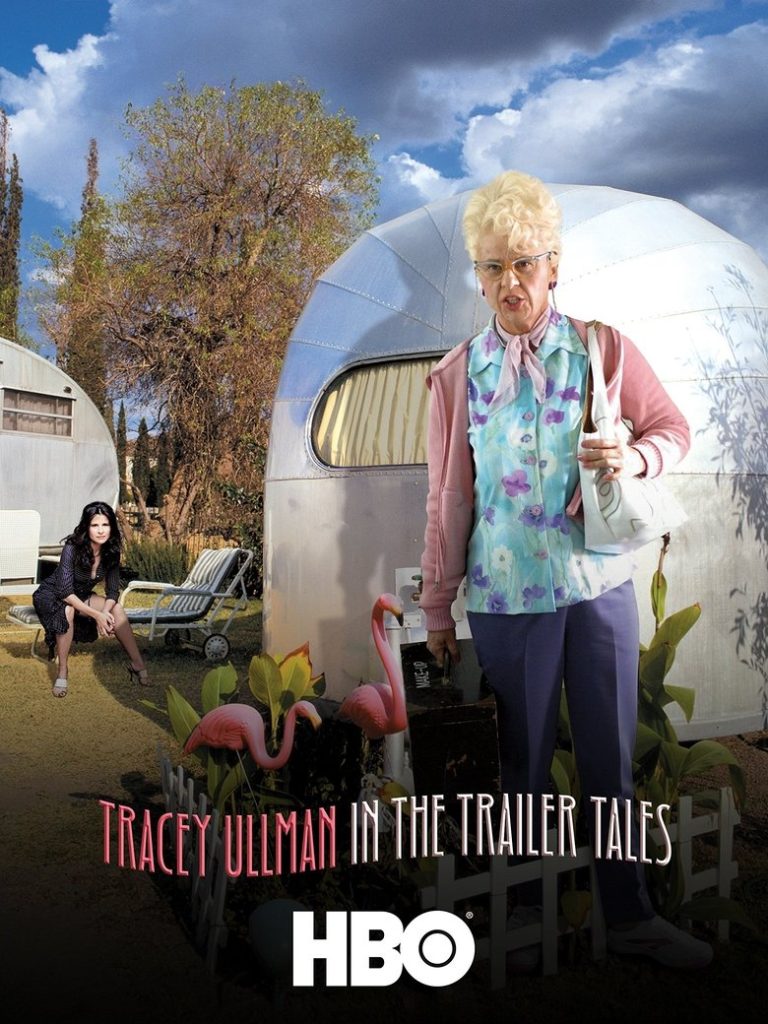
Tracey Ullman in the Trailer Tales is a 2003 TV movie comedy featuring the versatile actress in various humorous sketches. The film presents a series of comedic vignettes centered around trailer park life and eccentric characters. As a comedy special, it relies on character-driven humor and situational comedy rather than a continuous plot.
Parent Guide
A sketch comedy TV movie featuring character-based humor in trailer park settings. Without specific content details, conservative guidance suggests parental preview for younger viewers due to potential adult humor elements common in comedy specials.
Content breakdown
As a comedy, no violence is expected, though physical comedy or exaggerated situations may occur.
No scary content anticipated in this comedy format.
May include mild language typical of comedy specials, though specific content unknown.
May include mild innuendo or suggestive humor common in adult-oriented comedy.
No substance use expected, though characters in trailer settings might reference such elements.
Light comedy with minimal emotional intensity.
Parent tips
This comedy TV movie features sketch-based humor that may include exaggerated characters and situations typical of trailer park settings. Since it's not rated and specific content details aren't provided, parents should preview or watch alongside younger viewers to assess appropriateness. The humor may include mild innuendo or adult situations common in comedy specials, though without graphic content details, caution is advised for sensitive viewers.
Parent chat guide
Parent follow-up questions
- Which character made you laugh the most?
- What was the silliest thing you saw in the movie?
- Did any parts seem confusing or strange to you?
- How were the people in the movie different from people we know?
- What colors or sounds did you notice in the movie?
- What made the different characters funny or interesting?
- How did the movie show people living in trailers?
- Were there any jokes you didn't understand?
- What would you change about any of the characters?
- How is this comedy different from other funny shows you watch?
- How does sketch comedy work compared to regular movies?
- What stereotypes or exaggerations did you notice in the characters?
- How does the humor compare to other comedies you've seen?
- What makes Tracey Ullman's performance effective in different roles?
- How does the setting influence the type of humor presented?
- How does this comedy comment on social class or community life?
- What techniques does Tracey Ullman use to create distinct characters?
- How does sketch comedy allow for different types of social commentary?
- What limitations or advantages does the TV movie format present?
- How does this 2003 comedy compare to contemporary sketch shows?
🎭 Story Kernel
The film explores the collision between manufactured reality and authentic human experience through the lens of trailer park residents. Characters are driven by their desperate attempts to maintain dignity within a system designed to commodify their lives for entertainment. Ullman's various personas navigate this artificial ecosystem, revealing how people perform versions of themselves when constantly observed. The narrative questions what remains genuine when every moment becomes potential content, examining how survival instincts adapt to surveillance capitalism. Ultimately, it's about the human cost of turning lived experience into consumable product.
🎬 Visual Aesthetics
The visual language employs deliberate artifice through saturated colors and slightly exaggerated set designs that feel both realistic and theatrical. Camera work alternates between documentary-style handheld shots during 'real' moments and polished, multi-camera setups during performance sequences. This creates visual tension between authenticity and construction. The trailer park setting becomes a character itself—its uniformity broken by small, telling details in each resident's space. Lighting often highlights the contrast between private moments and public performances, with shadows playing across faces during vulnerable scenes.
🔍 Details & Easter Eggs
💡 Behind the Scenes
Tracey Ullman developed many characters through improvisation workshops with actual trailer park residents she interviewed during research. The production used a real Florida trailer park that was scheduled for demolition, allowing for authentic location shooting. Several scenes incorporate unscripted interactions with remaining residents who agreed to appear. The film's episodic structure was influenced by Ullman's background in sketch comedy, with each 'tale' functioning as a self-contained character study while contributing to the larger thematic whole.
Where to watch
Choose region:
- HBO Max
- HBO Max Amazon Channel
- Amazon Video
- Apple TV
- Google Play Movies
- YouTube