
Trese After Dark (2021)
Story overview
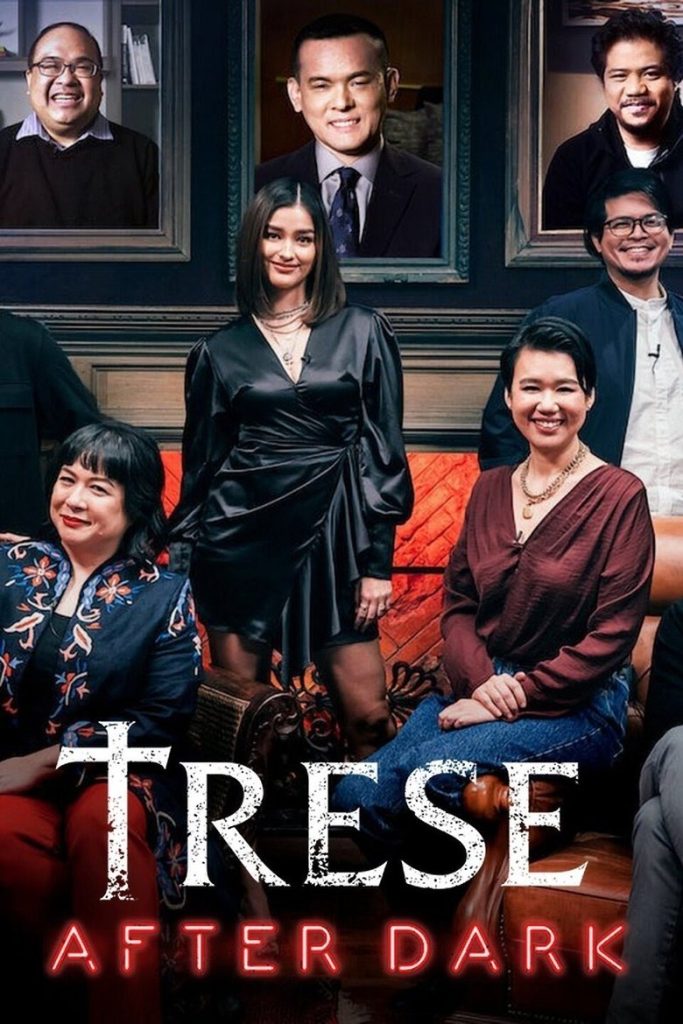
This documentary explores the creation of 'Trese,' delving into its roots in Filipino folklore, the comic's origins, and its adaptation into an anime series. It features interviews with stars and creators, offering insights into the creative process and cultural inspirations behind the project.
Parent Guide
A family-friendly documentary suitable for all ages, focusing on creative processes and cultural education without any concerning content.
Content breakdown
No violence or peril depicted; the content consists solely of interviews and discussions about the creative process.
No scary or disturbing elements; the documentary is informative and conversational in tone.
No offensive or inappropriate language used; all dialogue is professional and suitable for all audiences.
No sexual content or nudity present.
No depiction or discussion of substance use.
Mild emotional intensity may arise from passionate discussions about creativity and cultural representation, but nothing distressing.
Parent tips
This documentary is suitable for most audiences, focusing on creative discussions and cultural insights. It's a great opportunity to introduce children to Filipino folklore and the process of adapting stories across different media. No concerning content is present, making it safe for family viewing.
Parent chat guide
Parent follow-up questions
- What was your favorite part of the movie?
- Did you see any drawings or animations you liked?
- Can you tell me a story about a magical creature?
- What Filipino folklore elements did you learn about?
- How do you think making a comic is different from making an animation?
- Would you like to create your own comic or story?
- How does 'Trese' incorporate Filipino culture into its story?
- What challenges might creators face when adapting a comic to animation?
- What other folklore from around the world would you like to see in media?
- Discuss the significance of representing Filipino folklore in global media.
- How does the documentary highlight the collaborative nature of creative projects?
- What insights did you gain about the animation industry from this film?
🎭 Story Kernel
At its core, 'Trese After Dark' explores the corrosive nature of inherited trauma and the burden of legacy. Alexandra Trese isn't just solving supernatural crimes—she's navigating the psychological wreckage left by her family's centuries-old pact with the underworld. The film cleverly inverts the chosen one narrative: Alexandra's power isn't liberation but inheritance, a gilded cage of responsibility that manifests as literal monsters. Her drive isn't heroism but survival, both physical and psychological, as she confronts whether she's protecting humanity or merely maintaining a fragile status quo her ancestors created. The supernatural elements serve as metaphor for systemic corruption—the real horror isn't the aswang or tikbalang, but the human systems that created them.
🎬 Visual Aesthetics
The film's visual language masterfully blends noir aesthetics with Filipino folklore through a distinctive neon-and-shadow palette. Cinematographer Neil Daza employs Dutch angles during supernatural encounters, visually destabilizing reality while maintaining grounded handheld camerawork for human scenes. The color scheme shifts deliberately—warm amber for flashbacks to pre-colonial mythology, sickly green for corrupt present-day Manila, and deep crimson for moments of violent revelation. Action sequences utilize traditional arnis movements translated into supernatural combat, creating a uniquely Filipino visual grammar. Most striking is how the camera often lingers on reflective surfaces—puddles, mirrors, glass—suggesting the dual realities Alexandra must navigate.
🔍 Details & Easter Eggs
💡 Behind the Scenes
Voice actress Liza Soberano recorded her lines while recovering from a hand injury, which directors incorporated into Alexandra's character—notice her favoring her left hand during physical scenes. The iconic Binondo chase sequence was filmed during actual monsoon season, with actors navigating real floodwaters that reached chest-level. Production designer Ericson Navarro sourced props from actual antique shops in Quiapo, including the 'agimat' amulets which are genuine historical artifacts. Composer Malek Lopez sampled field recordings from Mount Banahaw, a mountain considered sacred in Filipino folklore, for the supernatural sound design.
Where to watch
Choose region:
- Netflix
- Netflix Standard with Ads