
Trick or Treat (1952)
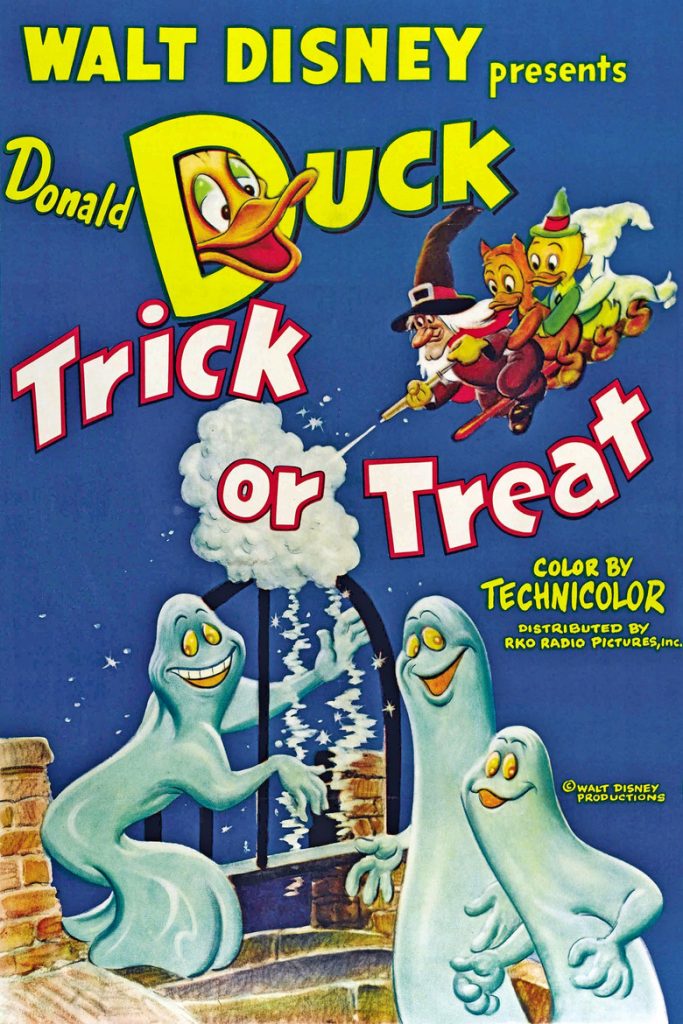
Story overview
This 1952 animated short features Donald Duck playing a Halloween trick on his nephews by dousing them with water. A magical witch witnesses this and decides to teach Donald a lesson through magical mischief. The story follows Donald's comical struggles as the witch's spells turn the tables on him. Ultimately, the children receive their Halloween treats while Donald learns about fairness and kindness.
Parent Guide
A classic Disney Halloween cartoon with light mischief, magical elements, and a moral about treating others kindly.
Content breakdown
Cartoonish slapstick with water-dumping and magical retaliation, no real danger or harm.
A witch character uses magic, but in a playful rather than frightening way typical of vintage animation.
No concerning language; typical cartoon sounds and expressions.
No sexual content or nudity.
No substance use depicted.
Light frustration and amusement, with resolution that reinforces positive behavior.
Parent tips
This classic Disney cartoon presents lighthearted Halloween themes with magical elements and slapstick comedy. The witch's magical interventions are playful rather than frightening, and Donald's antics are exaggerated for humor. The short runtime makes it suitable for brief family viewing, especially around Halloween.
Parents should note that the film depicts mild mischief and magical retaliation, which could prompt discussions about treating others with respect. The water-dumping prank and magical consequences are presented in a cartoonish, non-threatening manner typical of vintage animation.
This film offers an opportunity to talk about Halloween traditions, the difference between playful tricks and mean-spirited behavior, and how stories can teach lessons about kindness.
Parent chat guide
During viewing, you could point out: 'Notice how the witch uses magic to help the children' or 'How do you think Donald feels when the tables are turned on him?' This encourages active viewing and empathy.
After watching, discuss: 'What did Donald learn from his experience?' or 'How did the witch help make things fair?' These conversations can reinforce messages about treating others well and the consequences of our actions.
Parent follow-up questions
- What was your favorite part of the cartoon?
- How did the witch help the children?
- Was it funny when Donald got tricked?
- What would you do if someone played a trick on you?
- What treats do you like best?
- Why do you think Donald played that trick on his nephews?
- How did magic help solve the problem in the story?
- What lesson do you think Donald learned?
- Have you ever seen someone be unfair? What happened?
- What makes a good Halloween trick versus a mean one?
- How does the film use humor to teach a lesson about behavior?
- What role does the witch play as a character who intervenes?
- How might this story be different if it were made today?
- What does this cartoon show about getting even versus being fair?
- How do magical elements in stories help convey messages?
- How does this vintage cartoon reflect attitudes toward mischief and consequences from its era?
- What storytelling techniques does the animation use to make its point about fairness?
- How might different audiences interpret the witch's intervention differently?
- What does this short film suggest about authority figures correcting behavior?
- How do classic cartoons like this establish and subvert expectations about characters?
🎭 Story Kernel
At its core, 'Trick or Treat' is a cautionary tale about the dangers of idol worship and the toxic nature of fandom. The film explores how desperation and obsession can corrupt innocence, as high school outcast Eddie's veneration of deceased rock star Sammi Curr transforms from fandom into literal demonic possession. The driving force isn't supernatural evil alone, but the human vulnerability that invites it—Eddie's loneliness, his desire for power against bullies, and the teenage search for identity. The movie suggests that the real horror isn't the ghost in the vinyl, but what happens when someone willingly surrenders their agency to a destructive icon.
🎬 Visual Aesthetics
The film employs a distinct visual language that mirrors its heavy metal soundtrack—gritty, high-contrast lighting with deep shadows and sudden bursts of neon during concert sequences. Director Charles Martin Smith uses Dutch angles and quick zooms during supernatural moments to create disorientation, while the practical effects for Sammi Curr's burned visage remain impressively grotesque. The color palette shifts from the mundane blues and browns of suburban life to saturated reds and purples when the curse activates, visually marking the invasion of the supernatural into the ordinary. The concert footage intercut with Eddie's possession scenes creates a rhythmic, almost musical editing pattern.
🔍 Details & Easter Eggs
💡 Behind the Scenes
The film features an early cameo from Gene Simmons as radio DJ Nuke, while Sammi Curr is played by Tony Fields, who had to endure extensive prosthetic makeup for the burned appearance. The soundtrack includes original songs written specifically for the film, with contributions from Fastway and other 80s metal artists. Interestingly, the movie was completed but shelved for two years before release, eventually finding cult status through video rentals. The high school scenes were shot in a real Los Angeles school during summer break to avoid disrupting classes.
Where to watch
Choose region:
- Disney Plus