
Trouble (2024)
Story overview
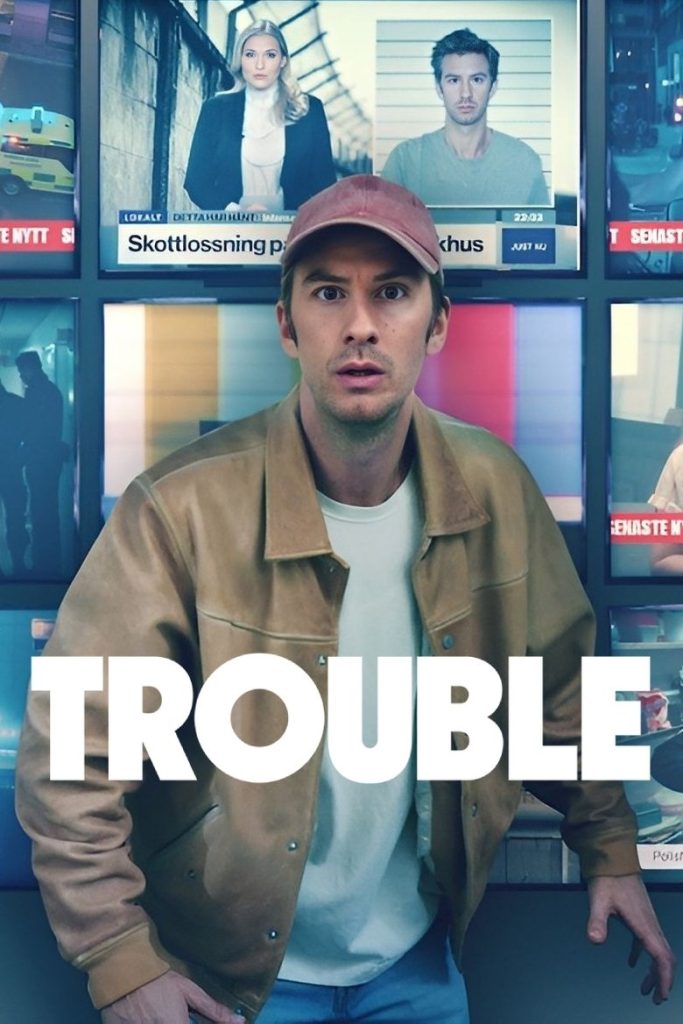
Trouble is a 2024 Swedish action-comedy-crime film directed by Jon Holmberg. The story follows a clumsy electronics salesman who is wrongfully convicted of murder. To prove his innocence, he must navigate police corruption and criminal conspiracies, blending tense action with comedic elements as he stumbles through dangerous situations.
Parent Guide
A comedic crime thriller with moderate action violence and themes of corruption. Best for teens and adults due to intense situations and mature themes. The clumsy protagonist provides humor that lightens darker elements.
Content breakdown
Action sequences include fights, chases, and confrontations with criminals and corrupt police. Some perilous situations where characters are threatened or in danger. Violence is not graphic but includes punches, falls, and implied threats. No gore or extreme brutality.
Themes of wrongful conviction and corruption may be unsettling. Some tense moments as characters evade capture or face threats. No horror elements or jump scares. Disturbing content is minimal, focused on situational tension rather than fear.
Occasional mild profanity or crude language in Swedish (with English subtitles). No strong or frequent swearing. Language is typical for crime-comedy genres without being excessive.
No sexual content or nudity. The film focuses on crime and comedy without romantic or sexual subplots.
Possible social drinking in background scenes, typical for adult settings. No depiction of drug use or substance abuse. Not a focus of the story.
Emotional moments related to injustice and perseverance. The protagonist's struggle to clear his name creates tension and empathy. Comedy provides relief, but themes of corruption and betrayal may be intense for sensitive viewers.
Parent tips
This film is rated TV-MA, indicating it's intended for mature audiences. It contains moderate violence, peril, and themes of corruption that may be intense for younger viewers. The comedic tone helps balance some darker elements, but parents should preview or watch with children under 13. Consider discussing themes of justice, corruption, and perseverance afterward.
Parent chat guide
Parent follow-up questions
—
- What was the funniest part?
- Why did the police not believe the salesman?
- How did the salesman solve his problem?
- What does 'wrongfully convicted' mean?
- How did corruption affect the story?
- What would you do to prove your innocence?
- How did comedy balance the serious parts?
- How does the film portray justice systems?
- What real-world parallels does the corruption theme have?
- How effective was the comedy in relieving tension?
- What moral choices did characters face?
🎭 Story Kernel
The film explores the absurdity of bureaucratic and judicial failure through the lens of Conny, an everyman caught in a Kafkaesque nightmare. At its heart, Trouble is about the reclamation of agency in a world that has dismissed you. Conny’s journey from a passive, divorced father to an accidental action hero highlights the theme of hidden competence; his mundane skills in electronics become his greatest weapons. The narrative balances the tension of a murder mystery with the levity of a classic farce, examining how societal labels—like 'convict' or 'loser'—can be dismantled through sheer persistence and a bit of technical ingenuity. It’s a commentary on the fragility of truth when faced with institutional corruption, suggesting that justice often requires stepping outside the law to expose the very people sworn to uphold it.
🎬 Visual Aesthetics
Jon Holmberg employs a visual palette that shifts between the sterile, oppressive grays of the prison environment and the saturated, slightly chaotic vibrancy of the outside world. The cinematography utilizes tight framing during the prison sequences to emphasize Conny’s claustrophobia and the literal walls closing in on him. In contrast, the action set-pieces are shot with a kinetic energy that mirrors the protagonist's frantic state of mind. Symbolism is found in the recurring presence of electronic components and wires, which serve as a visual metaphor for the complex, interconnected web of the conspiracy Conny must untangle. The lighting often plays with shadows to highlight the duality of the characters, particularly the corrupt police officers who hide their true nature behind the bright, professional sheen of their uniforms.
🔍 Details & Easter Eggs
💡 Behind the Scenes
Trouble (2024) is a modern reimagining of the 1988 Swedish cult classic Strul, which originally starred Björn Skifs. Director Jon Holmberg, known for his work on the Sune film series, aimed to update the story's humor and action for a contemporary audience while maintaining the spirit of the original caper. Lead actor Filip Berg underwent physical preparation to handle the film's demanding stunt sequences, emphasizing a grounded, 'everyman' approach to the action. The production utilized various locations across Sweden to create a sense of authenticity, blending gritty urban settings with the mundane suburban environments that define Conny’s pre-prison life.
Where to watch
Choose region:
- Netflix
- Netflix Standard with Ads
Trailer
Trailer playback is unavailable in your region.