
Tuck Everlasting (2002)
Story overview
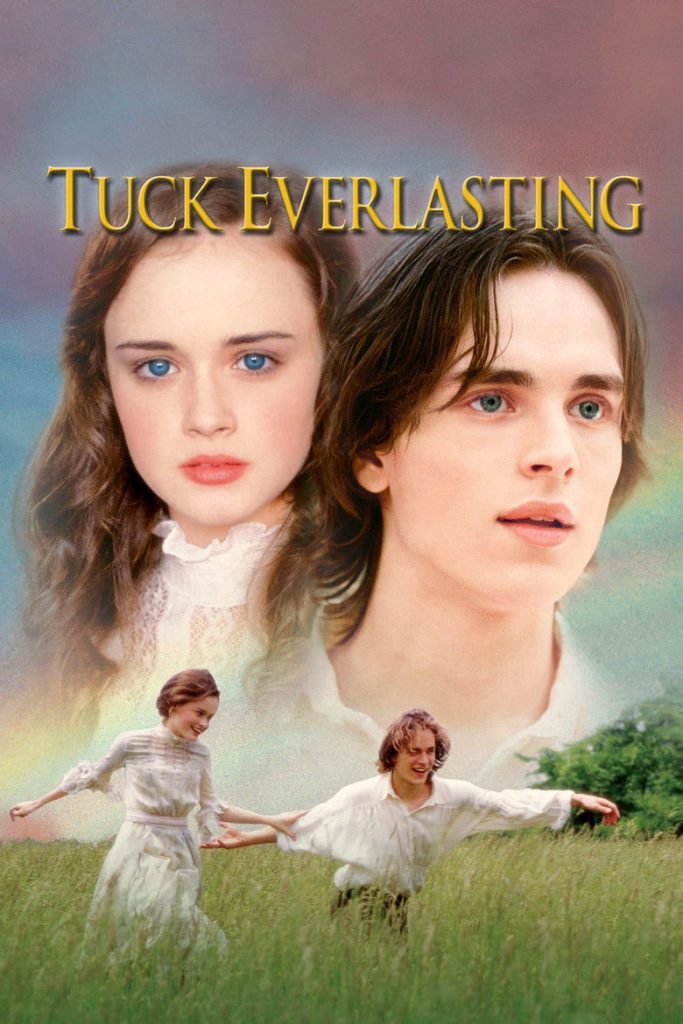
Based on Natalie Babbitt's classic novel, 'Tuck Everlasting' follows Winnie Foster, a sheltered teenager in 1914 who yearns for adventure beyond her family's strict boundaries. Her life changes when she discovers the Tuck family, who have accidentally gained immortality from a magical spring. The film explores themes of mortality, freedom, love, and the consequences of eternal life through Winnie's relationship with the immortal Jesse Tuck and her growing understanding of life's precious, fleeting nature.
Parent Guide
A thoughtful, beautifully filmed adaptation suitable for most families with children 8+. The film handles mature themes of mortality and freedom with sensitivity, offering valuable discussion opportunities rather than frightening content. The PG rating accurately reflects mild emotional intensity and fantasy peril.
Content breakdown
Brief scenes of mild peril: a man is shot (non-graphic, shown from a distance with minimal detail), Winnie is briefly kidnapped by a stranger who wants the spring's secret (no physical harm occurs), and there's tense pursuit through the woods. No graphic violence or blood is shown.
Some children might find the kidnapping scene momentarily tense, and the concept of immortality/death could be emotionally challenging for sensitive viewers. The 'Man in the Yellow Suit' villain is menacing but not graphically scary. The film's overall tone is contemplative rather than frightening.
No profanity or offensive language. Period-appropriate respectful dialogue throughout.
A chaste, innocent romance develops between Winnie and Jesse with brief hand-holding and one very gentle kiss. No sexual content, innuendo, or nudity.
No depiction of alcohol, drugs, or tobacco use. The 'magical' spring water is the central element but presented as fantasy rather than substance use.
The film deals with profound themes of mortality, loss, and life choices that may resonate emotionally. Scenes of family separation, the Tucks' eternal loneliness, and Winnie's final decision create thoughtful emotional weight. The ending is bittersweet but ultimately uplifting about life's value.
Parent tips
This gentle fantasy-drama is ideal for family viewing with children 8+, offering rich themes about life's value and personal freedom. The PG rating reflects mild peril and emotional intensity rather than objectionable content. Parents can use the film's central dilemma—whether to drink from the immortal spring—to discuss mortality, choices, and appreciating life's natural cycle. The historical 1914 setting provides opportunities to talk about changing social norms, especially regarding women's independence.
Parent chat guide
Parent follow-up questions
- What was your favorite part of the movie?
- How did Winnie feel when she met the Tuck family?
- What animals did you see in the forest?
- Why do you think Winnie wanted to leave home?
- How would you feel if you could live forever like the Tucks?
- What made the spring water special?
- Do you think Winnie made the right choice at the end? Why?
- How does immortality change the way the Tucks live their lives?
- What does the film teach us about the importance of making our own choices?
- How does the film explore the tension between safety and freedom?
- Discuss the symbolism of the spring and what it represents about human desires.
- How does the historical setting (1914) influence Winnie's options and decisions?
🎭 Story Kernel
The movie explores the profound tension between mortality and immortality, not as a fantasy but as a philosophical dilemma. Winnie's choice to live a finite life, despite the Tucks' offer of eternal youth, drives the narrative. It's really about what gives life meaning: the inevitability of death that makes moments precious. The characters are motivated by a deep-seated fear of stagnation; the Tucks are trapped in time, while Winnie seeks authentic growth. The core theme is that true fulfillment comes from embracing life's natural cycle, not escaping it, highlighting the beauty in transience over the hollow safety of permanence.
🎬 Visual Aesthetics
The film uses a soft, nostalgic color palette with warm golds and greens to evoke a timeless, pastoral idyll, contrasting with the stark, muted tones of the Tucks' isolated existence. Camera work often employs close-ups on characters' faces to capture their emotional turmoil, while wide shots of the forest and spring symbolize both freedom and entrapment. The action style is subtle, focusing on quiet moments of reflection rather than spectacle, with symbolism like the changing seasons reinforcing the theme of natural cycles versus artificial stasis.
🔍 Details & Easter Eggs
💡 Behind the Scenes
Based on Natalie Babbitt's 1975 novel, the film was shot in Maryland, USA, using locations like Seneca Creek State Park to capture the story's lush, timeless setting. Alexis Bledel, who plays Winnie, was relatively early in her career post-'Gilmore Girls,' bringing a fresh innocence to the role. The production emphasized practical effects and natural lighting to enhance the film's earthy, magical realism, with the spring set built to appear both inviting and eerily still, reflecting its dual nature as a source of life and curse.
Where to watch
Choose region:
- Disney Plus
- Amazon Video
- Apple TV Store
- Google Play Movies
- YouTube
- Fandango At Home
Trailer
Trailer playback is unavailable in your region.