
Turning Red (2022)
Story overview
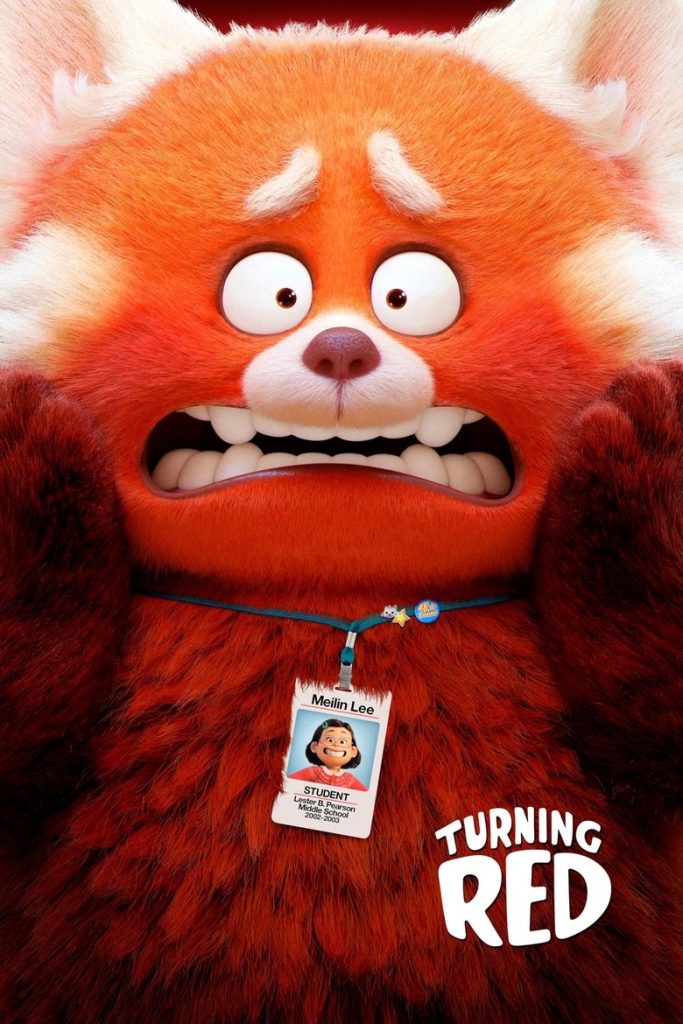
Turning Red is an animated family comedy about a 13-year-old girl navigating the challenges of adolescence with a magical twist. When Mei experiences strong emotions like excitement or stress, she transforms into a giant red panda, which complicates her relationships with family and friends. The film explores themes of self-acceptance, cultural identity, and the transition from childhood to teenage years through humor and fantasy elements.
Parent Guide
A family-friendly animated film about adolescence with positive messages about self-acceptance and cultural identity.
Content breakdown
Some comedic peril and fantasy action sequences, but no real danger or violence.
Mildly intense emotional moments related to family conflict and personal struggles.
Occasional mild language and bathroom humor typical for family comedies.
No sexual content or nudity; deals with puberty themes metaphorically.
No substance use depicted in the film.
Moderate emotional themes around family expectations, friendship, and self-discovery during adolescence.
Parent tips
This film deals with puberty themes in a metaphorical way through the red panda transformation, which may prompt questions from younger viewers. The story includes some mild family conflict and emotional moments as Mei balances her traditional family expectations with her own desires. The PG rating reflects some mild language and comedic peril, but overall it's a positive story about growing up and embracing one's true self.
Parent chat guide
Parent follow-up questions
- What was your favorite part with the red panda?
- How did Mei's friends help her?
- What made you laugh in the movie?
- Why do you think Mei turned into a red panda?
- How did Mei's feelings change during the movie?
- What did you learn about being a good friend from this story?
- What does the red panda transformation represent about growing up?
- How does Mei balance her family's expectations with her own interests?
- What message does the movie give about accepting yourself?
- How does the film portray the challenges of adolescence?
- What cultural themes did you notice in the family dynamics?
- How does the fantasy element enhance the story's message about self-discovery?
🎭 Story Kernel
At its core, 'Turning Red' explores the suffocating weight of generational trauma and the messy process of self-acceptance. Mei Lee's transformation into a red panda isn't just a metaphor for puberty—it's the physical manifestation of inherited emotional baggage passed down through her maternal line. The film critiques the 'perfect daughter' archetype, showing how Mei's mother Ming projects her own unprocessed trauma onto her child, demanding emotional perfectionism. The real conflict isn't about controlling the panda, but about Mei choosing which parts of her heritage to embrace and which to release. The 4*TOWN concert becomes the ultimate battleground where Mei must decide whether to seal away her authentic self to please her family or integrate her 'messy' emotions into her identity.
🎬 Visual Aesthetics
The animation masterfully blends two distinct visual languages: the clean, controlled lines of Mei's 'perfect' life versus the chaotic, expressive energy of her panda form. Notice how scenes with Ming often use tight framing and symmetrical compositions, visually trapping Mei within her mother's expectations. When the panda emerges, the animation shifts to exaggerated squash-and-stretch principles, with fur that reacts emotionally to Mei's feelings. The color palette deliberately contrasts the muted tones of the temple and school with the vibrant pinks and reds of Mei's authentic self-expression. The climactic sequence uses a stunning blend of 2D and 3D animation during the spiritual realm battle, visually representing the collision of tradition and modernity.
🔍 Details & Easter Eggs
💡 Behind the Scenes
Director Domee Shi drew heavily from her own Toronto childhood in the early 2000s, with the film's setting meticulously recreating the city's Chinatown and SkyDome (now Rogers Centre). The 4*TOWN boy band songs were actually written by Billie Eilish and Finneas O'Connell, who studied early-2000s pop groups to capture the authentic sound. Voice actor Sandra Oh (Ming) recorded many of her lines while physically moving and gesturing to capture the character's intense physicality. The red panda design went through 387 iterations to balance cuteness with emotional expressiveness, with animators studying real red pandas at the San Diego Zoo for movement reference.
Where to watch
Choose region:
- Disney Plus
- fuboTV
- Amazon Video
- Apple TV
- Google Play Movies
- YouTube
- Fandango At Home
Trailer
Trailer playback is unavailable in your region.