
Turtles All the Way Down (2024)
Story overview
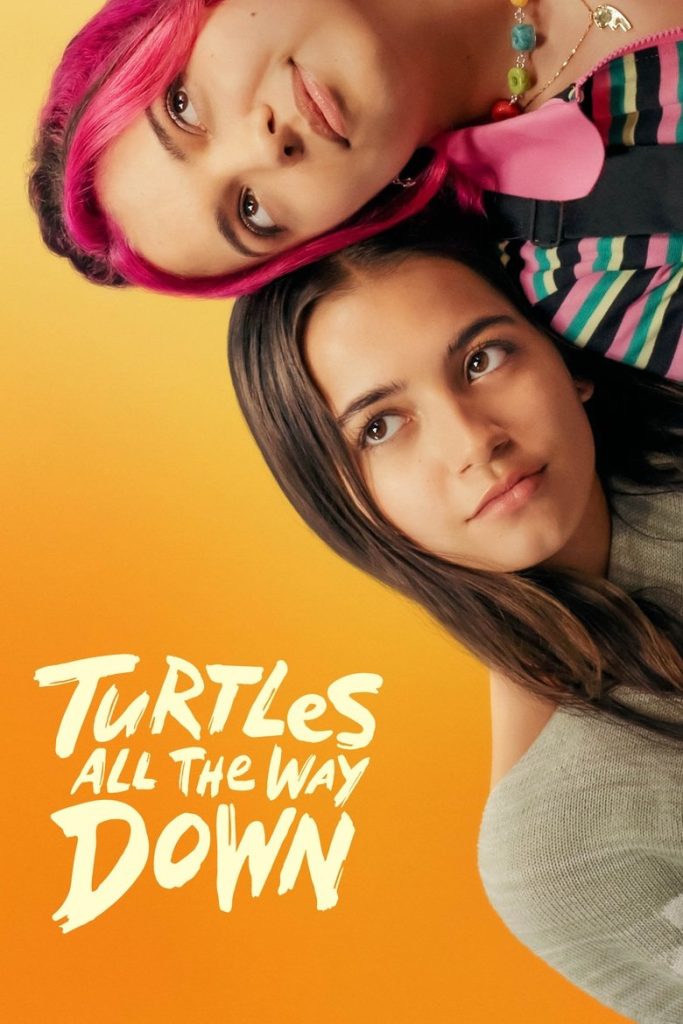
Turtles All the Way Down is a 2024 drama-romance film that explores themes of mental health, relationships, and personal growth. The story follows a teenage protagonist navigating the challenges of anxiety and obsessive thoughts while developing a meaningful connection with another character. Through its narrative, the film sensitively portrays the complexities of young adulthood and emotional struggles.
Parent Guide
A drama-romance focusing on mental health themes suitable for mature teens with parental guidance.
Content breakdown
No physical violence or peril depicted.
Contains psychological themes about anxiety and obsessive thoughts that may be intense for younger viewers.
May include occasional mild language consistent with PG-13 rating.
Romantic elements and mild references typical of teen relationships.
No substance use depicted.
Significant focus on emotional struggles, anxiety, and relationship dynamics.
Parent tips
This PG-13 rated drama-romance deals with mature themes including mental health challenges and emotional intensity. Parents should be prepared to discuss anxiety, obsessive thoughts, and relationship dynamics with their teens. The film's focus on psychological struggles makes it more suitable for older children who can process these themes with guidance.
Parent chat guide
Parent follow-up questions
- How did the characters show they cared about each other?
- What was your favorite part of the movie?
- How did the music make you feel during different scenes?
- What colors did you notice most in the movie?
- How did the main character handle difficult feelings?
- What did you learn about friendship from this movie?
- How do you think the characters helped each other?
- What would you do if you felt worried like the character did?
- How does the movie show what anxiety might feel like?
- What healthy coping strategies did you notice in the film?
- How do relationships help people through difficult times?
- What messages about mental health did you take from the story?
- How accurately do you think the film portrays mental health challenges?
- What did the film suggest about the relationship between anxiety and relationships?
- How did the characters' communication styles affect their connections?
- What insights did you gain about supporting others with emotional struggles?
🎭 Story Kernel
The film transcends the typical YA romance by centering on the paralyzing reality of Obsessive-Compulsive Disorder, specifically the 'thought spirals' that consume protagonist Aza Holmes. It isn't just about a missing billionaire or a teenage crush; it is an exploration of the terrifying realization that one’s own consciousness can feel like an invasive parasite. The narrative moves beyond the 'quirky' tropes of mental illness, illustrating how Aza’s fear of the microbiome and infection—specifically C. diff—creates a barrier between her and the world. It expresses the profound loneliness of being unable to trust your own brain, where the search for a 'true self' is buried under layers of intrusive thoughts that feel as real as the physical world, ultimately questioning the nature of identity when your thoughts are not your own.
🎬 Visual Aesthetics
Director Hannah Marks and cinematographer Brian Burgoyne utilize a visual language that mirrors Aza’s internal fragmentation. The camera often tightens on Aza during her spirals, creating a sense of suffocating intimacy that forces the viewer into her headspace. The recurring motif of the spiral is not just metaphorical but structural, reflected in the framing and the dizzying pace of the editing during her most intense episodes. The color palette shifts from the warm, hopeful tones of her interactions with Davis to the sterile, cold, and high-contrast visuals of her medical anxieties. The use of extreme close-ups on mundane objects—like a Band-Aid or a finger—highlights how the microscopic becomes monumental when filtered through the lens of health-related OCD, effectively visualizing the 'turtles all the way down' philosophy of infinite, inescapable regression.
🔍 Details & Easter Eggs
💡 Behind the Scenes
The film’s journey to the screen was lengthy, originally optioned by Fox 2000 before moving to New Line Cinema and finally debuting on Max. Director Hannah Marks worked closely with author John Green to ensure the depiction of OCD remained authentic to his own lived experiences with the disorder. Isabela Merced, who plays Aza, previously starred in another John Green adaptation, 'Let It Snow,' but delivers a much more transformative, internal performance here. The production filmed primarily in Cincinnati, Ohio, capturing a grounded, suburban atmosphere that contrasts sharply with the heightened, internal chaos of the protagonist's mental state.
Where to watch
Choose region:
- HBO Max
- HBO Max Amazon Channel
Trailer
Trailer playback is unavailable in your region.