
Tut’s Lost City Revealed (2022)
Story overview
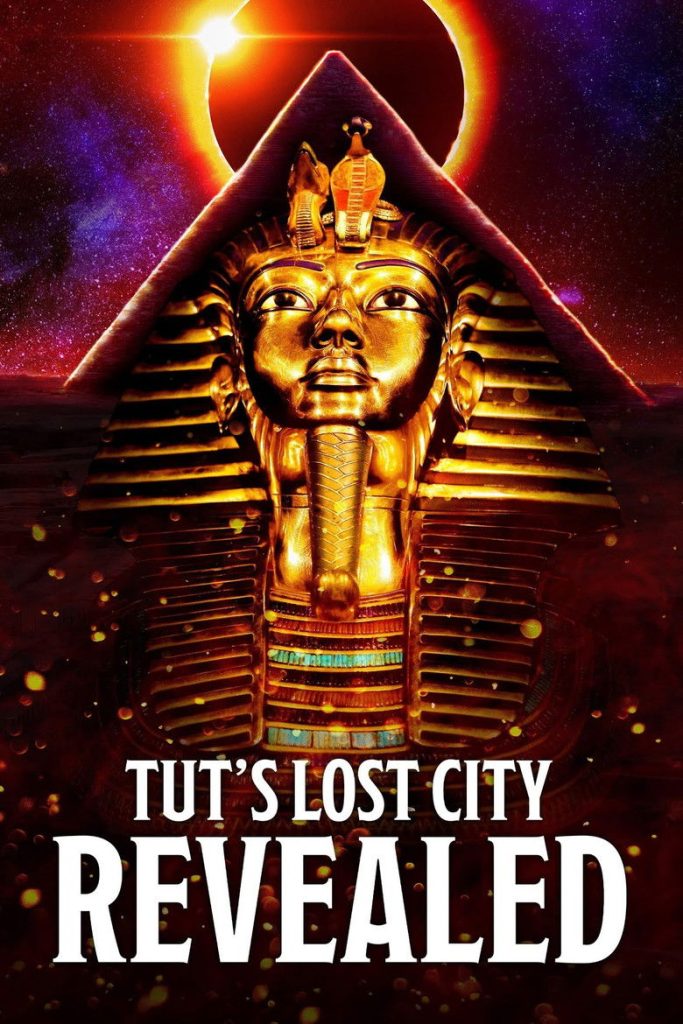
This 2022 documentary follows archaeologist Dr. Zahi Hawass as he uncovers a lost golden city in Egypt, revealing new insights into the final days of King Tutankhamun and Egypt's Golden Age. It builds on Howard Carter's famous 1922 discovery of Tut's intact tomb, presenting archaeological findings in an educational format with expert commentary.
Parent Guide
Educational documentary about archaeological discovery with no concerning content. Suitable for elementary school children and up.
Content breakdown
No violence or peril depicted. The documentary focuses on archaeological excavation and historical analysis.
No scary or disturbing content. May show ancient artifacts and excavation sites, but nothing frightening.
No offensive language. Professional, educational dialogue throughout.
No sexual content or nudity. Shows archaeological artifacts and sites only.
No substance use depicted or discussed.
Mild excitement around archaeological discoveries. No intense emotional content.
Parent tips
This documentary is suitable for children interested in history or archaeology. It focuses on factual discoveries without dramatization. For younger viewers, parents might explain basic concepts like archaeology and ancient Egypt. The content is educational and non-fiction, with no fictionalized violence or scary elements.
Parent chat guide
Parent follow-up questions
- What did the archaeologists find in the sand?
- What colors did you see in the city?
- Can you draw an Egyptian treasure?
- Why was finding this city important?
- How do archaeologists know where to dig?
- What do you think life was like in ancient Egypt?
- How does this discovery change what we know about King Tut?
- Why do you think this city was lost for so long?
- What tools do archaeologists use today that Carter didn't have in 1922?
- What does this discovery tell us about power and wealth in ancient Egypt?
- How does archaeological work balance preservation with discovery?
- Why might different archaeologists interpret the same findings differently?
🎭 Story Kernel
The film is less about discovering a city and more about the forensic reconstruction of a historical vacuum. It expresses the profound anxiety of absence—how do you prove something existed when all direct evidence is gone? The driving force isn't treasure, but validation; the archaeologists are haunted by the ghost of a hypothesis, fighting against time, skepticism, and the very sands that erased their subject. Their quest becomes a metaphor for all historical inquiry: building a narrative from negative space, where the lack of evidence becomes the most compelling clue of all.
🎬 Visual Aesthetics
The visual language masterfully contrasts sterile, high-tech lab shots with the overwhelming, sun-bleached expanse of the Valley of the Kings. Drone sweeps emphasize the brutal scale of the search area, making the eventual discovery feel like finding a needle in a planetary haystack. The color palette is deliberately drained in the desert scenes, all bleached gold and shadow, making the sudden, vivid blues and reds of digital reconstructions and artifact close-ups feel like shocking bursts of life returning to a long-dead world. The camera often lingers on hands sifting dust, making the act of looking feel intensely physical and desperate.
🔍 Details & Easter Eggs
💡 Behind the Scenes
The production faced immense logistical hurdles, securing rare filming permissions in restricted archaeological zones often closed to cameras. Key aerial shots were captured using specially permitted drone flights at dawn to avoid heat haze. The lead scientific consultant, Dr. Zahi Hawass, is shown reviewing lidar data; in reality, he initially publicly doubted the project's likelihood of success, adding a layer of real-world professional tension not explicitly stated in the narration. The soundtrack incorporates subtle, digitally altered samples of wind recorded at the site itself.
Where to watch
Choose region:
- HBO Max
- Discovery +