
Twin Peaks: Fire Walk with Me (1992)
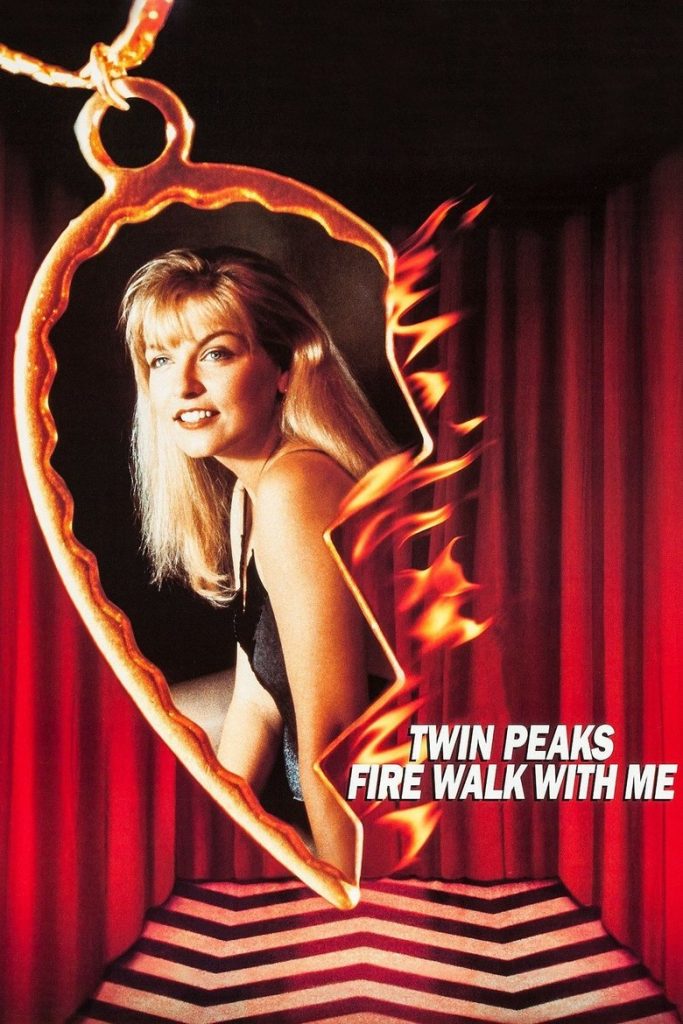
Story overview
Twin Peaks: Fire Walk with Me is a 1992 prequel to the television series Twin Peaks, exploring the final days of Laura Palmer. The film blends drama, mystery, and horror elements as it delves into Laura's troubled life and the supernatural forces surrounding her. It's a dark, atmospheric story that serves as both a character study and a continuation of the series' surreal narrative.
Parent Guide
This R-rated film contains mature themes and disturbing content unsuitable for viewers under 17. It explores dark psychological territory with surreal horror elements.
Content breakdown
Contains psychological violence, threats, and some physical violence with disturbing implications rather than graphic depiction.
Features intense psychological horror, surreal disturbing imagery, and themes of trauma that may be very unsettling.
Includes some strong language and adult dialogue consistent with the R rating.
Contains sexual themes, implications, and some suggestive content, though not explicit.
Depicts alcohol use and drug references within the context of the story.
High emotional intensity throughout with themes of psychological distress, fear, and trauma.
Parent tips
This film is rated R for mature content, making it unsuitable for children and younger teens. Parents should be aware that it contains intense themes including psychological horror, disturbing imagery, and adult situations. The film's nonlinear storytelling and surreal elements may also be confusing or unsettling for viewers not familiar with the Twin Peaks universe.
Parent chat guide
Parent follow-up questions
- What was your favorite part of the movie?
- Did anything in the movie make you feel scared?
- What colors did you see most in the movie?
- Can you tell me about one character you remember?
- What was the main problem in the story?
- How did the music make you feel during different scenes?
- What made this movie different from other movies you've seen?
- Which character did you relate to most and why?
- What themes did you notice in this film?
- How did the filmmakers create suspense without showing everything?
- What do you think the movie was trying to say about secrets?
- How did the supernatural elements affect the story?
- How does this film explore psychological trauma differently than other media?
- What artistic choices stood out to you in the filmmaking?
- How does this prequel enhance or change your understanding of the Twin Peaks universe?
- What commentary does the film make about small-town life and hidden darkness?
- How does the film balance supernatural elements with real-world issues?
🎭 Story Kernel
The film is not a whodunit but a 'why-dunit,' a harrowing autopsy of the events that created Laura Palmer's corpse. It expresses the absolute terror of being trapped in a body and a life that is no longer your own, colonized by external evil and internal trauma. Laura is driven not by hope, but by the desperate, failing instinct to outrun the doom she knows is her inheritance. The core theme is the violation of innocence as a systemic, cyclical force—the way abuse, symbolized by the demon BOB, is passed down like a curse, with the town of Twin Peaks itself as a complicit, beautiful cage.
🎬 Visual Aesthetics
Lynch employs a visual language of invasive dread. The camera is often static, forcing us to witness Laura's agony in unblinking tableaus, or it lurches with her disorientation. The color palette shifts from the warm, nostalgic hues of the series to a sickly, fluorescent green and oppressive darkness, mirroring her psychological decay. Symbolism is visceral: the ceiling fan's ominous whir, the traffic light's relentless cycle, the painting that bleeds—all are externalizations of Laura's trapped, screaming interiority. The infamous 'Red Room' sequences use surreal, jarring edits and discordant sound to visualize a reality unraveling.
🔍 Details & Easter Eggs
💡 Behind the Scenes
Sheryl Lee, who plays Laura Palmer, was originally hired only for the role of Maddy Ferguson in the TV series and the iconic homecoming photo. Her performance as Laura in FWWM was so devastating, Lynch expanded the film around her. The infamous 'Pink Room' nightclub sequence was filmed at a real, now-defunct Seattle rock club called The Vogue. David Bowie's cryptic cameo as Agent Phillip Jeffries was shot in just a few hours; his bizarre, accented performance was largely improvised based on Lynch's direction, contributing to the scene's unnerving, disjointed quality.
Where to watch
Choose region:
- HBO Max
- HBO Max Amazon Channel
- Criterion Channel
- Amazon Video
- Apple TV
- Google Play Movies
- YouTube
- Fandango At Home
Trailer
Trailer playback is unavailable in your region.