
Two Catalonias (2018)
Story overview
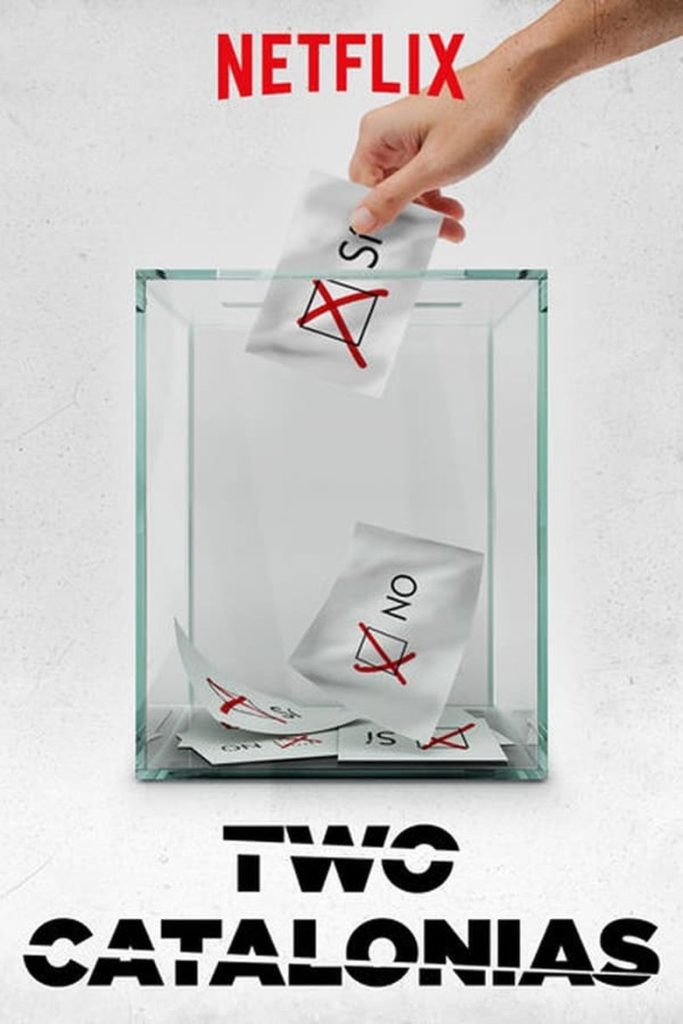
This 2018 Spanish documentary examines the political conflict surrounding Catalonia's independence movement from Spain, featuring interviews with key figures from both sides including politicians, activists, and lawmakers who present opposing viewpoints on this complex national issue.
Parent Guide
Documentary about political conflict requiring mature understanding of government systems and national identity issues.
Content breakdown
Discussions of political tension and civil disobedience; archival footage may show peaceful protests and police presence, but no graphic violence depicted.
Political tension and conflict between government and independence supporters could be unsettling for younger viewers; discussions of legal consequences and imprisonment.
Political rhetoric and debates; no strong profanity expected in subtitles/translations.
Political documentary with no sexual content or nudity.
No depiction of substance use.
Intense political debates and discussions of national identity; passionate arguments from both sides; potential for emotional responses to discussions of imprisonment and political consequences.
Parent tips
This documentary deals with mature political themes including regional independence movements, civil disobedience, and government authority. It presents multiple perspectives but requires understanding of political systems and national identity concepts. Best for older children who can process complex social issues.
Parent chat guide
Parent follow-up questions
—
- What is a country?
- Why do people want to make new countries?
- What do leaders do when people disagree?
- What are the arguments for and against Catalonia's independence?
- How do protests and demonstrations work in democracies?
- What happens when different regions want different things from their government?
- How does this conflict compare to other independence movements worldwide?
- What role does media play in shaping political opinions?
- What are the economic and social consequences of regional independence?
- How do democratic systems handle fundamental disagreements about national identity?
🎭 Story Kernel
At its core, 'Two Catalonias' is less about the political independence movement itself and more about the profound human schism it creates. The film expresses how ideology cleaves through the most intimate bonds—families, friendships, communities. What drives the characters is not just political conviction, but a desperate, often painful, need for identity and belonging in a suddenly binary world. We see politicians grappling with legacy, citizens wrestling with loyalty, and ordinary people whose dinner tables become ideological battlegrounds. The real conflict is the internal one: how to remain whole when your society, and your sense of self, is being torn in two.
🎬 Visual Aesthetics
The film's visual language is one of division and proximity. Directors Gerardo Olivares and Álvaro Longoria employ a stark, observational style, often framing subjects against backdrops of massive crowds or in tight, confrontational interviews that feel like interrogations of conscience. The color palette is muted and realistic, avoiding romanticism, which makes the bursts of vibrant separatist yellow and Spanish constitutional red all the more politically charged. The camera frequently lingers on faces—in doubt, in rage, in tears—making the political deeply personal. Shots of physical barriers, like the police lines during the referendum, visually mirror the social and emotional barriers being erected between people.
🔍 Details & Easter Eggs
💡 Behind the Scenes
The documentary's production was itself a high-wire act, filmed during the intensely volatile period leading up to and following the 2017 Catalan independence referendum. Directors Olivares and Longoria gained remarkable access to key figures on both sides, including then-Catalan President Carles Puigdemont and Spanish Deputy Prime Minister Soraya Sáenz de Santamaría. The necessity to film rapidly and reactively in a charged atmosphere, with the potential for legal repercussions, adds a layer of palpable tension to the footage. It was critically noted for presenting a balanced panorama by meticulously interviewing representatives from the entire political spectrum within Catalonia.
Where to watch
Choose region:
- Netflix
- Netflix Standard with Ads