Ultraman: Rising (2024)
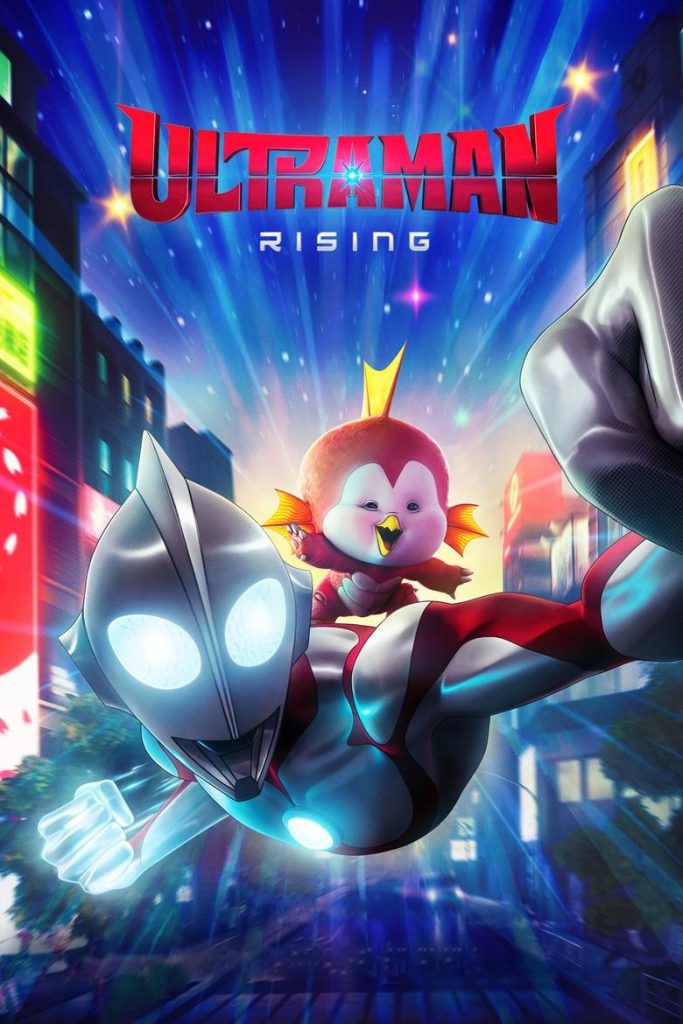
Story overview
A star athlete reluctantly returns home to take over his father's duties as Ultraman, shielding Tokyo from giant monsters as he becomes a legendary hero. This animated film blends family drama with science fiction action as the protagonist learns to balance his personal life with his newfound superhero responsibilities. The story explores themes of legacy, responsibility, and heroism through spectacular monster battles and character development.
Parent Guide
A family-friendly superhero film with moderate action violence and positive messages about responsibility and heroism.
Content breakdown
Giant monster battles with punching, throwing, and energy blasts; city destruction scenes; no blood or graphic injuries shown
Large monster designs and destruction scenes might frighten sensitive younger viewers; intense action sequences
No offensive language noted in PG rating
No sexual content or nudity
No substance use depicted
Themes of family responsibility and legacy handled in accessible way; some tension during action scenes
Parent tips
This PG-rated animated film contains moderate action violence typical of superhero/monster battle stories, with giant creatures fighting and city destruction scenes that might be intense for very young viewers. The emotional themes of family responsibility and legacy are handled in a family-friendly way, though some children might find the giant monster scenes frightening. The 117-minute runtime requires sustained attention, so consider your child's ability to sit through longer animated features.
The film presents positive messages about stepping up to responsibilities and protecting others, which can spark good conversations about what it means to be a hero. While there's no problematic language, sexual content, or substance use, the action sequences and giant monster battles create moderate peril that might overwhelm sensitive younger viewers.
Parent chat guide
Focus conversations on the positive themes of family legacy and protecting your community. If your child seems frightened by monster scenes, reassure them that the hero always protects people and that it's just a story. Use the film's messages about stepping up when needed to discuss real-life situations where they can help family or friends.
Parent follow-up questions
- What was your favorite part of the movie?
- How did the hero help people?
- Were the monsters scary or funny?
- What makes someone a good helper?
- Would you want to be a superhero?
- Why did the main character have to become Ultraman?
- What does it mean to have responsibilities?
- How did the hero balance his personal life with being a superhero?
- What would you do if you saw a giant monster?
- What makes someone brave?
- What challenges did the main character face in taking over his father's role?
- How does the film show the importance of community protection?
- What qualities make someone a true hero beyond just fighting monsters?
- How did the character grow throughout the story?
- What would be hardest about being a superhero in real life?
- How does the film explore themes of legacy and family expectations?
- What commentary might the film be making about modern heroism?
- How does the protagonist's athletic background influence his approach to being Ultraman?
- What responsibilities come with power or special abilities?
- How does the film balance entertainment with meaningful themes?
🎭 Story Kernel
Ultraman: Rising subverts the traditional tokusatsu formula by shifting the focus from cosmic battles to the domestic exhaustion of parenthood. The film follows Ken Sato, a narcissistic baseball star who reluctantly inherits the Ultraman mantle, only to find himself raising a 35-foot-tall baby kaiju named Emi. At its core, the narrative explores the reconciliation of generational trauma and the sacrifice required to break cycles of neglect. It is less about defeating a physical villain and more about Ken’s internal transformation from a self-centered athlete into a compassionate guardian. By forcing a hero to protect the very 'monster' he was taught to hunt, the story emphasizes empathy over destruction, suggesting that the ultimate act of heroism is not winning a fight, but providing a safe environment for the next generation to grow.
🎬 Visual Aesthetics
Produced by Industrial Light & Magic, the film’s visual language is a sophisticated blend of stylized character designs and high-fidelity environmental textures. The animation adopts a 'painterly' aesthetic that avoids the pitfalls of hyper-realism, opting instead for expressive, angular lines that evoke a comic-book sensibility. The cinematography masterfully handles the sense of scale, frequently utilizing low-angle shots to remind the audience of the characters' immense size, while simultaneously using warm, soft lighting within Ken’s home to create a sense of domestic intimacy. The bioluminescent glows of the kaiju serve as a visual metaphor for life and energy, contrasting sharply with the cold, metallic, and rigid geometry of the Kaiju Defense Force’s weaponry. This visual dichotomy reinforces the thematic struggle between natural life and militaristic control.
🔍 Details & Easter Eggs
💡 Behind the Scenes
Ultraman: Rising is a landmark production as it represents the first full-length animated feature fully produced by the legendary visual effects house Industrial Light & Magic (ILM). Director Shannon Tindle, who previously earned acclaim for his work on Kubo and the Two Strings, originally developed the concept as an original story titled 'Made in Japan' before collaborating with Tsuburaya Productions to integrate it into the Ultraman mythos. The film spent several years in development to ensure a respectful yet fresh take on the 50-year-old franchise, ultimately debuting as a Netflix original in June 2024.
Where to watch
Choose region:
- Netflix
- Netflix Standard with Ads
Trailer
Trailer playback is unavailable in your region.