
Uma Maheswara Ugra Roopasya (2020)
Story overview
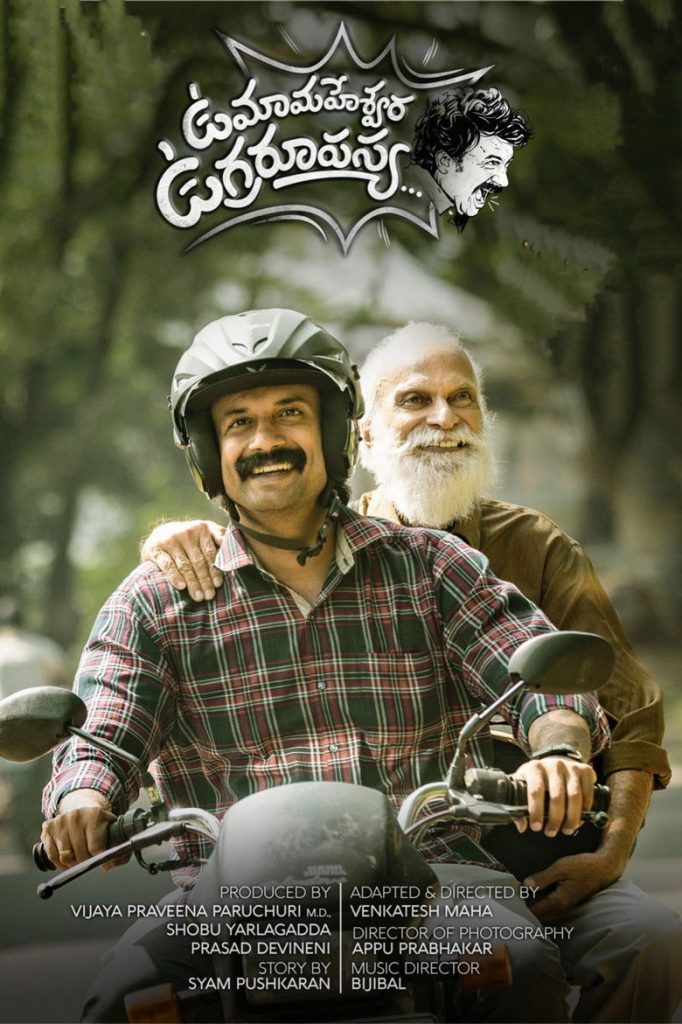
Uma Maheswara Ugra Roopasya is a 2020 Indian comedy-drama film. It follows the story of a man who undergoes a transformation in his life and personality. The movie explores themes of personal growth, relationships, and societal expectations through humorous and dramatic situations.
Parent Guide
A comedy-drama with themes of personal transformation suitable for older children with parental guidance.
Content breakdown
May include comedic conflicts or mild tension typical of the genre.
Could contain some dramatic moments that might be intense for younger viewers.
May include mild language appropriate to comedic situations.
Could contain mild romantic elements or innuendo typical of comedy-dramas.
No substance use expected based on genre conventions.
Contains emotional moments related to personal growth and relationships.
Parent tips
This film contains comedic and dramatic elements that may be suitable for older children and teenagers. Parents should be aware that as a comedy-drama, it might include some mature themes or situations typical of the genre. Consider previewing the film or watching it with your child to discuss any content that arises.
Parent chat guide
Parent follow-up questions
- What was your favorite funny part?
- How did the characters show they were friends?
- What colors did you see in the movie?
- What problem did the main character have to solve?
- How did humor help tell the story?
- What would you do if you faced a similar challenge?
- How did the character change throughout the film?
- What message do you think the movie was trying to share?
- How did the comedy and drama work together in the story?
- What societal expectations did the film explore?
- How did the character's transformation affect their relationships?
- What techniques did the filmmakers use to balance humor with serious themes?
🎭 Story Kernel
At its core, 'Uma Maheswara Ugra Roopasya' explores the performative nature of masculinity and the fragility of social hierarchies. The film isn't about a man's fall from grace, but about the collective delusion that upholds his grace in the first place. Maheswara's 'ugra roopam' (fierce form) is a carefully constructed persona, a mask worn to command respect in a society that equates gentleness with weakness. The driving force for every character is a desperate need to belong to, or control, the established social order—whether it's the villagers seeking a protector, the rival trying to topple a king, or Maheswara himself clinging to an identity that is slowly crushing him. The real conflict is between the individual and the role he is forced to play.
🎬 Visual Aesthetics
The film's visual language masterfully contrasts the intimate with the performative. The camera often lingers in tight, handheld shots during Maheswara's private moments of doubt, making his internal collapse feel visceral and claustrophobic. In public, the frames become wider, more composed, and static, mirroring the staged nature of his dominance. The color palette leans heavily on earthy browns and muted greens, grounding the story in a tangible rural reality, which makes the bursts of violent red—whether in anger or in the symbolic 'kumkuma'—all the more jarring. The action is not stylized heroism but awkward, desperate scuffles, emphasizing that violence here is a failure of communication, not a display of strength.
🔍 Details & Easter Eggs
💡 Behind the Scenes
The film is a Telugu remake of the Malayalam hit 'Maheshinte Prathikaaram,' but director Venkatesh Maha significantly recontextualized it for a rural Andhra setting. Actor Satyadev, known for softer roles, underwent a physical transformation and studied the body language of local strongmen to embody Maheswara. Key scenes were shot in real villages around Visakhapatnam to capture authentic textures, and many supporting actors were locals, lending a documentary-like realism to the community dynamics. The title itself is a clever play, referencing both the goddess Uma (Parvati) and the protagonist's constructed, god-like local persona.
Where to watch
Choose region:
- Netflix
- Netflix Standard with Ads
- Apple TV
- Google Play Movies
- YouTube