
Under the Volcano (1984)
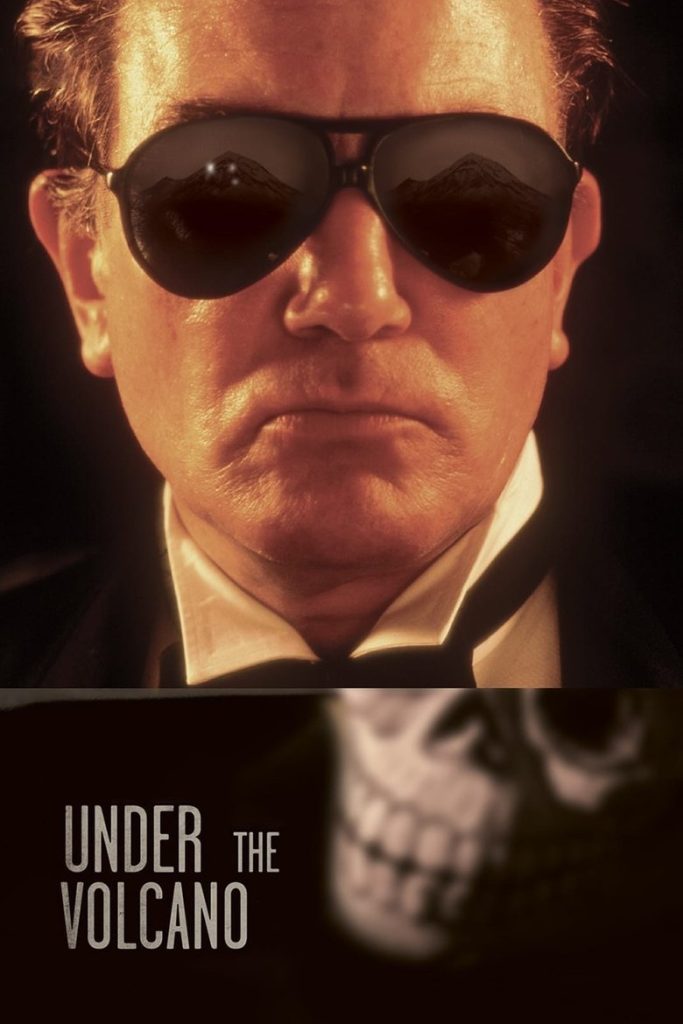
Story overview
Set in 1939 Mexico during the Day of the Dead festival and the outbreak of war in Europe, this drama follows one day in the life of Geoffrey Firmin, a British consul living in alcoholic disrepair in a small Mexican town. His self-destructive behavior, possibly symbolizing a threatened civilization, confounds and saddens his idealistic half-brother Hugh and his ex-wife Yvonne, who returns hoping to heal their broken marriage.
Parent Guide
Mature drama about alcoholism and personal disintegration with complex themes and emotional intensity. Not suitable for children.
Content breakdown
No physical violence, but psychological tension and references to war. Some peril from Geoffrey's self-destructive behavior and drunken states.
Disturbing portrayal of alcoholism and emotional breakdowns. Day of the Dead imagery including skeletons and altars might unsettle some viewers. Intense emotional scenes of despair and marital conflict.
Some strong language including 'God damn,' 'hell,' and other profanity. Not excessive but present in emotional moments.
Implied sexual relationships and some kissing. No nudity or explicit sexual content.
Central theme involves frequent and excessive alcohol consumption throughout the film. Characters drink constantly, often to intoxication. Cigarette smoking is also prevalent.
High emotional intensity dealing with addiction, failed relationships, existential despair, and personal disintegration. Characters experience deep sadness, frustration, and hopelessness.
Parent tips
This R-rated drama deals with mature themes including alcoholism, marital breakdown, and existential despair. The film contains frequent drinking, some strong language, and intense emotional scenes. Best suited for mature teens who can handle complex character studies and symbolic storytelling. The Day of the Dead setting includes cultural elements that may require explanation.
Parent chat guide
Parent follow-up questions
—
—
- What did you notice about how the characters treated each other?
- What did you learn about Mexican culture from this movie?
- How does the film use Geoffrey's alcoholism as a metaphor for larger societal issues?
- What do you think the film says about personal responsibility versus external circumstances?
- How does the Day of the Dead setting enhance the film's themes?
- What did you think about the different approaches Hugh and Yvonne took with Geoffrey?
🎭 Story Kernel
At its core, 'Under the Volcano' is less about the political turmoil of 1938 Mexico and more a harrowing autopsy of a man's final, deliberate descent. Geoffrey Firmin, the British consul, isn't passively succumbing to alcoholism; he is actively, almost artistically, constructing his own ruin. His drinking is a conscious rejection of a world he finds morally bankrupt and personally painful—a world represented by his ex-wife Yvonne's return and his half-brother Hugh's political idealism. The film posits that for some, self-annihilation is the only authentic form of agency left when faced with the unbearable weight of memory, love, and a crumbling sense of self. His final, fatal walk into the barrio is not a mistake, but a destination.
🎬 Visual Aesthetics
The film's visual language is a masterclass in subjective disorientation, mirroring the consul's fractured psyche. Director John Huston and cinematographer Gabriel Figueroa use a restless, prowling camera that often feels unmoored, combined with extreme close-ups that trap us in Firmin's sweaty, claustrophobic perspective. The color palette is a key player: the vibrant, almost garish hues of the Day of the Dead celebrations and the Cuernavaca streets create a fever-dream contrast to the consul's internal gray despair. This isn't just local color; it's the indifferent, pulsating life from which he is irrevocably alienated. The recurring visual motif of spirals—in staircases, crowds, and the consul's own staggering path—visually reinforces his inescapable downward trajectory.
🔍 Details & Easter Eggs
💡 Behind the Scenes
Albert Finney's physically transformative performance as the consul was legendary; he reportedly drank real beer (switched to near-beer for safety in later takes) to achieve the authentically slurry, dissociated state. The film was shot on location in Cuernavaca, Mexico, with the iconic 'Cantina El Farolito' being a real, still-operating bar. Director John Huston had wanted to adapt Malcolm Lowry's notoriously 'unfilmable' novel for decades, seeing it as a personal project. The screenplay underwent significant revisions, with Guy Gallo's final version controversially streamlining the novel's complex interior monologues into visual and behavioral cues.
Where to watch
Choose region:
- HBO Max
- HBO Max Amazon Channel
- Criterion Channel
Trailer
Trailer playback is unavailable in your region.