
Unexpected Family (2026)
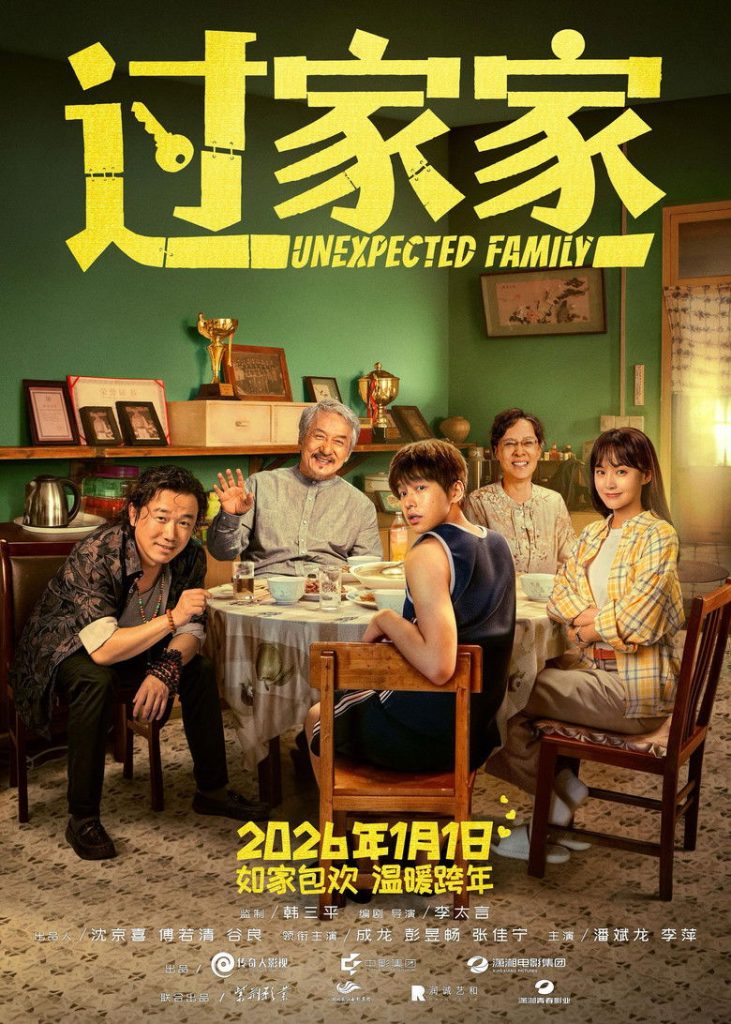
Story overview
In this 2026 Chinese comedy-drama, young Zhong Bufan flees his small town for Beijing due to family reasons. During his journey, he encounters Ren Jiqing, an elderly man with Alzheimer's disease who mistakenly believes Zhong is his son. The film explores their unlikely bond as they travel together, blending humor with heartfelt moments about family, memory, and connection.
Parent Guide
A heartwarming comedy-drama about an unlikely friendship between a young runaway and an elderly man with Alzheimer's. Suitable for most families with elementary-aged children and up, with some emotional themes that may require explanation for younger viewers.
Content breakdown
No violence, fighting, or perilous situations. The journey involves travel but no dangerous scenarios.
Mild emotional moments related to Alzheimer's symptoms and family separation. Some scenes show confusion and memory loss that might be puzzling but not frightening to children.
No profanity, crude language, or inappropriate dialogue. Conversations are respectful and family-appropriate.
No sexual content, nudity, or romantic situations. Focus is on platonic friendship and family relationships.
No smoking, drinking, or drug use depicted. Characters are sober throughout.
Moderate emotional themes around family bonds, memory loss, and intergenerational connection. Some poignant moments when Ren experiences confusion or when family relationships are discussed, but handled with warmth and humor.
Parent tips
This film deals with themes of Alzheimer's disease, family separation, and intergenerational relationships in a gentle, comedic way. The emotional content is handled sensitively but may require explanation for younger viewers. The comedy is situational and character-driven rather than slapstick or crude. No violence, substance use, or inappropriate content is present, making it suitable for family viewing with parental guidance for emotional themes.
Parent chat guide
Parent follow-up questions
- What was your favorite part of the movie?
- How did the two friends help each other?
- What made you laugh in the story?
- Why do you think Ren thought Zhong was his son?
- How did Zhong show he was a good friend to Ren?
- What did you learn about Alzheimer's from this movie?
- How did the movie balance comedy with serious topics?
- What does the film say about family beyond blood relations?
- How might you help someone with memory problems like Ren?
- Analyze how the film portrays intergenerational relationships in modern China.
- Discuss the symbolism of the journey to Beijing.
- How does the film handle the stigma around Alzheimer's disease in society?
Where to watch
Streaming availability has not been announced yet.
Trailer
Trailer playback is unavailable in your region.