
Unknown: Cosmic Time Machine (2023)
Story overview
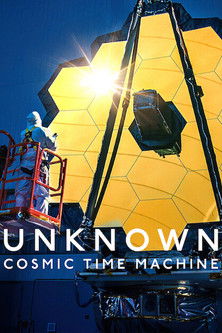
This 2023 documentary follows the development and launch of the James Webb Space Telescope, showcasing its stunning images of distant galaxies and exploring the scientific journey from concept to deployment.
Parent Guide
A family-friendly documentary about space exploration with no objectionable content. Suitable for all ages with an interest in science.
Content breakdown
No violence or peril depicted.
Content is educational and not scary; space imagery is awe-inspiring rather than frightening.
No offensive language.
No sexual content or nudity.
No substance use.
Mild excitement or wonder about space discoveries; no intense emotional scenes.
Parent tips
This documentary is educational and inspiring, focusing on space exploration and scientific achievement. It's suitable for children interested in astronomy, with no concerning content. Consider watching together to discuss the science and encourage curiosity about the universe.
Parent chat guide
Parent follow-up questions
- What was your favorite picture from space?
- What do you think stars are made of?
- Would you like to be an astronaut?
- How does the telescope take pictures so far away?
- Why is it important to study other galaxies?
- What was the hardest part of building the telescope?
- What scientific discoveries might come from this telescope?
- How does the telescope's design help it see distant objects?
- What challenges did engineers face during development?
- How does this telescope advance our understanding of the universe's origins?
- What are the implications of finding Earth-like planets?
- How does international collaboration benefit space exploration?
🎭 Story Kernel
At its heart, the film is an exploration of human persistence against the overwhelming scale of the universe. It chronicles the decades-long journey of the James Webb Space Telescope, framing it not just as a scientific endeavor, but as a collective reach for our origins. The narrative focuses on the quest for 'first light'—the earliest stars formed after the Big Bang—positioning the telescope as a bridge between current human consciousness and the dawn of time. It expresses the fragility of our knowledge, highlighting how much of our cosmic history remains hidden in infrared shadows. By documenting the immense risks and the '344 single points of failure,' the film underscores that our greatest discoveries require an almost irrational level of faith in engineering and international cooperation, ultimately suggesting that looking outward is the only way to truly understand our place within.
🎬 Visual Aesthetics
The visual language of the documentary oscillates between the claustrophobic, high-tension environments of NASA’s mission control and the infinite, silent expanse of deep space. Director Shai Gal utilizes crisp, high-definition CGI to illustrate the complex 'origami' deployment of the telescope's sunshield and mirrors, which is essential given that no cameras could follow JWST to its destination at the second Lagrange point. This digital recreation is contrasted with the raw, emotional close-ups of scientists like Thomas Zurbuchen and Amber Straughn. The climax of the film’s visual journey is the transition from the grainy, familiar images of the Hubble era to the startlingly sharp, vibrant infrared vistas of the Carina Nebula and the Deep Field. These images serve as the ultimate cinematic payoff, transforming abstract data into a sublime visual experience.
🔍 Details & Easter Eggs
💡 Behind the Scenes
Unknown: Cosmic Time Machine is the fourth installment of the Netflix 'Unknown' docuseries, which explores various frontiers of human knowledge. Director Shai Gal was granted unprecedented access to NASA facilities during the lead-up to the telescope's launch and the subsequent release of its first images in 2022. The production features key figures like Gregory Robinson, the program director credited with turning the project around after years of delays. The film highlights the international collaboration between NASA, the European Space Agency (ESA), and the Canadian Space Agency (CSA), showcasing the global effort required for such a feat.
Where to watch
Choose region:
- Netflix
- Netflix Standard with Ads
Trailer
Trailer playback is unavailable in your region.