
Vertigo (1958)
Story overview
Vertigo is a psychological thriller about a retired detective with a fear of heights who takes on a case involving a friend's wife. As he investigates her unusual behavior, he becomes increasingly obsessed with her, leading to a complex web of deception and psychological manipulation. The film explores themes of obsession, identity, and reality through its suspenseful narrative and visual storytelling.
Parent Guide
A psychological thriller exploring obsession and deception with moderate intensity, suitable for mature viewers who can handle complex themes.
Content breakdown
Some scenes of peril including a fall from height (not graphic), and tense situations that create psychological suspense.
Psychological tension, themes of obsession and deception, and some unsettling scenes involving manipulation and identity confusion.
Occasional mild language consistent with the time period, nothing strong or frequent.
Some romantic tension and kissing, but no explicit sexual content or nudity.
Social drinking in a few scenes, typical for the era, but not a prominent element.
Strong themes of obsession, psychological manipulation, and emotional turmoil that create sustained tension.
Parent tips
Vertigo is a classic psychological thriller that deals with mature themes of obsession, deception, and mental health issues. The film contains moderate psychological tension and some scenes that might be unsettling for younger viewers due to its themes of manipulation and identity confusion. While rated PG, its complex narrative and psychological depth make it more suitable for older children and teenagers who can process its themes.
Parent chat guide
Parent follow-up questions
- What was your favorite part of the movie?
- How did the music make you feel?
- What colors did you notice in the movie?
- Did you see any places that looked interesting?
- What did you think about how the detective solved the mystery?
- How did the characters' feelings change during the story?
- What would you do if you were afraid of something like heights?
- Why do you think people sometimes pretend to be someone else?
- How does the film show what obsession looks like?
- What clues did you notice about what was really happening?
- How do the characters' fears affect their decisions?
- What makes this mystery different from other detective stories?
- How does the film explore themes of identity and reality?
- What psychological techniques does the director use to create suspense?
- How does the portrayal of obsession relate to real-life relationships?
- What commentary does the film make about perception versus reality?
🎭 Story Kernel
Vertigo explores obsession as a form of self-destruction, where Scottie's attempt to resurrect Madeleine reveals he's chasing his own idealized projection rather than a real person. The film dissects how trauma (his acrophobia, her suicidal impulses) creates voids that characters try to fill with fabricated identities. Ultimately, it's about the impossibility of controlling reality or people—Scottie's vertigo symbolizes his psychological inability to accept life's uncertainties. Judy's transformation back into Madeleine demonstrates how we become prisoners of others' fantasies, while the circular narrative structure mirrors the inescapable nature of obsession.
🎬 Visual Aesthetics
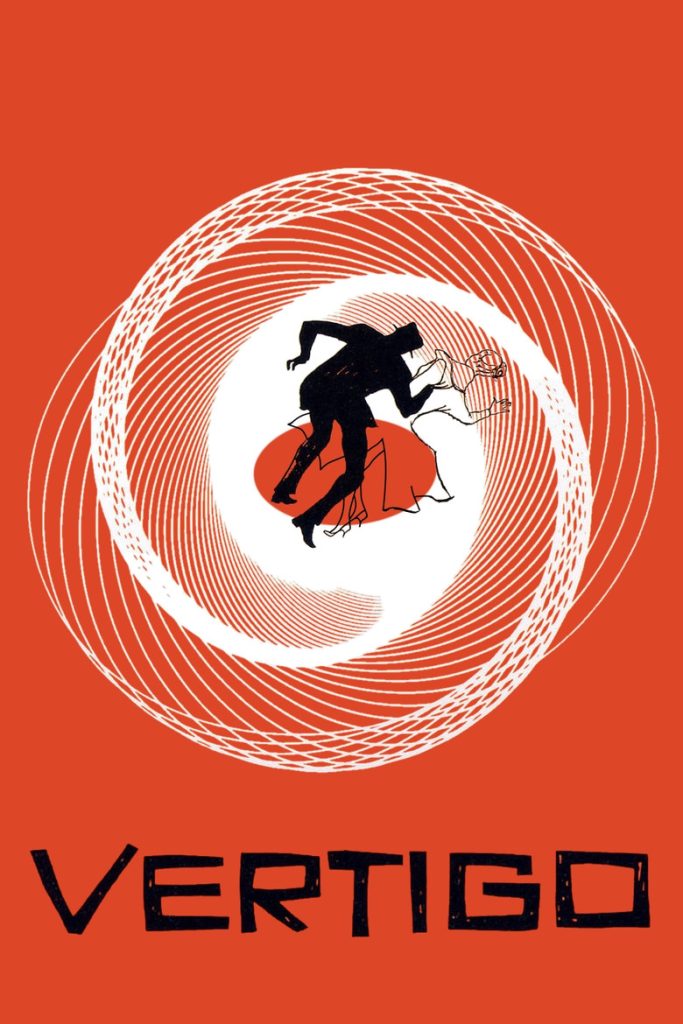
Hitchcock's visual language creates psychological landscapes through dolly zooms (the famous vertigo effect), spirals in hairstyles, staircases, and artwork that mirror obsessive thought patterns. The color palette shifts dramatically—from cool greens and grays during the 'Madeleine' sequences to warm, saturated reds in Judy's scenes, visually distinguishing fantasy from reality. Camera movements become characters themselves, with slow tracking shots building tension and sudden cuts mirroring psychological breaks. The San Francisco locations aren't just settings but psychological extensions of Scottie's disorientation, with steep hills and winding roads externalizing his internal turmoil.
🔍 Details & Easter Eggs
💡 Behind the Scenes
Kim Novak initially refused the dual role, finding it psychologically disturbing, and Hitchcock had to persuade her personally. The famous dolly zoom effect was invented for this film by combining forward camera movement with reverse zoom. Bernard Herrmann's score was so integral that Hitchcock increased its prominence during editing. San Francisco's Mission Dolores and Palace of Fine Arts became iconic locations, though the mission tower was a studio miniature. James Stewart, at 50, was considered too old for the role by some critics, adding unintended layers to Scottie's vulnerability.
Where to watch
Choose region:
- Amazon Prime Video
- Amazon Prime Video with Ads
- Amazon Video
- Apple TV
- Google Play Movies
- YouTube
- Fandango At Home
- VIX
Trailer
Trailer playback is unavailable in your region.