
Wallace & Gromit: The Curse of the Were-Rabbit (2005)
Story overview
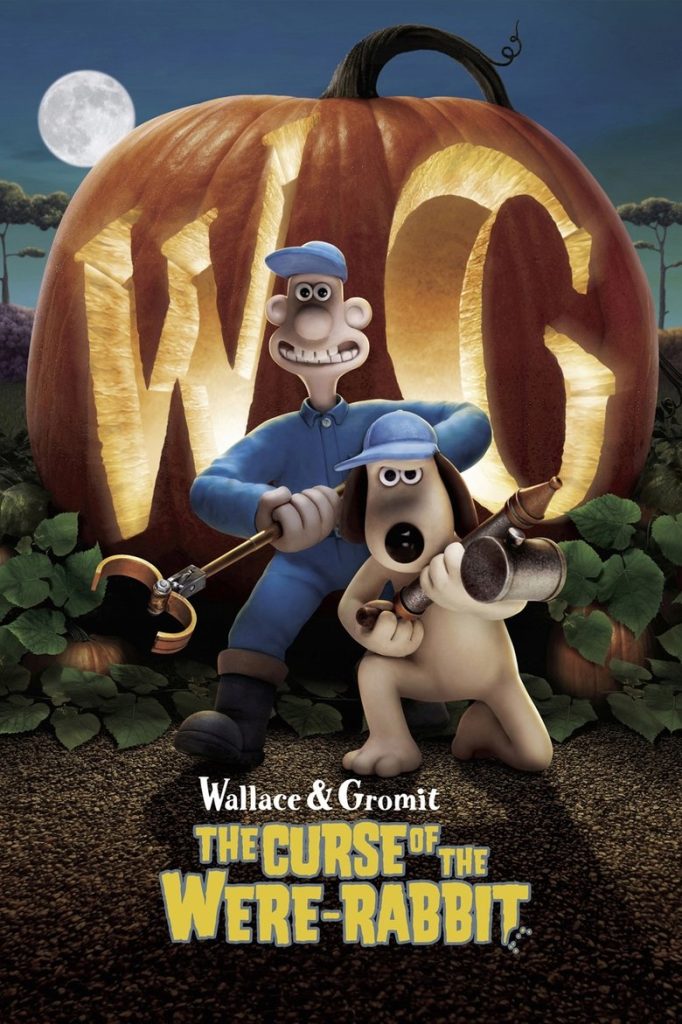
Wallace & Gromit: The Curse of the Were-Rabbit is a charming stop-motion animated adventure featuring the eccentric inventor Wallace and his clever dog Gromit. The duo runs a humane pest control business that temporarily houses evicted garden pests, but they face a new challenge when a mysterious vegetarian monster threatens the town's annual vegetable-growing contest. With humor and creativity, they work to solve this mystery while maintaining their commitment to kindness toward animals.
Parent Guide
A gentle, humorous animated adventure suitable for most children, with mild moments of peril and clever humor.
Content breakdown
Some chase scenes and confrontations with the monster create mild peril, but no actual violence occurs.
The monster might be momentarily startling for very young children, but it's presented in a cartoonish, non-graphic way.
No offensive language; dialogue is family-friendly throughout.
No sexual content or nudity present.
No depiction of substance use.
Some suspenseful moments when characters face the monster, but resolution is always positive and humorous.
Parent tips
This film is generally appropriate for most children, with its G rating indicating content suitable for all ages. The animation style is whimsical and engaging, though some scenes involving the monster might be slightly intense for very young viewers. The humor is clever and visual, appealing to both children and adults with its British wit and charming characters.
Parents should note that while there's no real violence, there are moments of mild peril as characters confront the monster, which could be momentarily startling. The film promotes positive messages about problem-solving, teamwork, and treating animals humanely, making it a good choice for family viewing.
Parent chat guide
After viewing, consider discussing what makes the characters funny or interesting, and how the story shows that even scary-looking creatures might not be what they seem. You could also talk about the different ways characters express emotions without speaking much, since Gromit communicates largely through facial expressions and actions.
Parent follow-up questions
- What was your favorite funny part in the movie?
- How did Gromit help Wallace solve problems?
- What sounds did the different animals make?
- How did the characters show they were friends?
- What colors did you like in the movie?
- Why do you think Wallace and Gromit tried to help the garden pests instead of hurting them?
- How did the characters use teamwork to solve the mystery?
- What made some scenes funny even when characters were in trouble?
- How did Gromit communicate without talking much?
- What would you invent to help with a problem like theirs?
- What does the film suggest about judging things by their appearance?
- How does the humor work differently for kids versus adults?
- What real-life issues about animal treatment might the story be commenting on?
- How does the animation style contribute to the storytelling?
- What character traits make Wallace and Gromit effective problem-solvers?
- How does the film balance comedy with moments of tension or mystery?
- What cultural elements of British humor are present in the storytelling?
- How does the film approach environmental or animal welfare themes subtly?
- What makes stop-motion animation an effective medium for this type of story?
- How do the characters' eccentricities contribute to the film's charm?
🎭 Story Kernel
At its core, 'The Curse of the Were-Rabbit' explores the tension between human ambition and nature's chaos through Wallace's disastrous attempts at scientific control. The film satirizes both suburban obsession with perfect gardens and the Frankenstein complex of playing god with biology. Wallace's 'Mind-Manipulation-O-Matic' represents humanity's arrogant belief that we can engineer solutions to natural problems without consequences, while Gromit's silent pragmatism serves as the film's moral compass. Ultimately, it's about accepting that some forces—whether lunar cycles or monstrous appetites—defy our neat technological fixes, and that true heroism lies in adaptation rather than domination.
🎬 Visual Aesthetics
Aardman's signature stop-motion aesthetic achieves remarkable expressiveness through meticulous claymation, with Wallace's elastic facial expressions conveying entire emotional arcs in single frames. The color palette shifts from the warm, cozy browns of West Wallaby Street to the cool, ominous blues of moonlit garden raids, visually tracking the narrative's descent into chaos. The film's visual genius lies in its scale—massive vegetable close-ups make carrots feel like ancient monoliths, while the miniature world-building creates immersive suburban Englishness. The were-rabbit transformation sequences use clever shadow play and exaggerated physical distortion that nods to classic horror films while maintaining Aardman's charming aesthetic.
🔍 Details & Easter Eggs
💡 Behind the Scenes
The film required 30 animators working for five years, with each animator producing only about 3-5 seconds of footage per week. Peter Sallis recorded all of Wallace's dialogue in just three days, using his distinctive Yorkshire accent that became the character's trademark. The were-rabbit puppet contained over 800 individual pieces and required four animators to operate simultaneously during transformation scenes. Director Nick Park insisted on practical effects, even creating real vegetable explosions using compressed air rather than digital effects, giving the destruction an authentic, tactile quality that defines Aardman's charm.
Where to watch
Choose region:
- Netflix
- Netflix Standard with Ads
- Apple TV
- Google Play Movies
- YouTube
- Fandango At Home
Trailer
Trailer playback is unavailable in your region.