
War for the Planet of the Apes (2017)
Story overview
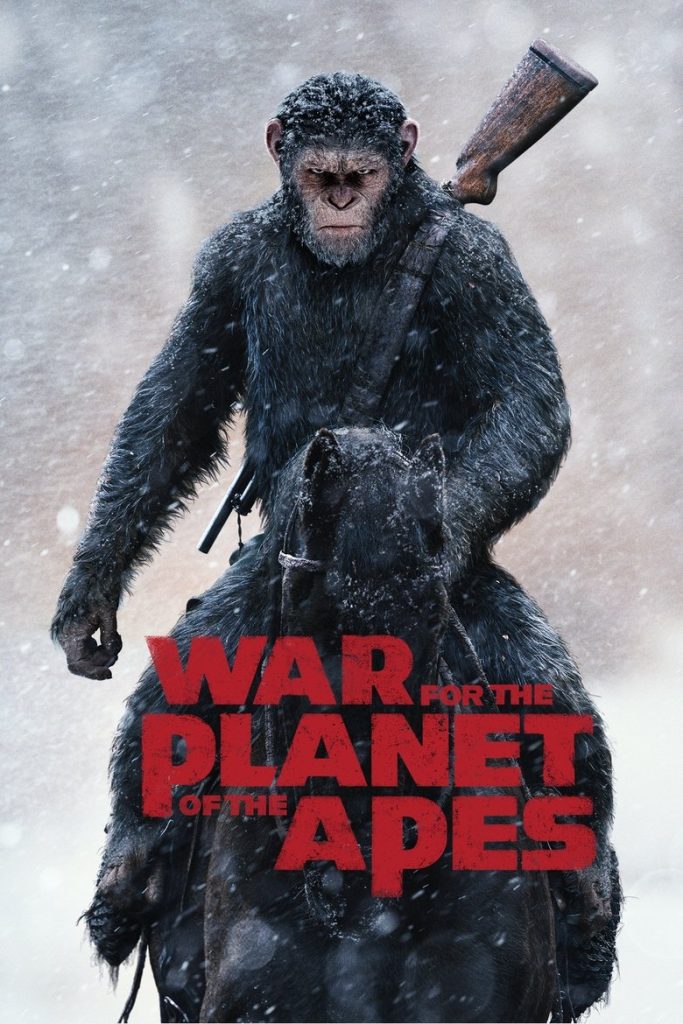
War for the Planet of the Apes is a 2017 science fiction drama set in a world where apes have risen to become the dominant species. The film follows Caesar, the ape leader, as he faces a brutal human military force determined to eradicate his kind. It explores themes of survival, conflict, and the moral complexities of war, with intense action sequences and emotional depth.
Parent Guide
A intense sci-fi war drama with mature themes, best for teens and older due to violence and emotional content.
Content breakdown
Contains battle scenes, gunfire, explosions, and perilous situations with characters in danger.
Includes tense moments, dark themes, and some disturbing images related to war and conflict.
May have occasional mild language, typical for a PG-13 rating.
No sexual content or nudity present.
No substance use depicted.
High emotional stakes with themes of loss, sacrifice, and survival.
Parent tips
This film is rated PG-13 for sequences of sci-fi violence and action, thematic elements, and some disturbing images. Parents should be aware that it contains intense battle scenes, perilous situations, and emotional moments that may be too strong for younger viewers. The movie deals with mature themes like war, loss, and survival, which could be challenging for sensitive children.
Parent chat guide
Parent follow-up questions
- What was your favorite animal in the movie?
- How did the apes talk to each other?
- What colors did you see in the forest?
- Was there a happy part in the story?
- Did you see any friends helping each other?
- Why do you think the humans and apes were fighting?
- What made Caesar a good leader?
- How did the apes show they cared for each other?
- What would you do if you were in a scary situation like in the movie?
- What did you learn about working together?
- What are the differences between how humans and apes acted in the war?
- How did the movie show the cost of conflict?
- What choices did Caesar make that were hard, and why?
- How does the film explore themes of family and loyalty?
- What message do you think the movie was trying to share?
- How does the film comment on real-world issues like war and prejudice?
- What moral dilemmas did the characters face, and how were they resolved?
- In what ways did the movie challenge your views on leadership and sacrifice?
- How did the cinematography and music enhance the emotional impact?
- What parallels can you draw between the film's conflicts and historical events?
🎭 Story Kernel
At its core, 'War for the Planet of the Apes' explores the cyclical nature of violence and the corrupting influence of revenge. Caesar's journey isn't about defeating humans but about preventing apes from becoming the very monsters they're fighting. The Colonel's obsession with purity mirrors humanity's historical tribal conflicts, while Caesar's internal struggle represents the cost of leadership in war. The film asks whether breaking the cycle of vengeance requires transcending one's own nature, ultimately suggesting that true victory lies in preserving one's soul rather than territory.
🎬 Visual Aesthetics
The film employs a stark, desaturated palette dominated by grays, whites, and muted blues, reflecting both the snowy landscape and the moral bleakness of the conflict. Michael Seresin's cinematography favors intimate close-ups of Caesar's expressive eyes over spectacle, making this the most interior-focused entry in the trilogy. The prison camp sequences use vertical framing and oppressive compositions that echo Holocaust imagery, while the final avalanche delivers catharsis through nature's raw power rather than choreographed action.
🔍 Details & Easter Eggs
💡 Behind the Scenes
Andy Serkis performed Caesar's role while battling pneumonia during the snowy prison camp sequences, adding genuine physical exhaustion to his performance. The avalanche finale used practical effects with 12,000 tons of manufactured snow on a Vancouver mountaintop. Director Matt Reeves screened 'Apocalypse Now' and 'The Great Escape' for the crew to establish tone, while Maurice's sign language was developed with a deaf consultant to ensure authenticity.
Where to watch
Choose region:
- HBO Max
- HBO Max Amazon Channel
- YouTube TV
- Amazon Video
- Apple TV
- Google Play Movies
- YouTube
- Fandango At Home
Trailer
Trailer playback is unavailable in your region.