
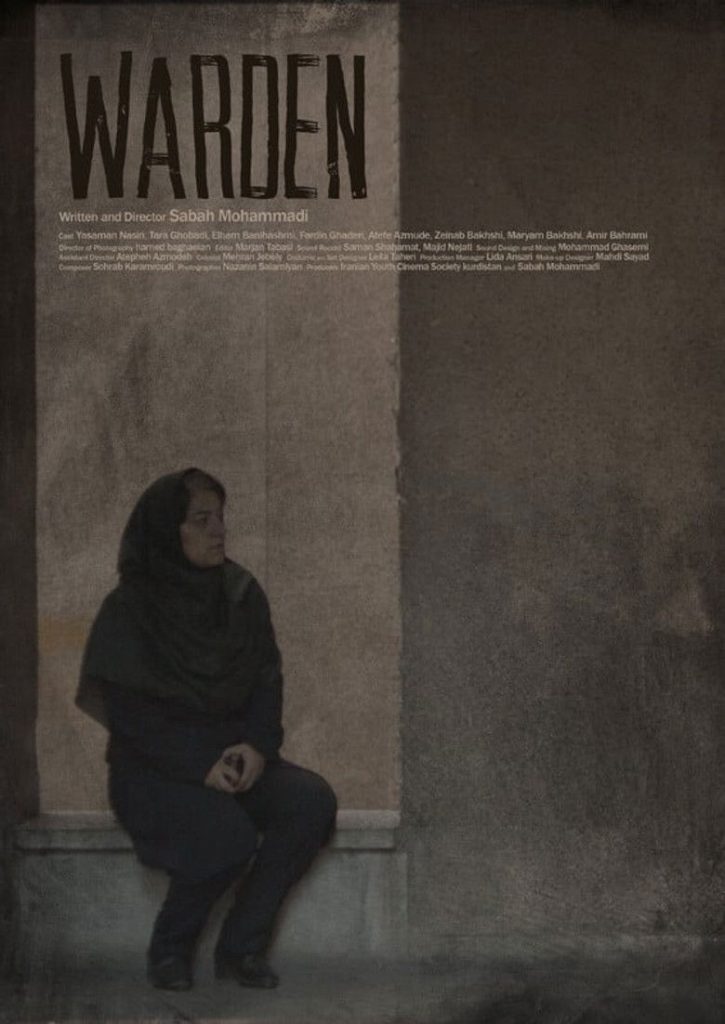
Warden (2026)

Released: 2026-01-01 Recommended age: 8+ No IMDb rating yet
Warden

Movie details

  • Genres: Drama
  • Director: Sabah Mohammadi
  • Original language: fa
  • Premiere: 2026-01-01

Story overview

Zivar, a middle-aged woman, serves as the supervisor of a student dormitory. When a student returns late, she reacts harshly, but later, in her solitude, she feels guilt and attempts to make amends, exploring themes of responsibility, regret, and personal growth in a short drama.

Parent Guide

A gentle, introspective short film about a dorm supervisor dealing with guilt after a harsh reaction, suitable for most audiences with minimal concerns.

Content breakdown

Violence & peril
None

No violence or peril depicted; the conflict is emotional and verbal, centered on a disciplinary interaction.

Scary / disturbing
Mild

Mild emotional intensity from themes of guilt and solitude, but nothing visually scary or disturbing; suitable for sensitive viewers.

Language
None

No offensive or strong language expected; dialogue is likely in Farsi with subtitles, focusing on dramatic conversation.

Sexual content & nudity
None

No sexual content or nudity; the film deals with platonic relationships in a dormitory setting.

Substance use
None

No substance use shown; the setting is a student dormitory with no indication of drugs or alcohol.

Emotional intensity
Mild

Mild emotional themes of regret and self-reflection; may evoke empathy but is not overly intense, appropriate for children.

Parent tips

This short drama focuses on emotional themes like guilt and redemption, with no explicit content. It's suitable for children aged 8 and up, but younger viewers might need guidance to understand the emotional nuances. Watch together to discuss how people handle mistakes and forgiveness.

Parent chat guide

After watching, talk about why Zivar felt guilty and how she tried to fix things. Ask your child about times they've made a mistake and what they did about it. Discuss the importance of empathy and learning from errors in everyday life.

Parent follow-up questions

  • How did Zivar feel when she was alone?
  • What did she do to feel better?
  • Why do you think Zivar reacted so strongly at first?
  • What does it mean to try to make things right?
  • How does the film show the impact of our actions on others?
  • What can we learn from Zivar's journey about responsibility?
  • Discuss the themes of isolation and redemption in the film.
  • How might cultural context (e.g., Iranian setting) influence the story's portrayal of authority and guilt?
⚠️ Deep Film Analysis (Contains Spoilers) · Click to Expand
A prison thriller where the real cage is the warden's own moral compromise.

🎭 Story Kernel

The film explores the corrosive nature of power and the illusion of control through Warden Zhang's descent. Initially presented as a reformer, his obsession with maintaining order becomes the very chaos he seeks to prevent. The narrative reveals that true imprisonment isn't physical confinement but the psychological shackles of duty corrupted by pride. Each character represents a different facet of institutional failure—the idealistic guard, the manipulative inmate, the compromised doctor—all orbiting Zhang's crumbling authority. The climax isn't about escape but about confronting how systems designed for rehabilitation become engines of dehumanization, with the warden ultimately becoming the most trapped individual in his own facility.

🎬 Visual Aesthetics

Director employs a desaturated color palette dominated by concrete grays and sickly fluorescent greens, visually mirroring the emotional sterility of the prison. Camera work alternates between oppressive static shots in administrative areas and shaky, claustrophobic handheld sequences in cell blocks, creating visceral tension. The deliberate framing often traps characters behind bars or in doorways even when they're technically 'free.' Lighting consistently casts harsh shadows across faces during moral decisions, while the rare outdoor scenes use washed-out natural light to emphasize the characters' disconnect from normalcy. The action sequences are brutally efficient rather than stylized, emphasizing the institutional violence's mechanical nature.

🔍 Details & Easter Eggs

1
Early scenes show Warden Zhang unconsciously straightening a crooked picture frame on his office wall—a visual metaphor for his compulsive need for order that ultimately destroys him.
2
The recurring motif of keys appears in every major character's introduction, but only the inmates are shown actually using them, suggesting the staff's symbolic imprisonment.
3
During the riot sequence, background graffiti visible for only three frames reads 'the guard is inside,' foreshadowing the warden's final confinement in solitary.
4
The prison's architectural layout, revealed in a security monitor shot, forms a perfect panopticon shape, commenting on constant surveillance's psychological effects.

💡 Behind the Scenes

Lead actor underwent a two-week lockdown experience in a decommissioned prison to prepare, during which guards followed actual protocols. The production used a former Soviet-era facility in Lithuania, chosen for its particularly oppressive architecture. Director insisted on practical effects for all violence, resulting in the riot sequence taking 11 days to shoot. Supporting cast included several former correctional officers as consultants, whose insights about institutional dynamics were incorporated into dialogue. The film's distinctive green tint was achieved through custom lens filters rather than digital grading.

Where to watch

Streaming availability has not been announced yet.

SkyMe App
SkyMe Guide Download on the App Store
VIEW