
Watership Down (1978)
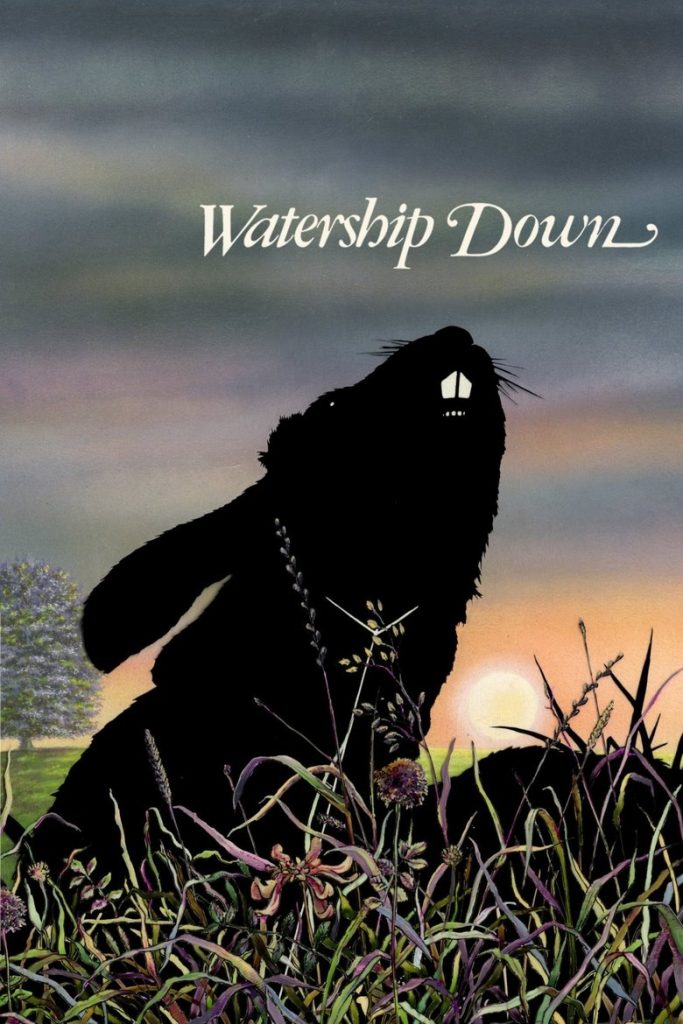
Story overview
Watership Down is an animated adventure film about a group of rabbits who must leave their home when their warren is threatened. Led by determined rabbits including Fiver, Bigwig, Blackberry, and Hazel, they embark on a perilous journey to find a safe new home. The story explores themes of survival, community, and courage as they face various challenges along the way.
Parent Guide
An intense animated adventure with mature themes of survival and community conflict, better suited for older children who can handle emotional complexity.
Content breakdown
Scenes of animal conflict including fights, chases, and peril. Some injuries and implied deaths shown in a realistic manner for an animated film.
Intense sequences involving predators, environmental dangers, and tense survival situations. Some frightening imagery and themes of mortality.
No concerning language issues noted.
No sexual content or nudity.
No substance use depicted.
Themes of loss, danger, and survival create emotional tension. Characters face serious challenges that may be affecting for sensitive viewers.
Parent tips
This animated film deals with mature themes including survival, danger, and loss that may be intense for younger viewers. While rated PG, it contains scenes of peril and violence that are more graphic than typical children's animation. The realistic depiction of animal struggles and some frightening sequences make it better suited for older children who can handle emotional complexity.
Parents should be aware that the film doesn't shy away from showing the harsh realities of nature, including predator-prey relationships and the consequences of conflict. The animation style is more realistic than cartoonish, which can make the intense scenes feel more immediate. Consider your child's sensitivity to animal stories and their ability to process themes of mortality before viewing.
Parent chat guide
During viewing, be available to pause if scenes become too intense. The journey has moments of tension and danger that might need explanation. You can point out how the rabbits work together and show courage when facing obstacles.
After watching, talk about the themes of leadership, friendship, and perseverance. Ask how the rabbits showed bravery and what your child learned about working together to solve problems. Discuss how stories can help us understand difficult topics in a safe way.
Parent follow-up questions
- What was your favorite rabbit character?
- How did the rabbits help each other?
- What makes a good home for animals?
- What was something brave the rabbits did?
- How did the rabbits feel when they found new friends?
- Why was it important for the rabbits to find a new home?
- How did different rabbits use their special skills to help the group?
- What challenges did the rabbits face on their journey?
- What does it mean to be a good leader like Hazel?
- How did the rabbits show they cared about each other?
- What qualities helped the rabbit community survive their challenges?
- How did the film show the balance between individual needs and group safety?
- What did you think about how the rabbits dealt with danger and loss?
- How does this story compare to other adventure stories you've seen?
- What lessons about friendship and loyalty did you notice in the story?
- How does the film explore themes of freedom versus security?
- What commentary might the story make about community and social structures?
- How does the animation style affect the emotional impact of the story?
- What parallels can you draw between the rabbits' journey and human experiences?
- How does the film handle complex themes like sacrifice and survival?
🎭 Story Kernel
At its core, 'Watership Down' is less about fluffy bunnies and more about the primal, often violent, struggle to establish a home and a functioning society. The film explores the tension between prophetic vision and practical leadership through Fiver's fragile clairvoyance and Hazel's reluctant heroism. It's a stark examination of what a community must sacrifice—innocence, peace, individual lives—to secure its future. The rabbits aren't driven by simple hunger, but by the deep-seated, mythological need for a safe warren, making their journey a foundational epic. The villainous General Woundwort represents the ultimate perversion of this drive: security achieved through tyranny and fear.
🎬 Visual Aesthetics
The film's visual language masterfully contrasts idyllic English countryside with visceral horror. The pastoral watercolor backgrounds are repeatedly violated by stark, graphic violence—the gore of the snare, the blood-soaked field. This clash creates a pervasive unease. The animation style is deliberately rough and earthy, with muted browns and greens dominating, making bursts of red shockingly potent. The famous 'Bright Eyes' sequence employs a surreal, luminous palette and flowing abstraction to depict spiritual revelation, a visual oasis from the harsh realism. The camera often adopts a low, ground-level perspective, immersing us in the rabbits' vulnerable worldview.
🔍 Details & Easter Eggs
💡 Behind the Scenes
The film's notorious intensity sparked controversy upon its 1978 release, with many parents shocked by its graphic content despite the rabbit protagonists. The haunting theme song 'Bright Eyes' was performed by Art Garfunkel and became a UK number-one single. Director Martin Rosen, making his debut, fought to preserve the novel's brutal honesty against studio pressure to soften it. The voice cast features a who's who of British talent, including John Hurt as the prophetic Fiver, Richard Briers as the comical Dandelion, and Zero Mostel (in his final role) as the scene-stealing seagull Kehaar. The animation was a grueling, years-long process for the team at Nepenthe Productions.
Where to watch
Choose region:
- HBO Max
- HBO Max Amazon Channel
- Criterion Channel
- TCM
- Amazon Video
- Apple TV
- Google Play Movies
- YouTube
- Fandango At Home
- Shout! Factory TV
- Plex
- Plex Channel
Trailer
Trailer playback is unavailable in your region.