We Grown Now (2024)
Story overview
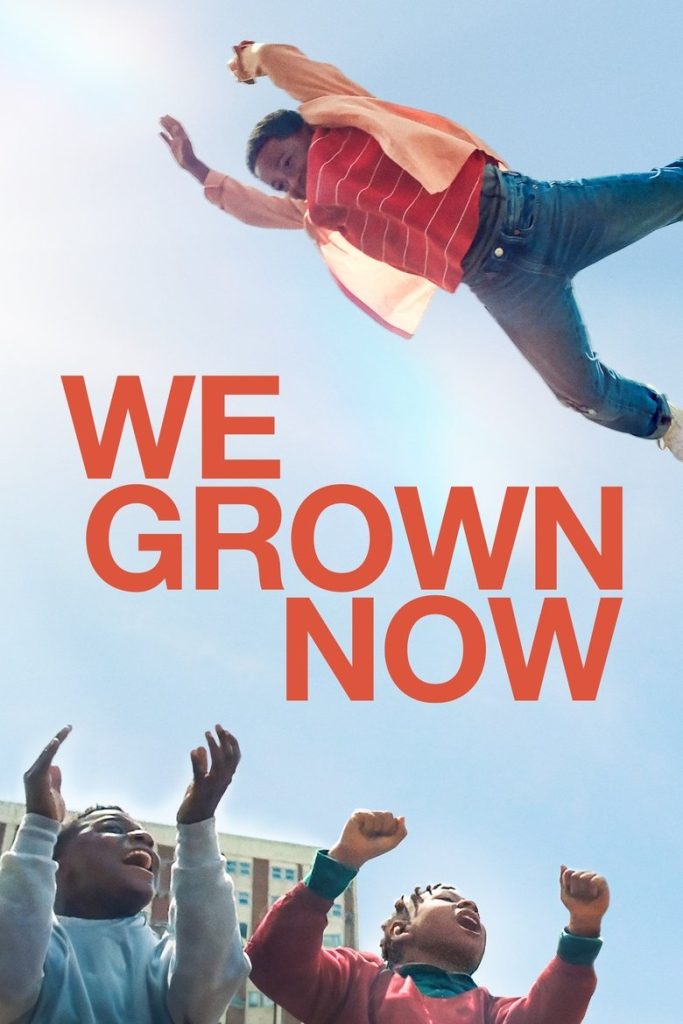
We Grown Now is a heartfelt 2024 drama set in 1992 Chicago, following two imaginative 12-year-old best friends, Malik and Eric, as they navigate childhood in public housing. The film explores their bond, daily adventures to escape school routines, and the impact of community tragedy on their coming-of-age journey, emphasizing themes of friendship, resilience, and the challenges of growing up in an urban environment.
Parent Guide
We Grown Now is a family-friendly drama with minimal concerning content, focusing on emotional and social themes rather than action or intensity. Best for viewers aged 8 and up due to its mature subject matter, which may require parental guidance for younger children to process themes of tragedy and hardship.
Content breakdown
No graphic violence is shown. The film includes implied or off-screen community tragedy (e.g., references to loss or hardship) that creates emotional peril, but there are no violent acts depicted on screen.
Some scenes may be emotionally intense or sad due to themes of tragedy and growing up challenges, but there are no jump scares, horror elements, or visually disturbing imagery.
No strong profanity or offensive language is expected, consistent with a PG rating. Dialogue is likely mild and age-appropriate.
No sexual content, nudity, or romantic scenes are present. The focus is on platonic friendship and family dynamics.
No depiction of alcohol, drugs, or smoking by characters, given the child-focused storyline and PG rating.
The film has moderate emotional intensity due to themes of friendship, community tragedy, and the hardships of urban life. It may evoke sadness or empathy, but it's handled in a thoughtful, non-traumatic way suitable for older children and teens.
Parent tips
This PG-rated drama offers a poignant look at childhood resilience and friendship, suitable for viewers aged 8 and up. Parents should note it deals with mature themes like community tragedy and urban hardships, which may require discussion for younger audiences. The film's emotional depth and realistic portrayal of life challenges make it a valuable conversation starter about empathy and social issues, but it lacks intense violence, strong language, or explicit content.
Parent chat guide
Parent follow-up questions
—
- How did Malik and Eric show they were good friends?
- What adventures did they have in the city?
- How did they feel when something sad happened in their community?
- Why do you think Malik and Eric wanted to escape school and their housing situation?
- How did the tragedy affect their friendship and community?
- What does 'learning to fly' mean in the story?
- How does the film portray the challenges of growing up in public housing in the 1990s?
- What broader social issues does the tragedy in the community highlight?
- How do Malik and Eric's experiences reflect themes of resilience and coming-of-age?
🎭 Story Kernel
The film is a lyrical meditation on the sanctity of Black childhood within the confines of Chicago’s Cabrini-Green in 1992. It isn't merely a story of systemic neglect; it’s an exploration of how imagination serves as a survival mechanism. Through the eyes of Malik and Eric, the narrative examines the tension between the boundless potential of youth and the encroaching realities of state surveillance and community tragedy following the shooting of a young neighbor. It asks what it means to grow up when your environment is being dismantled—both physically through demolition and socially through aggressive policing. The core expresses the resilience of friendship as a sanctuary that exists above the concrete, where two boys can momentarily defy the laws of physics and social expectation to simply exist as children before the world demands they harden.
🎬 Visual Aesthetics
Cinematographer Pat Scola employs a visual language that oscillates between gritty realism and dreamlike transcendence. The camera frequently lingers at the eye level of the children, making the towering high-rises feel both like an expansive playground and a restrictive fortress. There is a recurring motif of 'flying'—whether through the boys jumping onto discarded mattresses or the camera sweeping across the Chicago skyline—symbolizing their desire for upward mobility and spiritual freedom. The lighting shifts from the warm, amber hues of domestic safety within Malik’s apartment to the cold, sterile blues of the public hallways and the intrusive white glare of police searchlights. This color palette reinforces the dichotomy between the internal warmth of the family unit and the external hostility of a world that views these children as statistics rather than dreamers.
🔍 Details & Easter Eggs
💡 Behind the Scenes
Director Minhal Baig, a Chicago native, conducted extensive research to ensure the authenticity of the Cabrini-Green setting, including interviewing former residents to capture the specific communal spirit of the high-rises. The film was shot on location in Chicago, utilizing the city's unique architecture to ground the story in a specific historical moment. While Jurnee Smollett and S. Epatha Merkerson provide veteran stability to the cast, the film’s emotional weight rests on the naturalistic performances of newcomers Blake Cameron James and Gian Knight Ramsey. The production design meticulously recreated 1990s housing project interiors to emphasize the care residents took in their homes.
Where to watch
Choose region:
- Netflix
- Amazon Video
- Apple TV Store
- Google Play Movies
- YouTube
- Fandango At Home
- Spectrum On Demand
Trailer
Trailer playback is unavailable in your region.