
What Killed Maradona? (2021)
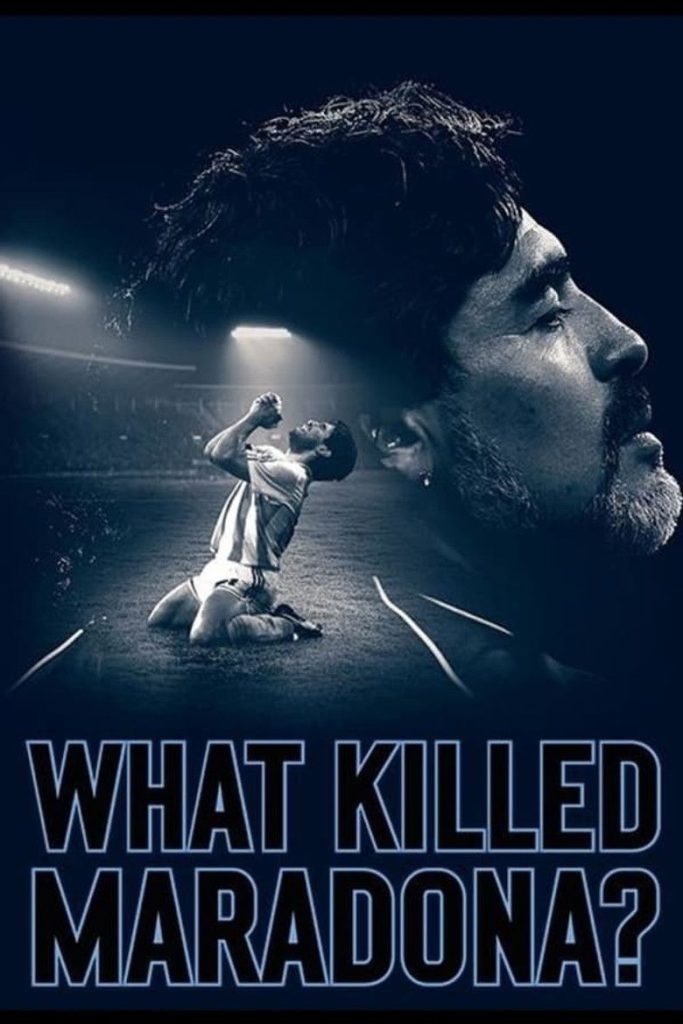
Story overview
This documentary examines the life and death of football legend Diego Maradona through interviews with people who knew him. It explores various factors that may have contributed to his passing at age 60, including his health struggles, lifestyle choices, and the pressures of fame. The film presents a balanced look at both his extraordinary talent and personal challenges.
Parent Guide
A documentary exploring the complex factors behind a sports legend's death. While educational, it deals with mature themes that require parental guidance for younger viewers.
Content breakdown
No violent scenes or peril depicted. Discussion of health decline and death is present but not visually graphic.
Some discussion of addiction, health problems, and death could be unsettling for sensitive viewers, but no disturbing imagery is shown.
May contain occasional mild language typical of documentary interviews, but no strong profanity is expected based on the subject matter.
No sexual content or nudity.
Discusses Maradona's struggles with addiction and substance use, though not in graphic detail. Important context for understanding his life story.
Emotionally heavy at times as it deals with decline, loss, and the complexities of a public figure's life. Interviews may show emotional moments.
Parent tips
This documentary deals with mature themes including addiction, health decline, and death. While there's no graphic violence or explicit content, the subject matter may be emotionally heavy for younger viewers. Best suited for children who can understand discussions about complex adult issues.
Parent chat guide
Parent follow-up questions
—
- What made Maradona special as a football player?
- How do you think it feels to be famous?
- Why do you think Maradona faced so many challenges despite his success?
- What can we learn from how people remember him?
- How does this documentary balance celebrating talent with examining personal struggles?
- What responsibilities do public figures have regarding their health and behavior?
🎭 Story Kernel
The documentary isn't a hagiography but a forensic investigation into the ecosystem that enabled Maradona's downfall. It argues that 'What Killed Maradona?' is a plural question: the answer is a toxic cocktail of systemic exploitation, media vampirism, political manipulation, and personal addiction. The film posits that his genius was both his salvation and curse, making him a commodity to be milked by everyone from the Camorra to the Argentine government. It's less about a man's death and more about how modern celebrity is a slow-motion public execution, with the subject often complicit in their own destruction. The driving force isn't a villain but a network of enablers—agents, hangers-on, and a ravenous public—who needed the myth more than the man.
🎬 Visual Aesthetics
The visual language is deliberately schizophrenic, mirroring Maradona's fractured reality. It oscillates between grainy, euphoric archival match footage—often in saturated, heroic slow-motion—and stark, clinical present-day interviews shot with a detached, almost forensic stillness. The color palette drains from the vibrant greens and blues of stadium glory to the washed-out greys of hospital corridors and dimly lit rooms. Symbolism is blunt but effective: recurring shots of needles, pill bottles, and chaotic paparazzi flashes are intercut with images of golden trophies, creating a visual equation of addiction. The camera often lingers on empty, decaying spaces he once inhabited, speaking to absence more powerfully than any testimony.
🔍 Details & Easter Eggs
💡 Behind the Scenes
The production faced significant challenges accessing key figures from Maradona's inner circle, with many refusing to participate, which itself became a thematic element about silence and complicity. Director Asif Kapadia, known for 'Amy' and 'Senna', employed his signature style of constructing narratives entirely from archival footage and voiceover, without talking-head interviews from the filmmakers. Much of the never-before-seen personal footage came from a legal battle with a former manager. It was shot across Argentina, Italy, and Cuba, with the crew noting the stark contrast in how each location preserved—or erased—his memory.
Where to watch
Choose region:
- HBO Max
- Discovery +