
When the Game Stands Tall (2014)
Story overview
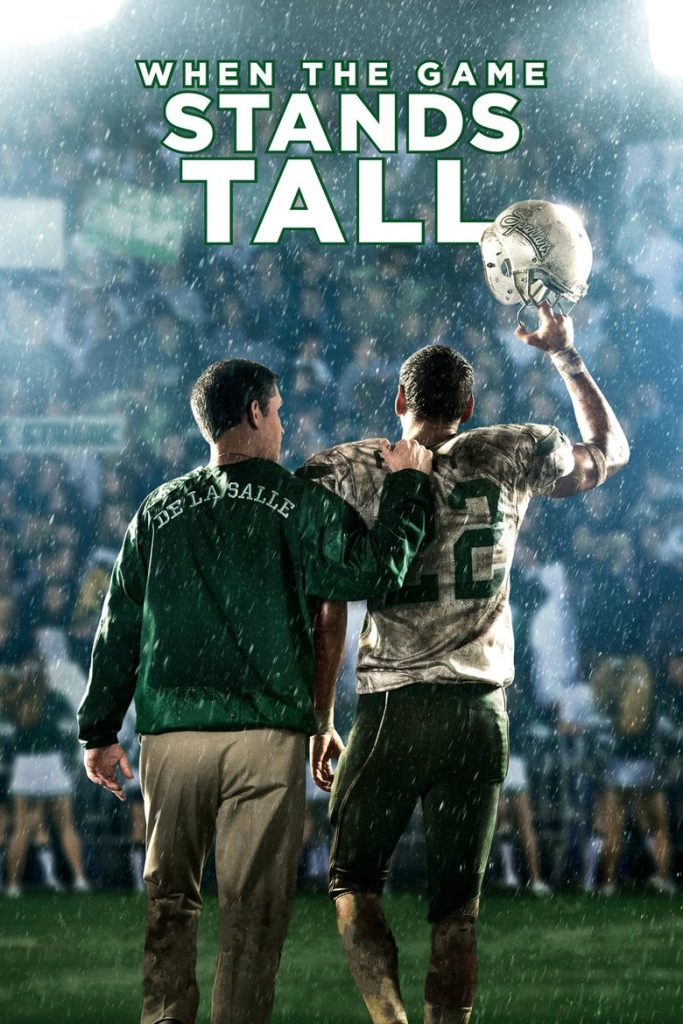
When the Game Stands Tall is a 2014 American sports drama film directed by Thomas Carter, starring Jim Caviezel, Michael Chiklis, Laura Dern, Clancy Brown, and Ser'Darius Blain. Based on a true story, it follows Coach Bob Ladouceur as he transforms a struggling high school football team into a record-breaking program with 12 consecutive undefeated seasons. The film explores themes of teamwork, discipline, perseverance, and character development both on and off the field, set against the backdrop of American high school sports culture.
Parent Guide
A family-friendly sports drama with strong positive messages about character, teamwork, and perseverance. While suitable for most children 8+, some emotional scenes and competitive intensity may require discussion.
Content breakdown
Football game action with tackles and collisions typical of the sport. One brief scene shows a character being shot (non-graphic, occurs off-screen with emotional aftermath). No gore or intense violence.
Emotional scenes involving a character's death and team grieving. Football injuries are shown but not graphic. The pressure of maintaining a winning streak creates some tense moments.
Occasional mild language like 'hell' and 'damn.' No strong profanity.
No sexual content or nudity. Brief romantic subplot is limited to hugging and supportive conversations.
No depiction of alcohol, drugs, or tobacco use.
Strong emotional themes including team unity, overcoming loss, grief after a character's death, and pressure to succeed. Uplifting moments balance the emotional weight.
Parent tips
This film is rated PG for thematic material, a scene of violence, and brief language. It's suitable for most children ages 8 and up with parental guidance. The movie emphasizes positive values like teamwork, dedication, and overcoming adversity, but includes some emotional moments related to loss and injury. Parents should be prepared to discuss the competitive aspects of sports and the film's portrayal of personal sacrifice for team success.
Parent chat guide
Parent follow-up questions
—
- What was your favorite part of the football game scenes?
- How did the players help each other on the team?
- What does it mean to be a good teammate?
- Why do you think the coach focused so much on character rather than just winning?
- How did the team change after experiencing loss?
- What sacrifices did players make for the team, and were they worth it?
- How does the film portray the pressure of maintaining a winning streak?
- What critiques might you have about the 'winning at all costs' mentality in sports?
- How does the film balance inspirational messaging with realistic challenges?
🎭 Story Kernel
The film's true subject isn't winning streaks, but the psychological aftermath of their end. It dissects how Coach Bob Ladouceur's philosophy—'We don't talk about winning'—is stress-tested by tragedy and defeat. The core conflict is internal: can a culture built on brotherhood and selflessness survive the public shame of failure? The 151-game winning streak becomes a narrative trap, a golden cage that distorts the team's identity. The driving force is the characters' struggle to redefine success not as an unbroken record, but as the courage to be imperfect together. The real victory isn't reclaiming the title, but learning to play without the armor of invincibility.
🎬 Visual Aesthetics
The cinematography employs a grounded, documentary-like aesthetic during football sequences—shaky handheld shots and tight framing in the trenches emphasize physicality and chaos. This contrasts sharply with composed, still shots in locker room speeches, visually isolating Coach Ladouceur as a calm center. The color palette is deliberately muted: earthy tones, concrete grays, and grass-stained uniforms dominate, avoiding glamorous sports-movie sheen. Symbolically, repeated shots of players linking arms or helping each other up are more prominent than touchdown celebrations, visually prioritizing connection over competition. The camera often lingers on faces in defeat longer than in victory, studying the anatomy of loss.
🔍 Details & Easter Eggs
💡 Behind the Scenes
The film is based on the true story of De La Salle High School's football team. Actor Jim Caviezel, who plays Coach Bob Ladouceur, spent extensive time with the real coach to capture his quiet, methodical demeanor. Many football scenes were filmed at actual high school stadiums in Louisiana, standing in for California, to utilize local talent and facilities. Notably, several real-life De La Salle players and coaches served as technical advisors and extras, lending authenticity to the play-calling and locker room dynamics. The production emphasized practical football action over CGI, with actors undergoing rigorous training to execute plays accurately.
Where to watch
Choose region:
- Netflix
- Netflix Standard with Ads
- Amazon Video
- Apple TV Store
- Google Play Movies
- YouTube
- Fandango At Home
Trailer
Trailer playback is unavailable in your region.