
Wild Hearts Can’t Be Broken (1991)
Story overview
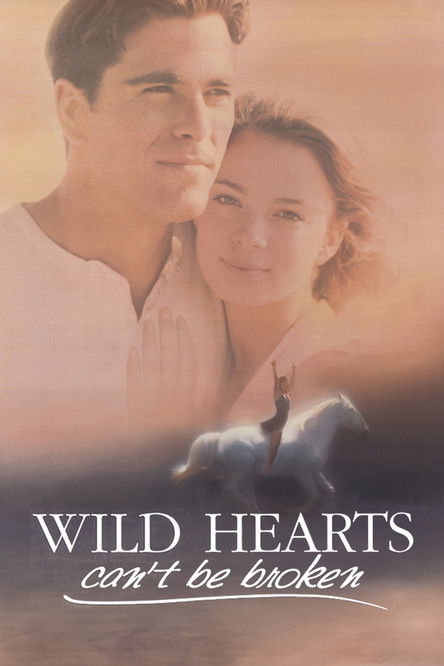
Wild Hearts Can't Be Broken is a 1991 family drama based on a true story. It follows a determined young woman who dreams of becoming a diving horse performer at a seaside show. The film explores themes of perseverance, following one's dreams, and overcoming challenges through hard work and courage. It's an uplifting story about resilience and pursuing what you love despite obstacles.
Parent Guide
A family-friendly drama with positive messages about determination and following dreams. Suitable for all ages with no concerning content.
Content breakdown
Some scenes of characters practicing dangerous stunts with horses, but presented in a non-graphic, family-appropriate manner.
No scary or disturbing content. The tone is uplifting throughout.
No offensive language present.
No sexual content or nudity.
No substance use shown.
Some emotional moments related to challenges and determination, but handled gently for family viewing.
Parent tips
This G-rated film is appropriate for all ages and offers positive messages about determination and following dreams. Parents can discuss how the main character shows resilience when facing difficulties and how she pursues her goals with courage. The movie provides opportunities to talk about historical entertainment forms and how people overcome physical challenges.
Parent chat guide
Parent follow-up questions
- What was your favorite part with the horses?
- How did the girl feel when she was practicing?
- What do you think was hard for her to do?
- Would you like to try something new like she did?
- How did she show she was brave?
- What made the main character keep trying even when things were difficult?
- How did she show courage in the story?
- What did you learn about following your dreams from this movie?
- How did the people around her help or not help her?
- What would you do if you wanted to achieve something challenging?
- What qualities helped the main character succeed in her goal?
- How does the film show the importance of perseverance?
- What historical context did you notice about the entertainment in the movie?
- How did she handle setbacks or disappointments?
- What does the title 'Wild Hearts Can't Be Broken' mean to you?
- How does this true story demonstrate the theme of resilience?
- What societal expectations might the main character have been challenging?
- How does the film portray the balance between passion and practicality?
- What does the story suggest about overcoming physical limitations?
- How might this historical context differ from modern entertainment careers?
🎭 Story Kernel
At its core, 'Wild Hearts Can't Be Broken' is less about the spectacle of diving horses and more about the quiet, brutal process of self-definition in the face of profound loss. The film explores how Sonora Webster, stripped of her primary identity as a performer, must forge a new self from the raw materials of trauma. Her drive isn't just to ride again; it's to reclaim agency over a narrative that has violently rewritten her body. The movie posits that true courage isn't the absence of fear during the 40-foot dive, but the daily, invisible labor of choosing a life of purpose over one of passive victimhood. It's a story about the will to perceive the world—and one's place in it—through a new, internal lens.
🎬 Visual Aesthetics
The film's visual language creates a stark dichotomy between spectacle and intimacy. The diving sequences are shot with a wide, awe-inspiring grandeur, emphasizing the dizzying height and the crowd's roaring spectacle. In contrast, Sonora's world after the accident becomes intensely tactile and close-up. The camera lingers on textures: the grain of wood in her home, the feel of a horse's mane, the unsettling void of her bandaged eyes. The color palette shifts from the bright, saturated carnival hues to muted, earthy tones, visually mapping her journey from external performer to internal navigator. The final dive is filmed not for the crowd's view, but for Sonora's subjective, internal experience—a triumph felt, not seen.
🔍 Details & Easter Eggs
💡 Behind the Scenes
The film is based on the true story of Sonora Carver, who continued diving for eleven years after going blind. Gabrielle Anwar performed many of her own riding stunts. The diving sequences were filmed at the actual location of the original Atlantic City Steel Pier, adding authentic period atmosphere. Interestingly, Michael Schoeffling, who played Al, largely retired from acting shortly after this film. The production meticulously recreated the diving ramp and mechanism, consulting historical records to ensure accuracy in the perilous-looking stunt work.
Where to watch
Choose region:
- Disney Plus
- Amazon Video
- Apple TV
- Google Play Movies
- YouTube
- Fandango At Home
Trailer
Trailer playback is unavailable in your region.