
Wild Strawberries (1957)
Story overview
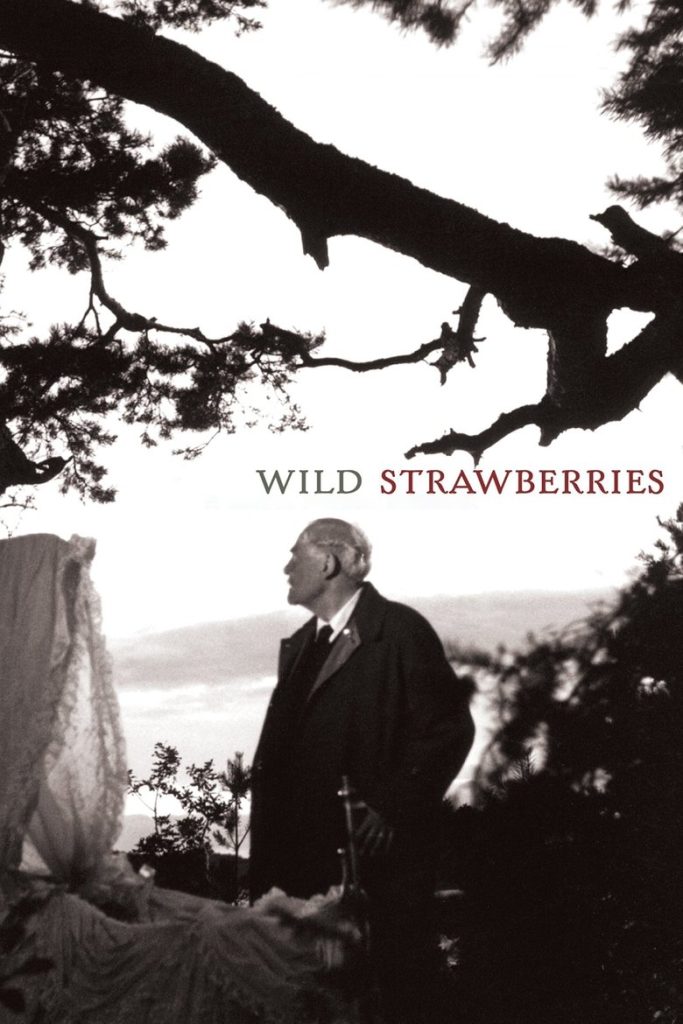
Wild Strawberries is a Swedish drama about an elderly doctor reflecting on his life during a road trip. Through encounters with various travelers and dream sequences, he examines his past relationships, regrets, and the passage of time. The film explores themes of aging, memory, and the search for meaning in life's later stages.
Parent Guide
A thoughtful, slow-paced drama about reflection and aging, suitable for mature viewers who appreciate character studies.
Content breakdown
No violence or physical danger depicted.
Some dream sequences have surreal, slightly unsettling imagery but nothing frightening.
No offensive or strong language.
No sexual content or nudity.
No substance use depicted.
Deals with themes of regret, aging, and mortality that may be emotionally complex for younger viewers.
Parent tips
This classic art film contains no violence, strong language, or explicit content, but deals with mature emotional themes. The slow pacing, black-and-white cinematography, and philosophical tone may challenge younger viewers' attention spans. The film's dream sequences and non-linear storytelling require some emotional maturity to appreciate.
Parents should consider their child's ability to engage with introspective character studies and abstract concepts about life and mortality. The film's value lies in its thoughtful exploration of human experience rather than entertainment value.
Parent chat guide
Encourage children to share their thoughts about growing older, family relationships, and how people reflect on their lives. Ask open-ended questions about what the film made them think or feel rather than testing their comprehension of specific scenes.
Parent follow-up questions
- What colors did you see in the movie?
- How did the people in the car feel?
- What was your favorite part of the trip?
- Did you see any animals or nature?
- What do you think the doctor was thinking about?
- How do people change as they get older?
- What makes a trip interesting or boring?
- Have you ever thought about things that happened long ago?
- Why do you think the doctor was remembering his past?
- What does it mean to think about your life choices?
- How do dreams help us understand our feelings?
- What makes someone feel satisfied or regretful about their life?
- How does the film use memory to explore character development?
- What commentary does the film make about aging and mortality?
- How do the dream sequences contribute to the film's themes?
- What does the film suggest about finding meaning in life's later stages?
🎭 Story Kernel
At its core, 'Wild Strawberries' is an autopsy of a life lived in emotional quarantine. The film isn't about an old man remembering his past—it's about how memory itself becomes a courtroom where the present prosecutes the past for crimes of emotional neglect. Professor Borg's journey isn't toward reconciliation but toward the terrifying realization that his intellectual achievements are merely elaborate tombstones marking where his capacity for love was buried. The characters are driven not by external goals but by the gravitational pull of regret—Borg's pilgrimage to receive an honor becomes instead a sentencing hearing where he must finally acknowledge the emotional bankruptcy behind his professional success.
🎬 Visual Aesthetics
Bergman's visual language operates as memory made manifest—the present is rendered in crisp black-and-white realism, while flashbacks shimmer with an almost tactile softness, as if we're touching the emulsion of memory itself. The famous nightmare sequence uses extreme close-ups and distorted perspectives not for horror but for psychological precision—Borg's face becomes a landscape of anxiety. The recurring visual motif of clocks without hands perfectly captures the film's central tension: time has stopped mattering quantitatively while becoming unbearably heavy qualitatively. The road itself becomes a visual metaphor for consciousness—straight and purposeful in the present, branching and recursive in memory.
🔍 Details & Easter Eggs
💡 Behind the Scenes
Victor Sjöström, who plays Professor Borg, was actually a legendary film director himself (often called 'the father of Swedish cinema') and was initially reluctant to take the role due to poor health. Bergman wrote the part specifically for him, and Sjöström's real-life frailty became part of Borg's character. The famous nightmare sequence was filmed using a specially constructed set with forced perspective—the oversized clock and distorted buildings were actually normal-sized props placed much closer to the camera. The entire film was shot in just 35 days, with Bergman completing the final edit in under a week. Many locations were actual places from Bergman's childhood, making the film's geographical journey a personal pilgrimage for the director as well.
Where to watch
Choose region:
- HBO Max
- HBO Max Amazon Channel
- Criterion Channel
- Amazon Video
- Apple TV
- Fandango At Home
- Kanopy
Trailer
Trailer playback is unavailable in your region.