
Wildlife (2018)
Story overview
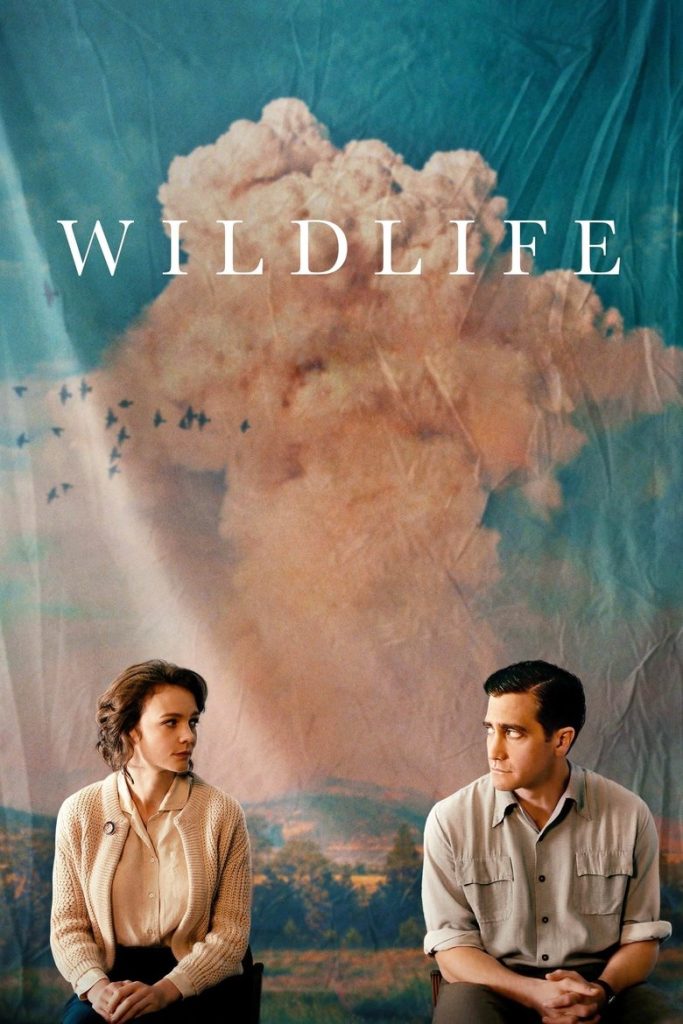
Wildlife is a 2018 American drama film directed by Paul Dano, starring Jake Gyllenhaal, Carey Mulligan, and Ed Oxenbould. Set in 1960s Montana, it follows 14-year-old Joe as his family faces turmoil when his father Jerry loses his job and decides to fight a nearby forest fire, leaving Joe and his mother Jeanette to navigate their strained relationship and personal struggles. The film explores themes of family dynamics, marital discord, and coming-of-age in a quiet, character-driven narrative.
Parent Guide
Wildlife is a thoughtful drama with mature themes suitable for teens and adults. It focuses on emotional realism rather than action or spectacle, making it more appropriate for viewers who can handle nuanced family conflicts.
Content breakdown
There is no physical violence. The main peril involves the distant forest fire, which is discussed and seen from afar but not shown as graphic or immediate danger. Some tense family arguments occur.
The film contains emotionally disturbing scenes, including marital conflict, parental abandonment, and infidelity. These themes may be unsettling for sensitive viewers, especially children. The forest fire serves as a metaphor for chaos but is not depicted in a frightening manner.
Occasional mild language such as 'hell' or 'damn' is used. No strong profanity is present.
There are implications of infidelity and brief, non-explicit romantic scenes. No nudity or graphic sexual content is shown.
Social drinking by adults is shown in a few scenes, such as at a party. No excessive or glorified substance use is depicted.
The film has a steady emotional intensity due to its focus on family dysfunction and personal struggles. Scenes of arguments, loneliness, and emotional neglect may be impactful for viewers. It's more psychologically intense than action-packed.
Parent tips
This film is suitable for mature children and teenagers due to its emotional themes and realistic portrayal of family conflict. Parents should be aware that it deals with adult issues like infidelity, job loss, and emotional neglect, which may be intense for younger viewers. The PG-13 rating reflects moderate emotional content and some mature themes. It's best viewed with parental guidance for discussions about relationships and resilience.
Parent chat guide
Parent follow-up questions
—
- How did Joe feel when his dad left?
- What did you think about the forest fire in the story?
- Why do you think Jerry decided to fight the fire?
- How did Jeanette's actions affect Joe?
- What does this film teach about family challenges?
- How does the film portray the breakdown of a marriage?
- What role does the setting play in the characters' emotions?
- Discuss Joe's coming-of-age journey amidst family turmoil.
🎭 Story Kernel
At its core, 'Wildlife' explores the brutal economics of emotional labor within a family unit. The film isn't about infidelity or abandonment in the traditional sense, but about the transactional nature of survival when dreams collapse. Jerry's retreat into firefighting isn't heroism—it's a form of emotional bankruptcy, leaving Jeanette to liquidate their remaining marital assets: her dignity, his trust, their son's innocence. Joe becomes the ledger where these debts are recorded, witnessing his mother monetize her desperation and his father's dignity burn away. The real tragedy isn't the affair with Warren Miller, but how each character learns to auction off pieces of themselves to stay afloat in a world that offers no safety nets.
🎬 Visual Aesthetics
Director Paul Dano and cinematographer Diego García employ a restrained, observational visual language that feels like eavesdropping. The 1960s Montana setting is rendered in a muted, almost dusty palette—washed-out yellows, faded greens, and the oppressive gray of smoke—mirroring the emotional austerity. Camera work is deliberately static during domestic scenes, making the rare movements (like Joe running through the field) feel seismic. The recurring motif of fire operates on multiple levels: as literal threat, as destructive purge for Jerry, and as the only source of warmth in emotionally frozen landscapes. Framing often traps characters in windows or doorways, visually emphasizing their entrapment.
🔍 Details & Easter Eggs
💡 Behind the Scenes
This marked actor Paul Dano's directorial debut, though he'd been developing the project for years with partner Zoe Kazan (who co-wrote the screenplay). Carey Mulligan prepared by studying photographs of 1960s housewives and worked with a dialect coach to master Jeanette's specific Montana accent. The film was shot in Oklahoma, not Montana, because tax incentives made production feasible. Interestingly, the wildfire sequences used minimal CGI—most were real controlled burns filmed with professional firefighters on standby. Jake Gyllenhaal, who plays Jerry, is also credited as a producer, having championed the project after reading the script.
Where to watch
Choose region:
- Netflix
- AMC Plus Apple TV Channel
- AMC+ Amazon Channel
- AMC+
- Philo
- Sundance Now
- MUBI
- MUBI Amazon Channel
- The Roku Channel
- Pluto TV
- Apple TV Store
- YouTube
- Fandango At Home
- Amazon Video
- Google Play Movies
Trailer
Trailer playback is unavailable in your region.