
WILL (2023)
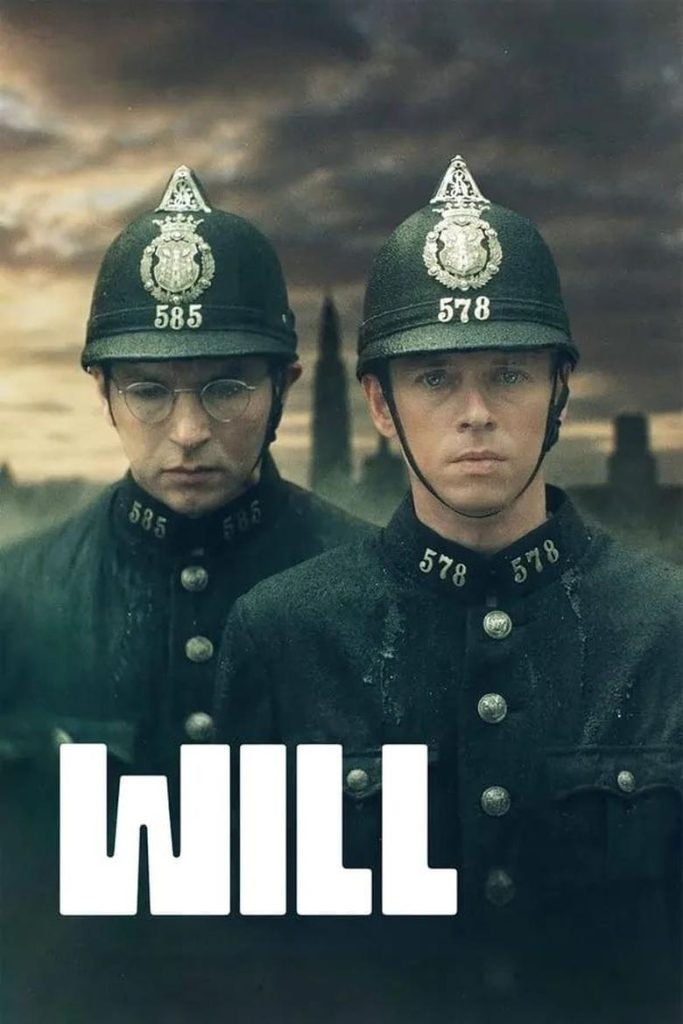
Story overview
In 2023 Belgian drama 'WILL,' two young police officers in Nazi-occupied Antwerp during World War II face moral dilemmas as they navigate between collaboration with the occupiers and resistance. Directed by Tim Mielants, this historical war film explores themes of loyalty, survival, and ethical choices under extreme pressure.
Parent Guide
A thoughtful historical drama exploring moral complexity during wartime occupation. While not graphically violent, it deals with mature themes that require emotional maturity and historical understanding.
Content breakdown
War-related tension, implied violence, and perilous situations. Scenes of intimidation, threats, and the psychological pressure of occupation. No graphic combat or gore shown directly.
Atmospheric tension of living under occupation, moral dilemmas, and ethical compromises. Themes of betrayal, fear, and difficult choices may be emotionally challenging for sensitive viewers.
Occasional strong language in tense situations. Some period-appropriate derogatory terms related to the historical context.
No sexual content or nudity depicted in the film.
Social drinking in period-appropriate settings. Characters shown smoking cigarettes, reflecting the time period.
High emotional intensity due to moral dilemmas, ethical compromises, and the psychological pressure of occupation. Characters face difficult choices with serious consequences.
Parent tips
This film deals with mature themes of war, occupation, and moral compromise. While not graphically violent, it portrays tense situations and ethical dilemmas that may be challenging for younger viewers. Best suited for older children and teens who can understand historical context and discuss the complex choices characters face.
Parent chat guide
Parent follow-up questions
—
—
- What did you notice about how the police officers treated people differently?
- Why do you think some characters made different choices than others?
- How did the setting (occupied city) affect the story?
- What moral dilemmas did the main characters face, and how did they resolve them?
- How does the film portray the complexity of collaboration versus resistance?
- What contemporary parallels can you draw from this historical situation?
- How did the film handle the tension between personal survival and ethical responsibility?
🎭 Story Kernel
WILL strips away the romanticized veneer of the Belgian resistance to expose the agonizing reality of the 'gray zone.' Set in Nazi-occupied Antwerp in 1942, the film follows Wilfried Wils, a young auxiliary policeman who finds himself paralyzed between the demands of the brutal occupiers and the desperate maneuvers of the underground resistance. It is a profound exploration of complicity, where the protagonist is neither a hero nor a villain, but a man drowning in the impossibility of remaining neutral. The narrative suggests that in a world of total war, the pursuit of self-preservation is a slow-motion moral suicide. By focusing on the mundane horrors of collaboration and the paralyzing fear of consequences, the film challenges the audience to question their own integrity under the crushing weight of a totalitarian regime. It is a story about the heavy price of silence and the corrosive nature of compromise.
🎬 Visual Aesthetics
Director Tim Mielants and cinematographer Robrecht Heyvaert craft a visual language defined by suffocating intimacy and a desaturated, somber palette. The camera often lingers on the expressive, sweat-slicked face of Stef Aerts, capturing the micro-expressions of a man losing his soul. Antwerp is depicted not as a historic gem, but as a labyrinth of shadows, damp alleyways, and claustrophobic interiors that mirror Wilfried’s internal entrapment. The use of low-key lighting emphasizes the moral murkiness, with characters frequently half-submerged in darkness. Symbolism is woven through the contrast between Wilfried’s artistic aspirations and the visceral filth of the city’s sewers, where the literal and metaphorical refuse of the occupation resides. The visual style avoids the glossy spectacle of traditional war epics, opting instead for a gritty, tactile realism that makes the historical trauma feel immediate and inescapable.
🔍 Details & Easter Eggs
💡 Behind the Scenes
The film is an adaptation of the best-selling 2016 novel 'Wil' by Jeroen Olyslaegers, which sparked significant dialogue in Belgium regarding the country's wartime history and the complexities of collaboration. Director Tim Mielants, widely recognized for his work on 'Peaky Blinders' and 'The Responder,' brought a distinctively dark, atmospheric tension to the project. Lead actor Stef Aerts underwent rigorous preparation to portray the protagonist's psychological disintegration. The production was one of the most ambitious in Flemish cinema, utilizing authentic locations in Antwerp to ground the historical narrative in a palpable sense of place and time.
Where to watch
Choose region:
- Netflix
- Netflix Standard with Ads
Trailer
Trailer playback is unavailable in your region.