
Wings of Desire (1987)
Story overview
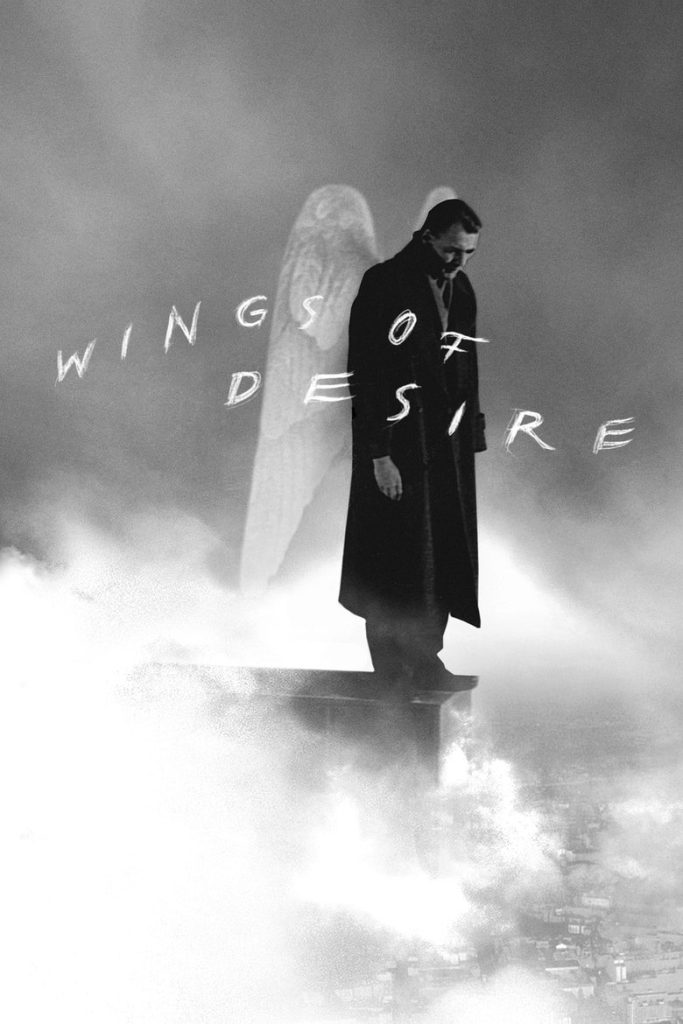
Two angels, Damiel and Cassiel, observe human life in Berlin, offering silent comfort to people. When Damiel falls in love with a trapeze artist named Marion, he yearns to become human to experience life fully, guided by actor Peter Falk's wisdom.
Parent Guide
A contemplative fantasy-drama with minimal concerning content, suitable for mature pre-teens and teens interested in artistic, philosophical films.
Content breakdown
No violence or peril depicted. The film is calm and observational.
Some scenes might be quietly intense due to themes of existential longing or loneliness, but nothing frightening. The angel perspective is gentle.
No offensive language. Dialogue is poetic and philosophical.
No sexual content or nudity. Romantic themes are expressed through dialogue and emotion.
No substance use depicted.
Emotionally resonant due to themes of love, isolation, and the desire for human experience, but presented in a reflective, not overwhelming, manner.
Parent tips
This poetic, slow-paced film explores themes of love, existence, and spirituality through an angel's perspective. It contains philosophical dialogue, black-and-white cinematography (with some color scenes), and minimal action, making it best for mature children who enjoy thoughtful stories. The PG-13 rating reflects its abstract themes rather than explicit content.
Parent chat guide
Parent follow-up questions
—
- What do you think angels do in the movie?
- How did Damiel feel when he watched people?
- Why do you think Damiel wanted to become human?
- How does the movie show the difference between watching life and living it?
- What does the film say about the human experience through an angel's eyes?
- How do the cinematic techniques (like black-and-white vs. color) enhance the themes?
🎭 Story Kernel
The film's core is the paradox of consciousness: to feel is to suffer, yet to be numb is not to live. It posits that the divine condition—omniscient observation without participation—is a form of exquisite torture. The angels, Damiel and Cassiel, are not driven by plot but by existential yearning. Damiel's choice to fall is not for love of Marion alone, but for the totality of the human sensorium: the bitter taste of coffee, the weight of a pebble, the sting of a cut. His transformation is a philosophical argument made flesh—that meaning is not found in passive understanding, but in the vulnerable, embodied act of *experience* itself, with all its attendant pain and fleeting joy.
🎬 Visual Aesthetics
Wenders and cinematographer Henri Alekan craft a sublime visual dialectic. The angel's perspective is rendered in luminous, high-contrast black and white, a serene but detached monochrome of pure observation. The camera floats, unmoored from gravity, gliding through walls and over the city. When Damiel becomes human, the film erupts into warm, grainy color—a sensory overload that is both overwhelming and profoundly beautiful. This isn't just a technical switch; the color feels *earned*, tactile, and slightly imperfect, mirroring the newfound texture of mortal life. The Library sequence, with its sea of murmuring thoughts, is a masterclass in visualizing collective interiority.
🔍 Details & Easter Eggs
💡 Behind the Scenes
The iconic library scenes were filmed in the Staatsbibliothek Berlin. Cinematographer Henri Alekan, who shot Cocteau's 'Beauty and the Beast', used his grandmother's silk stockings as a filter to create the ethereal, diffused glow of the angelic POV. Bruno Ganz and Otto Sander prepared for their angel roles by observing Berlin from the Victory Column, studying the detached perspective their characters would have. Peter Falk's role was written specifically for him after Wenders saw his profound, world-weary quality in 'Columbo'.
Where to watch
Choose region:
- HBO Max
- HBO Max Amazon Channel
- Criterion Channel
- Amazon Video
- Apple TV Store
- Google Play Movies
- YouTube
- Fandango At Home
Trailer
Trailer playback is unavailable in your region.