
Winnie the Pooh (2011)
Story overview
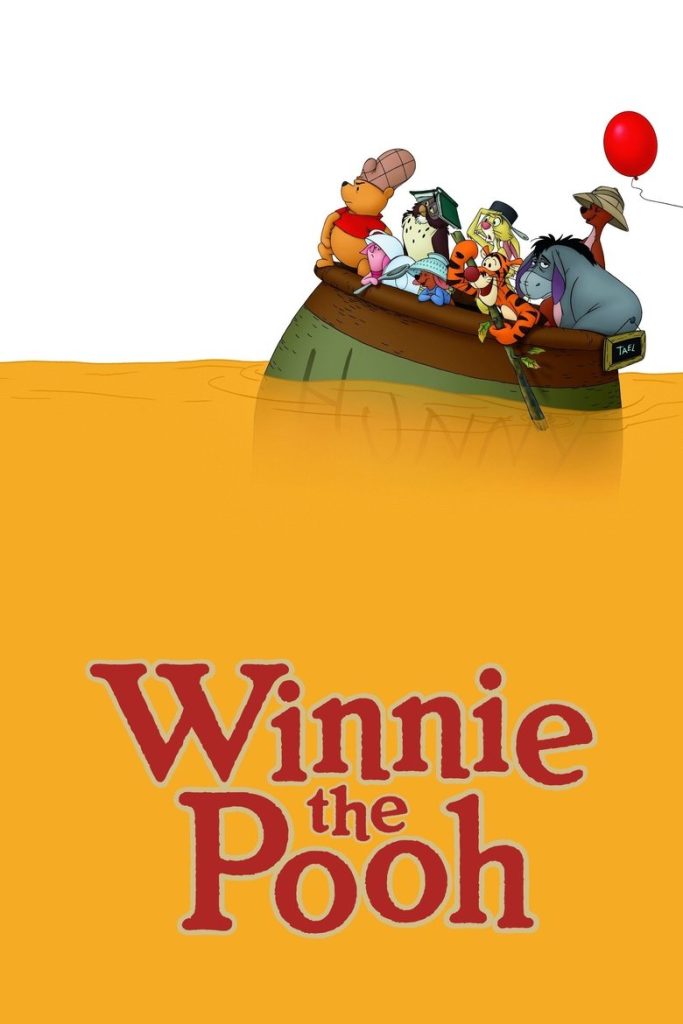
This animated family film follows Winnie the Pooh and his friends in the Hundred Acre Wood as they embark on a gentle adventure. When they misinterpret a note from Christopher Robin, the lovable characters believe their friend has been captured by a mysterious creature called the 'Backson.' The story unfolds with humor and friendship as Pooh, Tigger, Rabbit, Piglet, and others work together to rescue Christopher Robin, all while Pooh remains focused on his quest for honey. The film captures the charming simplicity and warmth of the classic characters in a lighthearted tale suitable for young viewers.
Parent Guide
A gentle, wholesome animated film perfectly suitable for all ages with no concerning content.
Content breakdown
Very mild cartoon-style peril when characters believe their friend is in danger, but everything is resolved safely and positively.
No scary or disturbing content. The 'Backson' creature is imaginary and not depicted as frightening.
No inappropriate language. All dialogue is child-friendly and positive.
No sexual content or nudity. Characters are modestly dressed cartoon animals.
No substance use. Pooh's interest in honey is portrayed as a simple, innocent desire for food.
Very mild emotional moments related to friendship and concern for others, all resolved happily.
Parent tips
This G-rated film is perfectly safe for all ages with no concerning content. The animation is bright and cheerful, featuring familiar characters from A.A. Milne's stories. The mild peril is very gentle and resolved quickly with positive outcomes, making it ideal for even the most sensitive young children. Parents can rest assured there are no scary scenes, inappropriate language, or mature themes to worry about. The film's short runtime of 63 minutes makes it manageable for young attention spans while delivering wholesome entertainment.
Parent chat guide
Parent follow-up questions
- Which character did you like the most and why?
- What was your favorite funny part in the movie?
- How did the friends help each other?
- What would you do if you thought a friend needed help?
- What do you think Pooh likes to do best?
- Why do you think the characters misunderstood the note?
- How did working together help the friends solve their problem?
- What does this movie show us about friendship?
- Have you ever had a misunderstanding with a friend like the characters did?
- What lesson do you think the characters learned?
- How did the characters' different personalities help them work as a team?
- What does the story show about how misunderstandings can happen?
- Why do you think the creators chose to make the 'Backson' imaginary?
- How does this version compare to other Winnie the Pooh stories you know?
- What positive qualities did the characters demonstrate?
- What themes about friendship and community does this story explore?
- How does the film use humor to address misunderstandings?
- What makes these classic characters still appealing to audiences today?
- How does the simple plot structure serve the film's family-friendly goals?
- What values from the original stories does this adaptation preserve?
🎭 Story Kernel
The film's core is not the episodic quests for honey or lost tails, but a profound exploration of existential anxiety and the comfort of community. Each character embodies a different facet of a child's psyche: Pooh represents simple, immediate desire; Piglet is pure, trembling anxiety; Eeyore is depressive realism; and Rabbit is obsessive control. Their adventures are less about external goals and more about navigating these internal states through gentle, non-judgmental support. The real conflict is the quiet dread of the unknown—the Heffalumps and Woozles—which is ultimately soothed not by conquest, but by the reassuring, predictable presence of friends in the Hundred Acre Wood. It's a story about how community softens the sharp edges of individual neuroses.
🎬 Visual Aesthetics
The film's hand-drawn, watercolor-inspired aesthetic is its most potent narrative tool. The soft, blurred edges and pastel palette of the Hundred Acre Wood create a visual womb, a safe container for the characters' anxieties. This stands in stark contrast to the Heffalump and Woozle dream sequence, which employs surreal, psychedelic animation, sharp angles, and oppressive, dark colors to visually externalize fear. The camera often adopts a low, child's-eye perspective, immersing us in Pooh's world. The simplicity of the animation—like the way Pooh's belly moves independently when he thinks—isn't primitive; it's a deliberate stylistic choice that prioritizes emotional expressiveness and charm over realism, making the psychological themes feel accessible and warm.
🔍 Details & Easter Eggs
💡 Behind the Scenes
The voice of Pooh, Sterling Holloway, was cast largely for his unique, gently rambling vocal quality, which the directors felt perfectly captured a 'bear of very little brain.' The iconic 'Heffalumps and Woozles' nightmare sequence was one of the most complex and expensive scenes to animate at the time, requiring elaborate effects and non-traditional techniques to achieve its surreal, frightening quality. Interestingly, the Hundred Acre Wood was based on Ashdown Forest in East Sussex, England, which the original author, A.A. Milne, visited with his son Christopher Robin.
Where to watch
Choose region:
- Disney Plus
- Amazon Video
- Google Play Movies
- YouTube
- Fandango At Home
- Apple TV
Trailer
Trailer playback is unavailable in your region.