
Winnie the Pooh: A Valentine for You (1999)
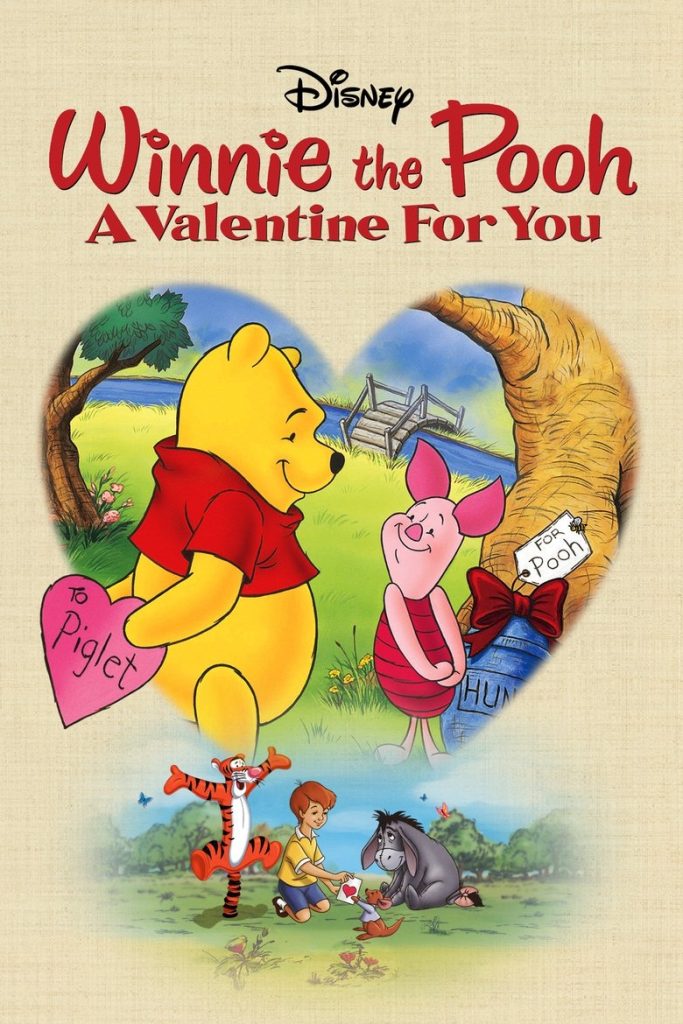
Story overview
In this short animated Valentine's Day special, Winnie the Pooh and his friends become concerned when they see Christopher Robin making a valentine for a girl. Believing he's been 'bitten by a Smitten' and become lovesick, they worry he'll no longer have time for them. Their solution involves a whimsical adventure to capture this love bug, hoping a second bite will cure him. The story celebrates friendship and reminds viewers that hearts have plenty of room for both old and new friends.
Parent Guide
A gentle, age-appropriate Valentine's Day special featuring beloved characters learning about friendship and affection.
Content breakdown
No violence or peril. The adventure is playful and non-threatening.
Nothing scary or disturbing. All content is gentle and reassuring.
No inappropriate language. All dialogue is polite and child-friendly.
No sexual content or nudity. Romantic feelings are presented in a very mild, metaphorical way appropriate for young children.
No substance use of any kind.
Mild emotional moments related to friendship concerns and caring for others. The tone remains gentle throughout.
Parent tips
This gentle Valentine's Day special is appropriate for all ages, featuring the familiar, comforting characters from the Hundred Acre Wood. The story introduces young children to the concept of romantic affection in a very mild, age-appropriate way through the metaphor of being 'bitten by a Smitten.' There are no scary moments or concerning content—just the characters' sweet misunderstanding and their loving concern for their friend Christopher Robin. The short runtime makes it easy to watch together and discuss the themes of friendship and caring for others.
Parent chat guide
Parent follow-up questions
- How did Pooh and his friends show they cared about Christopher Robin?
- What are some ways we show friends we love them?
- How did the characters work together to help their friend?
- What does Valentine's Day mean to you?
- How would you make a valentine for someone special?
- Why do you think Pooh and his friends were worried about Christopher Robin?
- What does it mean to be 'lovesick' in the story?
- How can we make room for new friends while keeping old friends?
- What are different types of love we can feel for people?
- How did the characters' misunderstanding lead to their adventure?
- How does the story use the 'Smitten' as a metaphor for romantic feelings?
- What does the story suggest about how friendships evolve when people develop new relationships?
- How might Christopher Robin have explained his feelings to his friends differently?
- What messages does the story send about expressing affection?
- How do the characters demonstrate loyalty and concern for each other?
- How does this children's story simplify complex emotions like romantic attraction?
- What cultural messages about Valentine's Day and romance does this story reinforce or challenge?
- How might the characters' reaction reflect common anxieties about friends changing relationships?
- In what ways does the story address the balance between old friendships and new relationships?
- How does the animation style and storytelling approach make these themes accessible to young viewers?
🎭 Story Kernel
The film's core isn't about romance but childhood anxiety about social rejection and the fear of being forgotten. Piglet's frantic search for a Valentine's gift stems from his deep-seated insecurity that his friends might not value him enough to include him. This drives the entire plot—his panic is not about love, but about belonging. Meanwhile, Tigger's over-the-top Valentine's Day preparations mask his own need for validation through spectacle. The resolution—where simply being present is the greatest gift—quietly argues that childhood friendships are sustained not by grand gestures but by consistent, reliable presence.
🎬 Visual Aesthetics
The animation employs a soft, watercolor-like palette dominated by warm pinks and reds, creating a cozy yet slightly overwhelming Valentine's atmosphere that visually mirrors Piglet's anxiety. Scenes of Piglet alone are often framed with wider shots that emphasize his smallness against the Hundred Acre Wood, enhancing his feeling of insignificance. During Tigger's energetic sequences, the camera adopts bouncy, exaggerated movements that mimic his personality. Symbolically, the recurring image of Piglet's empty mailbox becomes a visual representation of his fear of social exclusion.
🔍 Details & Easter Eggs
💡 Behind the Scenes
This 1999 direct-to-video special was produced during a transitional period for Disney's animation department, using a hybrid of traditional hand-drawn animation and early digital coloring techniques. Voice actor John Fiedler, who voiced Piglet, reportedly ad-libbed some of Piglet's more anxious mutterings based on his own understanding of the character's nervous personality. The production reused and modified background layouts from earlier 'Winnie the Pooh' projects to maintain visual continuity with the classic series, which explains the nostalgic texture of the Hundred Acre Wood environments.
Where to watch
Choose region:
- Disney Plus
- Amazon Video
- Google Play Movies
- YouTube