
Winnie the Pooh: Springtime with Roo (2004)
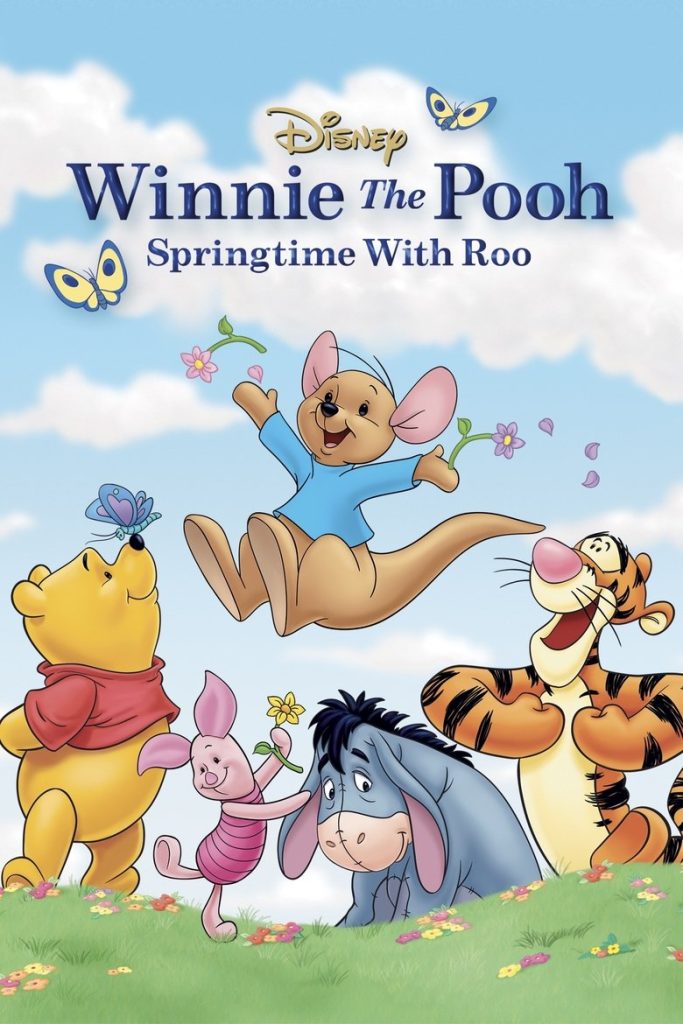
Story overview
In this delightful animated adventure, spring arrives in the Hundred Acre Wood, bringing excitement for young Roo who wants to explore and make new friends. However, Rabbit becomes overly focused on spring cleaning duties, neglecting his traditional role as Easter Bunny. Through Roo's innocent perspective and loving nature, the story gently explores themes of friendship, responsibility, and discovering what truly matters - that caring for others is more important than being in charge.
Parent Guide
A completely safe, gentle animated film with positive messages about friendship and kindness. No concerning content of any kind.
Content breakdown
No violence, fighting, or perilous situations. The story is entirely peaceful and gentle throughout.
Nothing scary or disturbing. All characters are friendly, and the setting is consistently cheerful and safe.
No inappropriate language. All dialogue is polite, friendly, and age-appropriate.
No sexual content or nudity. Characters are modestly dressed animated animals.
No substance use of any kind. Characters drink tea and eat honey in typical Winnie the Pooh fashion.
Mild emotional moments when Rabbit seems stressed about cleaning or when characters express friendship. All emotions are gentle and resolved positively.
Parent tips
This gentle G-rated film offers positive messages about friendship, kindness, and balancing responsibilities with fun. Perfect for family viewing, it features no concerning content. Young children might need help understanding Rabbit's initial reluctance to play Easter Bunny, while older children can appreciate the themes of leadership and compassion. The 65-minute runtime makes it ideal for younger attention spans.
Parent chat guide
Parent follow-up questions
- What was your favorite part of the movie?
- What color was Roo's spring flower?
- How did Rabbit feel at the beginning of the movie?
- What did Roo want to do most in spring?
- Why do you think Rabbit was so focused on cleaning?
- How did Roo help Rabbit remember what was important?
- What does it mean to be a good friend like Roo?
- Have you ever helped someone see things differently like Roo did?
- What does the movie teach us about leadership versus friendship?
- How does Rabbit's character change throughout the story?
- What responsibilities do you think are important versus which ones can wait?
- How do the different characters show love in their own ways?
- What metaphors might the spring cleaning represent in our lives?
- How does the film portray the balance between duty and joy?
- What leadership qualities does Rabbit demonstrate, both positively and negatively?
- How might this story apply to real-world situations of responsibility versus relationships?
🎭 Story Kernel
At its core, 'Springtime with Roo' explores the tension between rigid tradition and spontaneous joy. Rabbit's obsessive adherence to 'Spring Cleaning Day' rituals—modeled after his own childhood experiences with his mother—reveals how trauma can calcify into dogma. The film argues that true celebration isn't about perfect execution of inherited customs, but about creating meaningful moments that serve present relationships. Pooh's simple desire to enjoy spring becomes a revolutionary act against Rabbit's authoritarian scheduling, suggesting that the healthiest traditions evolve to accommodate human connection rather than suppress it.
🎬 Visual Aesthetics
The animation employs a deliberate visual dichotomy: Rabbit's world is depicted with sharp angles, organized spaces, and a muted palette dominated by browns and grays, reflecting his rigid mindset. In contrast, the Hundred Acre Wood's natural spaces burst with saturated greens, yellows, and floral patterns whenever characters embrace spontaneity. Camera movements become more fluid during joyful sequences, while Rabbit's cleaning montages use repetitive, mechanical pans that mirror his obsessive behavior. The visual storytelling subtly reinforces how environment reflects psychological state.
🔍 Details & Easter Eggs
💡 Behind the Scenes
This 2004 direct-to-video film marked one of Disney's final traditional hand-drawn animations before fully transitioning to CGI. Voice actor Ken Sansom recorded Rabbit's lines while battling illness, adding an unintentional layer of weariness to the character's obsessive behavior. The production team studied vintage Easter postcards for color inspiration, particularly for the spring floral sequences. Interestingly, this was among the last Winnie the Pooh projects to use the original voice cast before subsequent recastings, making it a transitional piece in the franchise's history.
Where to watch
Choose region:
- Disney Plus
- Amazon Video
- Apple TV Store
- Google Play Movies
- YouTube
- Fandango At Home
Trailer
Trailer playback is unavailable in your region.