
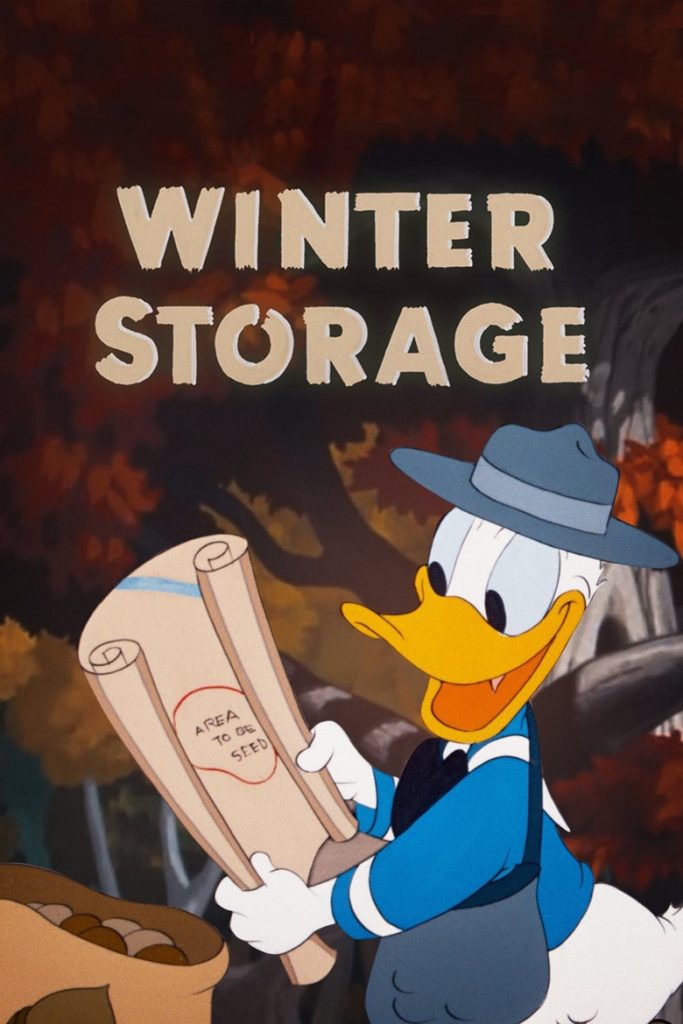
Winter Storage (1949)
Story overview
Winter Storage is a 1949 animated short film featuring Chip and Dale, two chipmunks preparing for winter. When their acorn supply runs low, they attempt to steal from Donald Duck, a park ranger who plants acorns. Donald sets traps and tries to provoke conflict between the chipmunks, but they eventually work together against him. The film is a classic comedy showcasing playful rivalry and teamwork.
Parent Guide
A classic animated short with mild cartoon conflict and positive messages about friendship and teamwork.
Content breakdown
Cartoon-style physical comedy including trapping, kicking, and chasing. No injuries or serious peril.
No frightening or disturbing content. All conflict is presented in a humorous, lighthearted manner.
No objectionable language. Characters communicate through animated expressions and sound effects.
No sexual content or nudity.
No substance use depicted.
Mild frustration and anger shown through exaggerated cartoon expressions, quickly resolved with teamwork and humor.
Parent tips
This short animated film contains mild cartoon violence typical of classic Disney shorts, including characters trapping each other, kicking, and engaging in playful physical conflicts. The humor revolves around pranks and rivalry between the chipmunks and Donald Duck, with no serious peril or lasting consequences. Parents should be aware that the characters sometimes use deception and theft (of acorns) as part of the comedic plot, which could prompt discussions about right and wrong behavior.
Parent chat guide
Parent follow-up questions
- How did the chipmunks feel when they couldn't find enough acorns?
- What happened when the characters got angry with each other?
- How did Chip and Dale help each other?
- What do animals need to get ready for winter?
- Was it okay for the chipmunks to take the acorns?
- Why do you think Donald Duck wanted to catch the chipmunks?
- How did the chipmunks' friendship help them solve their problem?
- What could the characters have done differently to avoid conflict?
- Have you ever had to work with someone even when you disagreed?
- What does this story show about teamwork?
- How does the film use humor to show conflict between characters?
- What does Donald Duck's role as a park ranger suggest about his responsibilities?
- How might the story be different if it took place today?
- What messages does the film give about problem-solving and cooperation?
- How do the characters' motivations drive the plot forward?
- How does this classic animation reflect attitudes toward nature and animal behavior from its time period?
- What commentary might the film be making about human-animal interactions?
- How does the physical comedy serve the story's themes?
- In what ways does the film balance conflict with resolution?
- How might different audiences interpret the characters' actions differently?
🎭 Story Kernel
At its core, 'Winter Storage' is a psychological thriller about the tyranny of nostalgia and the suffocating weight of material attachments. The protagonist, a man storing his deceased parents' belongings, isn't just organizing objects—he's confronting the curated version of his own history that they represent. His descent into obsession reveals how we use possessions as anchors to a past we can control, even as they prevent us from living in the present. The film's real horror isn't supernatural; it's the realization that our most cherished keepsakes can become prisons of our own making, freezing us in emotional stasis as effectively as the storage unit's climate control.
🎬 Visual Aesthetics
The film employs a deliberately claustrophobic visual language, with tight shots that make the storage unit feel both cavernous and suffocating. A desaturated blue-gray palette dominates, mimicking both winter's chill and the emotional coldness of preserved memories. The camera often lingers on objects just out of focus in the background, creating unease about what might be lurking among the boxes. Clever use of practical lighting—flickering fluorescents, the single beam of a flashlight—heightens the isolation. The most striking visual motif is the condensation of breath in the cold air, making the protagonist's anxiety literally visible while suggesting these memories are still 'breathing' in their frozen state.
🔍 Details & Easter Eggs
💡 Behind the Scenes
The storage facility was an actual decommissioned cold storage warehouse in Norway, with temperatures kept at a genuine -10°C during filming, requiring cast and crew to shoot in 20-minute intervals. Lead actor Lars Mikkelsen insisted on performing all his scenes without gloves despite the cold, believing the physical discomfort enhanced his character's deteriorating mental state. The production designer collected authentic 1970s-80s Norwegian household items from flea markets to fill the unit, with several props being donated family heirlooms from crew members. Director Anja Breien used primarily natural light from the facility's original skylights, shooting only during specific winter daylight hours over a grueling 12-week schedule.
Where to watch
Choose region:
- Disney Plus