
Witness for the Prosecution (1957)
Story overview
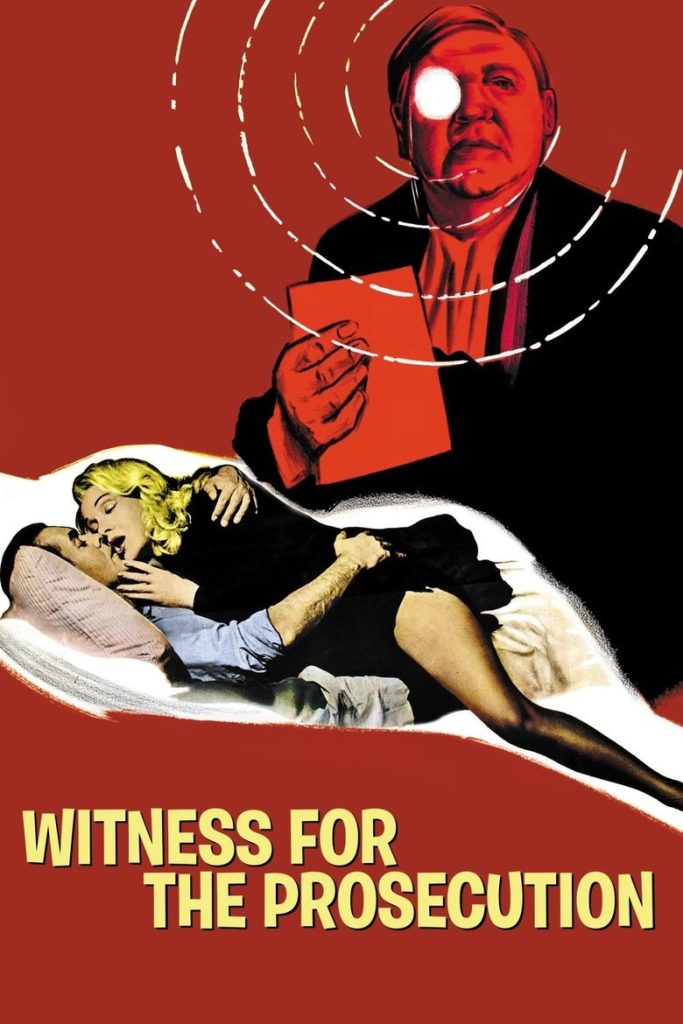
Witness for the Prosecution is a classic courtroom drama from 1957 that follows a brilliant but ailing barrister who takes on a high-profile murder case. The trial becomes increasingly complex as the testimony of the defendant's wife creates confusion and raises questions about truth and deception. The film builds tension through legal maneuvering and unexpected revelations, culminating in a famous twist ending that has made it a beloved mystery.
Parent Guide
A classic courtroom mystery suitable for mature children who can handle discussions of crime and moral ambiguity without graphic content.
Content breakdown
The film centers on a murder trial but shows no violence on screen. There are discussions of a violent crime and some tense courtroom moments.
Some suspenseful moments in court and themes of betrayal might be unsettling for sensitive viewers, but nothing visually frightening.
No offensive language; typical 1950s courtroom dialogue.
No sexual content or nudity; characters are professionally dressed throughout.
Social drinking in a few scenes, consistent with 1950s depictions.
High-stakes courtroom drama with themes of life-and-death consequences, deception, and moral dilemmas create sustained tension.
Parent tips
This film is primarily a courtroom drama focused on legal strategy, testimony, and moral ambiguity rather than graphic content. Parents should be aware that the central themes involve murder, deception, and betrayal, which might be intense for younger viewers. The film's black-and-white cinematography and classic Hollywood style may feel dated to modern children, but its clever plot and strong performances make it engaging for older audiences who enjoy mysteries.
Parent chat guide
Parent follow-up questions
- What did you think about the people talking in the big room?
- How did the movie make you feel?
- What was your favorite part?
- Did you see anyone being kind?
- What colors did you notice in the movie?
- Why do you think the lawyers were asking so many questions?
- What makes someone a good friend in this story?
- How do people show they're telling the truth?
- What would you do if you saw something unfair happening?
- What was the most surprising part for you?
- What strategies did the lawyers use to win their case?
- How did different characters' perspectives affect the story?
- What does this film show about how justice works?
- Why is it sometimes hard to know who's telling the truth?
- What would you have done differently if you were one of the characters?
- How does the film explore the theme of deception versus truth?
- What commentary does the movie make about the legal system?
- How do the characters' personal motivations affect their actions?
- What does the ending suggest about justice and morality?
- How does the film's 1950s setting influence its storytelling approach?
🎭 Story Kernel
At its core, 'Witness for the Prosecution' explores the terrifying fluidity of truth in adversarial systems. The film isn't about whether Leonard Vole is guilty or innocent—it's about how truth becomes a commodity to be packaged, sold, and manipulated by everyone involved. Each character, from the cunning Christine Vole to the ailing Sir Wilfrid Robarts, is driven by self-interest disguised as principle. Christine's shocking courtroom confession reveals the ultimate truth: in a system built on performance, the most convincing actor wins, regardless of objective reality. The final twist—Leonard's actual guilt and Christine's revenge—serves as a brutal commentary on how justice systems can be weaponized by those who understand their theatrical nature.
🎬 Visual Aesthetics
Billy Wilder masterfully uses the courtroom's physical constraints to create psychological tension. The camera frequently traps characters in tight frames—Sir Wilfrid's oxygen mask becomes both medical device and visual prison, while the witness box functions as a stage for performance. The black-and-white cinematography eliminates emotional color cues, forcing viewers to judge characters solely through dialogue and expression. Notice how the camera lingers on faces during testimony, creating intimacy with deception. The London fog outside the courtroom windows serves as visual metaphor for the murky truth within—everyone can see shapes moving, but clarity remains impossible until the final, devastating revelation.
🔍 Details & Easter Eggs
💡 Behind the Scenes
Marlene Dietrich fought for the role of Christine Vole against studio resistance, ultimately performing her own German accent despite being fluent in English. Tyrone Power, playing Leonard Vole, was in the final year of his life—his occasional weariness adds authentic depth to a character pretending to be wrongfully accused. The courtroom set was so meticulously detailed that visitors mistook it for a real Old Bailey courtroom. Most remarkably, the original theatrical production requested audiences keep the ending secret—a tradition Wilder honored by including a spoken plea at the film's conclusion, making 'Witness' one of cinema's first major spoiler-sensitive experiences.
Where to watch
Choose region:
- fuboTV
- MGM+ Amazon Channel
- MGM Plus Roku Premium Channel
- MGM Plus
- Philo
- Amazon Video
- Apple TV
- Google Play Movies
- YouTube
- Fandango At Home
- Spectrum On Demand
- Tubi TV
Trailer
Trailer playback is unavailable in your region.