
Wonder (2017)
Story overview
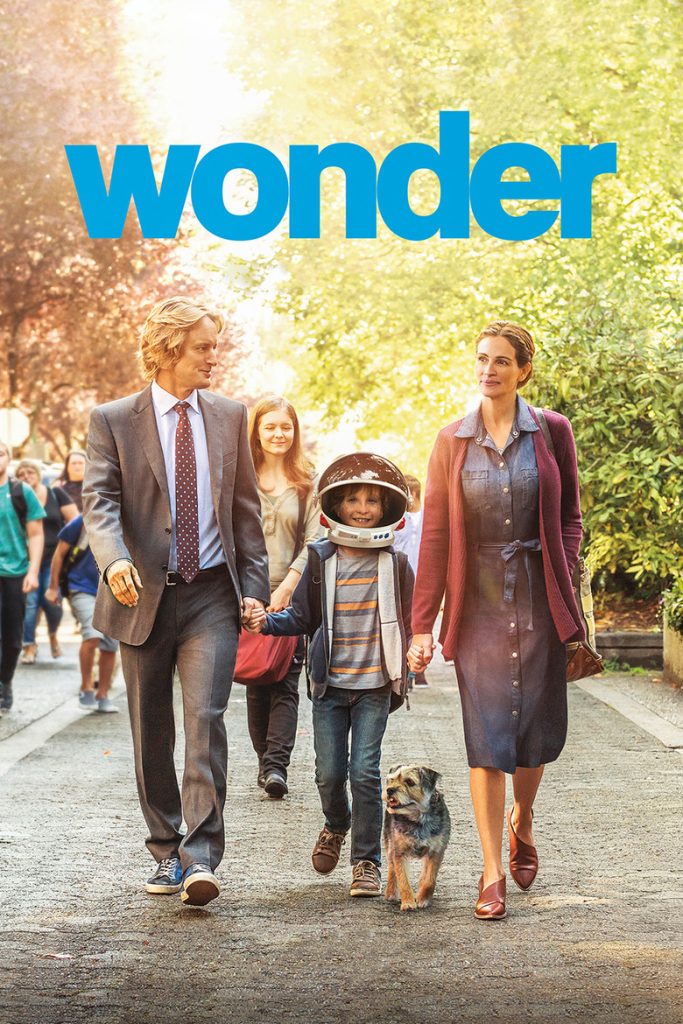
Wonder is a heartwarming family drama about August 'Auggie' Pullman, a boy with facial differences who enters fifth grade at a mainstream elementary school for the first time. The film follows his journey as he navigates friendships, bullying, and acceptance while his family and classmates learn valuable lessons about kindness and empathy. Through multiple perspectives, the story explores themes of courage, compassion, and the importance of looking beyond appearances.
Parent Guide
A family-friendly drama promoting empathy and kindness with minimal concerning content.
Content breakdown
Some brief bullying incidents including pushing and verbal harassment, but no physical violence.
Emotional scenes of exclusion and bullying that may be upsetting to sensitive viewers.
Very mild language such as 'stupid' or 'weird' in bullying contexts.
No sexual content or nudity.
No substance use depicted.
Strong emotional themes around acceptance, bullying, and family relationships that may elicit tears.
Parent tips
Wonder is an excellent film for family viewing that promotes important discussions about empathy, kindness, and acceptance of differences. The PG rating primarily reflects emotional themes and some mild bullying situations rather than any concerning content. This movie provides a wonderful opportunity to talk with children about how we treat others, especially those who might look or act differently from us.
Parents should be prepared for emotional moments as the film deals with themes of exclusion and bullying, though these are handled sensitively and ultimately lead to positive messages. The film's multiple perspectives help children understand different viewpoints, making it particularly valuable for discussions about empathy and social dynamics.
Parent chat guide
Use the film's bullying scenes as teachable moments about standing up for others and the impact of our words and actions. Discuss how small acts of kindness can make big differences in people's lives, just as they do in the movie. Encourage your child to think about times they've felt excluded or witnessed exclusion and how they responded.
Parent follow-up questions
- How did Auggie feel when other kids stared at him?
- What are some kind things the characters did for each other?
- What makes you special and different from your friends?
- How can we be good friends to people who feel lonely?
- What did you learn about being brave from this movie?
- Why do you think some kids were mean to Auggie at first?
- How did Auggie's friends help him feel included?
- What would you do if you saw someone being bullied at school?
- How did different characters see the same situations differently?
- What does 'choose kind' mean to you after watching this movie?
- How does the movie show that everyone has struggles, even if they're not visible?
- What role did peer pressure play in how characters treated Auggie?
- How did the multiple perspectives help you understand the story better?
- What real-life situations remind you of the challenges Auggie faced?
- How can schools create more inclusive environments for all students?
- How does the film address the difference between pity and genuine acceptance?
- What societal pressures contribute to bullying and exclusion in schools?
- How do the family dynamics in the film affect each character's journey?
- What does the film suggest about the relationship between appearance and identity?
- How can communities better support individuals with visible differences?
🎭 Story Kernel
At its core, 'Wonder' explores how we navigate difference in a world obsessed with sameness. While Auggie's facial difference is the catalyst, the film reveals that every character—Via struggling with sibling neglect, Jack wrestling with social pressure, Miranda hiding behind a new identity—carries invisible scars. The driving force isn't Auggie's quest for acceptance, but how his presence acts as a mirror forcing others to confront their own insecurities and hypocrisies. The real transformation occurs not when Auggie wins over his classmates, but when characters like Julian's mother must acknowledge their own complicity in perpetuating cruelty through well-meaning but misguided protection.
🎬 Visual Aesthetics
Director Stephen Chbosky employs a deliberate visual strategy that mirrors Auggie's perspective. Early scenes use tight close-ups and shallow focus, visually representing how Auggie's world feels small and intimidating. The color palette evolves from muted, almost clinical tones in hospital and home settings to warmer, more vibrant hues as Auggie gains confidence. Particularly effective is the use of Auggie's astronaut helmet—not just as a physical shield, but as a visual metaphor for how we all create emotional armor. The camera frequently shoots Auggie from behind or in shadow during difficult moments, then gradually brings him into full light as he finds acceptance.
🔍 Details & Easter Eggs
💡 Behind the Scenes
Jacob Tremblay spent 90 minutes daily in makeup to become Auggie, a process that helped him understand the character's daily burden. The film's cafeteria scenes were shot in a real middle school during summer break, using actual students as extras to capture authentic adolescent dynamics. Julia Roberts initially hesitated about playing Isabel Pullman, concerned about taking focus from Auggie's story, but was convinced by the script's balance of family perspectives. Author R.J. Palacio makes a cameo as the Pullmans' pediatrician.
Where to watch
Choose region:
- Netflix
- Netflix Standard with Ads
- MovieSphere+ Amazon Channel
- Amazon Video
- Apple TV
- Google Play Movies
- YouTube
- Fandango At Home
- Plex
Trailer
Trailer playback is unavailable in your region.