
Wonka (2023)
Story overview
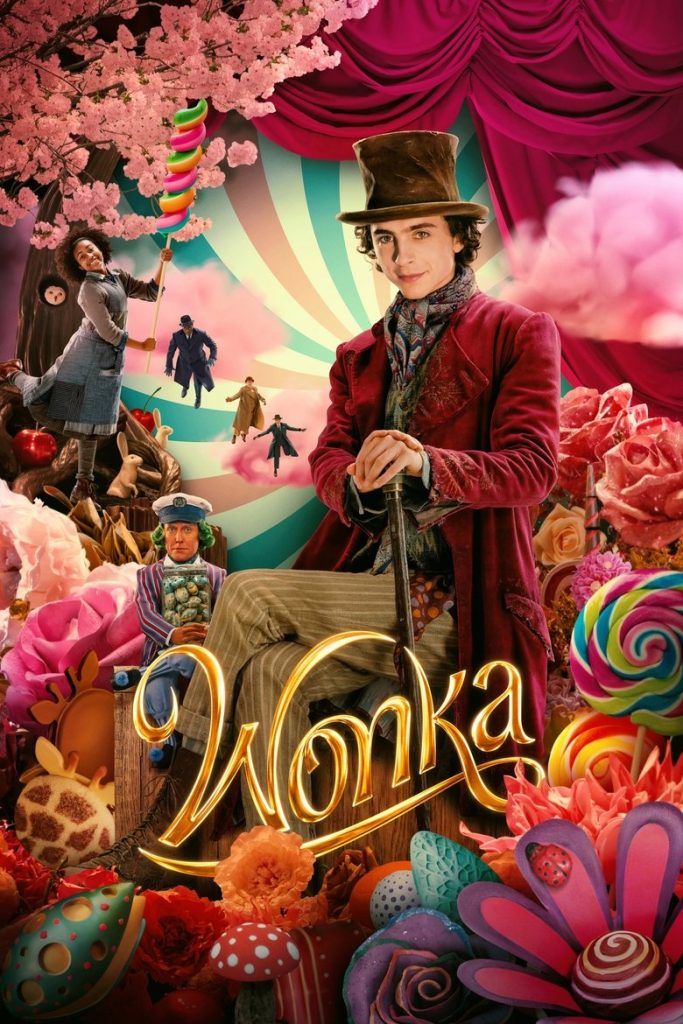
Wonka is a 2023 family fantasy comedy that tells the origin story of the iconic chocolatier Willy Wonka. The film follows young Willy as he arrives in a city with dreams of opening his own chocolate shop, facing challenges from established chocolate cartels. With magical elements and musical numbers, it's a whimsical adventure about creativity, perseverance, and the power of dreams. The movie maintains a lighthearted tone suitable for family viewing with its PG rating.
Parent Guide
A family-friendly fantasy comedy with mild peril and positive themes.
Content breakdown
Some scenes show characters in mild peril or facing obstacles from antagonists, but no physical violence.
Fantasy elements and mild suspense when characters face challenges, but nothing truly frightening.
No offensive language expected in this family film.
No sexual content or nudity in this family-oriented movie.
No depiction of substance use.
Mild emotional moments when characters face setbacks, but overall positive and uplifting tone.
Parent tips
Wonka is a family-friendly film with a PG rating, making it generally appropriate for most children. The fantasy elements and comedic tone create an engaging experience without intense content. Parents should be aware that some scenes involve mild peril as the protagonist faces obstacles from antagonists, but these are resolved positively. The movie's themes of perseverance and following one's dreams provide good discussion points for children.
Parent chat guide
Parent follow-up questions
- What was your favorite part of the movie?
- What colors did you see in the chocolate factory?
- How did Willy Wonka make people happy?
- What would you make if you had a chocolate shop?
- Who was your favorite character and why?
- What challenges did Willy Wonka face in the movie?
- How did the characters work together to solve problems?
- What does it mean to have a dream like Willy Wonka did?
- How did the movie show that being creative is important?
- What would you do if someone tried to stop you from doing something you love?
- What qualities made Willy Wonka successful despite obstacles?
- How did the movie balance fantasy elements with real-world challenges?
- What messages about perseverance did the film convey?
- How were friendships portrayed in the story?
- What did you think about how the movie showed competition between businesses?
- How does the film explore themes of entrepreneurship and creativity?
- What commentary might the movie be making about established systems versus innovation?
- How effectively did the film balance whimsical elements with character development?
- What did you think about the portrayal of determination in the face of adversity?
- How might this origin story connect to the classic Willy Wonka character you may know from other adaptations?
🎭 Story Kernel
At its core, Wonka is a musical fable about the triumph of communal optimism over institutionalized greed. Moving away from the eccentric recluse seen in previous adaptations, this version presents Willy Wonka as a penniless dreamer fueled by a promise to his late mother. The film explores the tension between the 'Chocolate Cartel'—a corrupt monopoly representing stagnant, corporate cruelty—and Wonka’s disruptive, imaginative spirit. The narrative emphasizes that genius is not a solitary trait but a collaborative effort, highlighted by Wonka’s partnership with the orphan Noodle. By focusing on themes of literacy, social mobility, and the emotional weight of a 'silver lining,' the movie posits that the true value of any creation lies not in the product itself, but in the joy and connection it facilitates among the marginalized people who help build it.
🎬 Visual Aesthetics
Director Paul King and cinematographer Chung-hoon Chung craft a 'heightened reality' that blends European architectural influences into a whimsical, nameless metropolis. The visual palette serves as a narrative tool, contrasting the drab, desaturated grays of Mrs. Scrubbit’s subterranean laundry with the explosive, saturated colors of Wonka’s confectionery inventions. Symbolism is woven into the production design; the 'Hoverchoc' represents the literal uplifting power of wonder in a restrictive society, while the intricate, clockwork nature of Wonka’s portable factory reflects his handcrafted approach to magic. The cinematography utilizes sweeping, theatrical movements during musical sequences to evoke a sense of classic Hollywood splendor. This aesthetic choice grounds the fantasy in a tactile world where the shimmer of chocolate and the threadbare textures of the characters' clothing feel equally authentic and meaningful.
🔍 Details & Easter Eggs
💡 Behind the Scenes
Timothée Chalamet performed his own singing and dancing, having been cast by Paul King after the director viewed Chalamet's viral high school musical performances. Hugh Grant’s role as the Oompa-Loompa was specifically designed to capture the 'sardonic and biting' personality described in Roald Dahl’s original books, rather than the more subservient versions seen in prior films. To maintain visual authenticity, the production employed a professional chocolatier, Gabriella Cugno, to create thousands of pieces of actual, edible chocolate for the set. The film’s production design by Nathan Crowley intentionally avoided CGI for many of the complex mechanical props to ensure a tangible, 'old-world' feel.
Where to watch
Choose region:
- HBO Max
- HBO Max Amazon Channel
- Cinemax Amazon Channel
- Cinemax Apple TV Channel
- Amazon Video
- Apple TV
- Google Play Movies
- YouTube
- Fandango At Home
- Plex
Trailer
Trailer playback is unavailable in your region.