
Wreck-It Ralph (2012)
Story overview
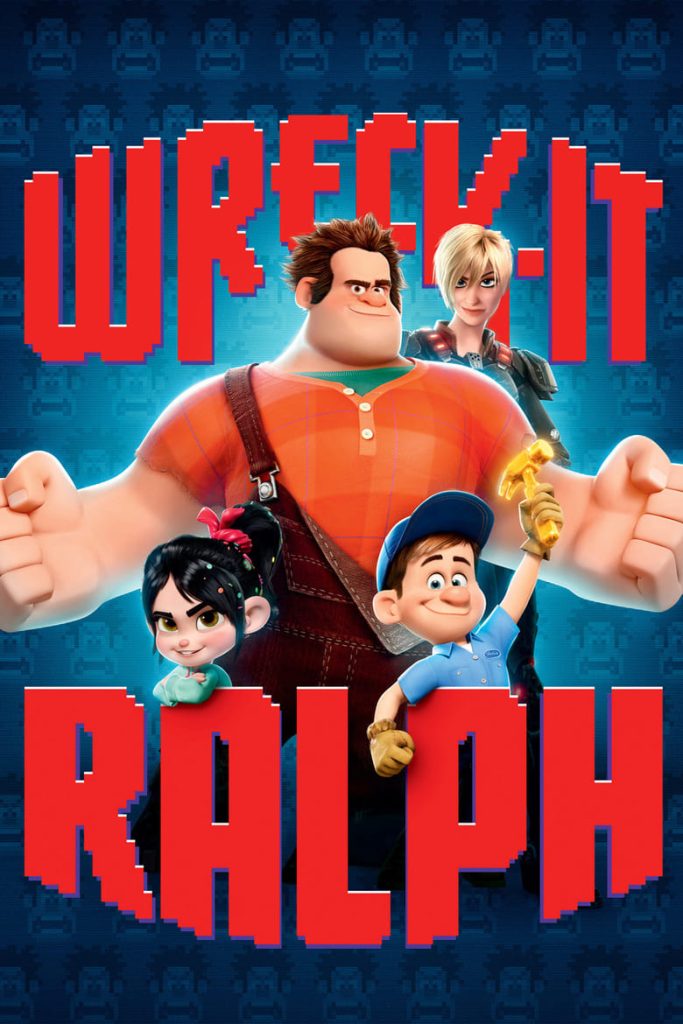
Wreck-It Ralph follows a video game villain who wants to prove he can be a hero. He travels between different arcade games, encountering various challenges and characters. The story explores themes of friendship, identity, and redemption in a colorful animated world.
Parent Guide
A family-friendly animated adventure with positive messages about friendship and self-acceptance, suitable for most school-age children.
Content breakdown
Cartoon-style action with video game violence, including alien battles and mild peril. No graphic injuries shown.
Some intense scenes in alien invasion sequences and emotional moments of rejection. The candy-themed world is generally cheerful.
No offensive language. Mild video game-style exclamations.
No sexual content or nudity.
No substance use depicted.
Some emotional moments involving friendship challenges and self-doubt, resolved positively.
Parent tips
This animated adventure features mild cartoon violence and peril typical of video game settings. Some scenes might be intense for very young viewers, particularly in the first-person shooter game sequence with alien invaders. The film's positive messages about friendship and self-acceptance make it suitable for most school-age children.
Parents should be aware that the movie includes some emotional moments when characters face rejection or danger. The PG rating reflects these elements rather than any inappropriate content. The colorful candy-themed world and video game references will likely appeal to children familiar with gaming.
Parent chat guide
Consider discussing how Ralph learns that being a hero isn't about being perfect, but about doing the right thing. You could also talk about how Vanellope faces challenges and how friends support each other. These conversations can help children process the movie's messages about identity and acceptance.
Parent follow-up questions
- What was your favorite colorful part of the movie?
- How did Ralph help his friends?
- What games do you like to play?
- How did the characters feel when they were happy?
- What candy from the movie looked the most delicious?
- Why did Ralph want to be a hero instead of a villain?
- How did the characters work together to solve problems?
- What does it mean to be a good friend in the movie?
- How did the different video game worlds look different?
- What lesson did Ralph learn by the end?
- How does the movie show that people can change and grow?
- What challenges did the characters face in their different games?
- How did the movie make you think about video game characters differently?
- What does the story say about judging people by their roles?
- How did friendship help the characters overcome obstacles?
- How does the movie explore themes of identity and self-acceptance?
- What commentary does the film make about video game culture and character archetypes?
- How do the different game worlds represent different aspects of the characters' journeys?
- What does the story suggest about redemption and second chances?
- How does the animation style enhance the storytelling about digital worlds?
🎭 Story Kernel
At its core, 'Wreck-It Ralph' explores the existential crisis of being typecast—both literally and metaphorically. Ralph's journey isn't about becoming a hero but about redefining what heroism means when the system labels you as 'bad.' The film cleverly parallels video game programming with social programming: characters are trapped by their coded purposes, much like people are confined by societal roles. Vanellope's glitch represents the beautiful imperfections that make us unique, while King Candy's obsession with control mirrors how systems suppress individuality to maintain order. The real conflict isn't Ralph versus Felix—it's self-acceptance versus external validation.
🎬 Visual Aesthetics
The film masterfully employs distinct visual languages for each game world: Fix-It Felix Jr. uses warm, nostalgic 8-bit aesthetics with limited animation cycles, Sugar Rush explodes with hyper-saturated candy colors and smooth CGI fluidity, and Hero's Duty contrasts with dark, gritty military realism. Camera work shifts accordingly—static side-scrolling perspectives in the arcade games versus dynamic, cinematic angles in Sugar Rush. The 'cy-bugs' visual design cleverly blends organic and mechanical elements, symbolizing how unchecked code can corrupt entire systems. Ralph's character model subtly evolves throughout, his pixelated edges softening as he develops emotionally.
🔍 Details & Easter Eggs
💡 Behind the Scenes
Director Rich Moore insisted on authentic arcade sounds, recording actual 1980s arcade cabinets rather than using digital recreations. The voice casting includes brilliant meta-humor: John C. Reilly as Ralph brings everyman vulnerability to a 'villain,' while Jane Lynch's Sergeant Calhoun parodies overly serious military characters. Sugar Rush's design required creating 200 unique candy assets, with animators studying real sugar crystallization under microscopes. The film's development involved consulting with actual game designers, including Nintendo veterans, to ensure authentic representation of gaming culture across decades.
Where to watch
Choose region:
- Disney Plus
- Amazon Video
- Apple TV
- Google Play Movies
- YouTube
- Fandango At Home
Trailer
Trailer playback is unavailable in your region.