
X-Men: Days of Future Past (2014)
Story overview
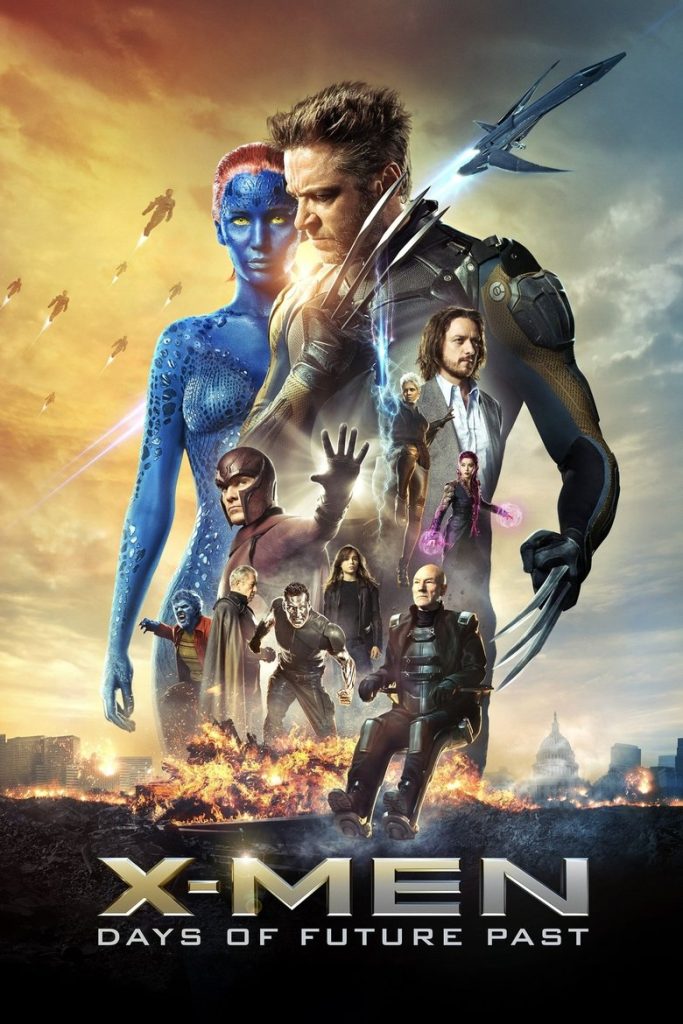
X-Men: Days of Future Past is a 2014 science fiction action film where mutants face extinction from powerful robotic Sentinels. To prevent this dark future, Wolverine is sent back in time to 1973 to change key events. The movie combines time-travel elements with superhero action as characters from different eras work together to alter history. It features themes of sacrifice, cooperation, and fighting against persecution.
Parent Guide
A sci-fi action film with complex themes and intense sequences best suited for mature pre-teens and teenagers.
Content breakdown
Frequent action violence including futuristic battles, character deaths, and perilous situations. Some hand-to-hand combat and weapon use.
Disturbing scenes of a dystopian future, some character deaths, and tense moments throughout. The Sentinels may be intimidating to sensitive viewers.
Occasional mild language typical of PG-13 action films. No strong profanity.
No sexual content or nudity present in the film.
Brief social drinking in 1970s settings, but not a focus of the story.
Emotional moments involving sacrifice, loss, and high-stakes decisions. The time-travel premise adds complexity to character relationships.
Parent tips
This PG-13 rated film contains moderate to strong violence with intense action sequences, peril, and some disturbing scenes involving futuristic warfare and character deaths. The time-travel plot may be complex for younger viewers, and there are moments of emotional intensity as characters face difficult choices. Parents should be aware that while there's no explicit sexual content or strong language, the action and sci-fi elements create a tense atmosphere suitable for mature pre-teens and teenagers.
Parent chat guide
Parent follow-up questions
- Which character did you like best and why?
- What was your favorite part of the movie?
- How did the characters help each other?
- What colors did you see in the movie?
- Did any parts make you feel happy or scared?
- Why do you think the characters needed to work together?
- What would you do if you could travel through time?
- How did the characters show bravery in the story?
- What was the biggest problem they had to solve?
- How did the movie make you feel during the action scenes?
- What do you think the movie says about prejudice and acceptance?
- How does time travel create challenges for the characters?
- What sacrifices did characters make for the greater good?
- How do the different time periods affect the story?
- What leadership qualities did you notice in the characters?
- How does the film explore the ethics of changing history?
- What commentary does the movie make about fear of difference?
- How do the characters' motivations evolve throughout the story?
- What parallels can you draw between the film's conflicts and real-world issues?
- How does the film balance action with character development?
🎭 Story Kernel
At its core, 'Days of Future Past' explores the cyclical nature of prejudice and violence through a temporal paradox. The film's driving force isn't heroism but desperation—both timelines feature mutants fighting not for victory but mere survival. Professor X's journey from broken idealist to renewed leader mirrors humanity's capacity for change, while Mystique's pivotal choice represents the rejection of predetermined destinies. The narrative cleverly uses time travel not as a gimmick but as a metaphor for second chances, asking whether altering one moment can break generational cycles of hatred. Magneto's consistent radicalism serves as the dark mirror to Xavier's hope, creating tension about which path truly prevents annihilation.
🎬 Visual Aesthetics
Bryan Singer establishes visual duality through starkly contrasting timelines. The future scenes employ desaturated blues and grays, with sterile, claustrophobic frames emphasizing mutant confinement. 1970s sequences burst with warm, earthy tones and wider shots reflecting possibility. The Quicksilver kitchen scene's slow-motion ballet of chaos demonstrates how mutant abilities can be beautiful rather than destructive. Sentinels evolve visually from clunky 70s prototypes to sleek future predators, mirroring humanity's advancing hatred. Camera work during the Paris peace talks deliberately isolates Mystique in frames, visually emphasizing her loneliness before her fateful decision.
🔍 Details & Easter Eggs
💡 Behind the Scenes
The film's complex production involved merging two X-Men franchises, requiring delicate contract negotiations with original and First Class cast members. Quicksilver's kitchen scene took three weeks to film with Evan Peters eating 50 pies. The future Sentinels' design incorporated organic and mechanical elements to appear both alien and familiar. Hugh Jackman suggested Wolverine's nude scene as a humorous callback to his first X-Men appearance. Singer studied 1970s political thrillers like 'All the President's Men' to capture the era's paranoid aesthetic.
Where to watch
Choose region:
- Disney Plus
- Amazon Video
- Apple TV
- Google Play Movies
- YouTube
- Fandango At Home
Trailer
Trailer playback is unavailable in your region.