
Yojimbo (1961)
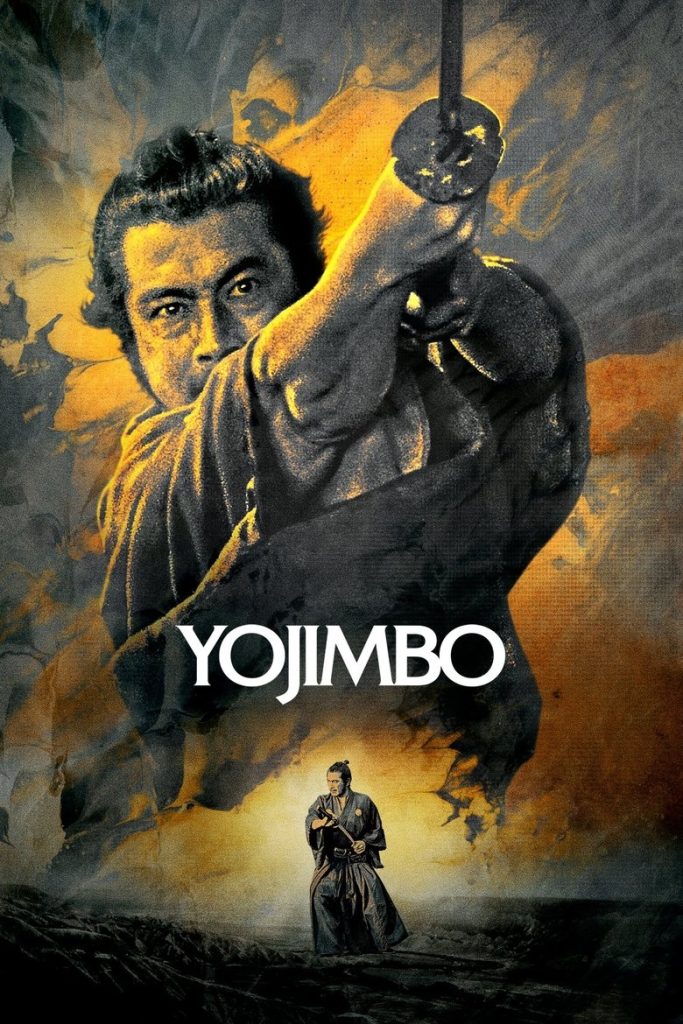
Story overview
Yojimbo is a classic Japanese samurai film set in feudal Japan. It follows a masterless samurai who arrives in a town controlled by two rival criminal gangs. He cleverly plays both sides against each other to clean up the corrupt town. The film explores themes of honor, deception, and justice through its atmospheric storytelling.
Parent Guide
A classic samurai film with stylized violence and mature themes of corruption and moral ambiguity.
Content breakdown
Stylized sword fights and combat with some blood shown. Characters are killed, but not in graphic detail.
Tense situations and conflict between characters. Some scenes may be intense for sensitive viewers.
No concerning language in the English subtitles.
No sexual content or nudity.
Characters are shown drinking sake in social settings.
Themes of deception, moral conflict, and life-or-death situations create sustained tension.
Parent tips
Yojimbo contains stylized violence typical of samurai films, including sword fights and some bloodshed. The story involves mature themes of corruption, manipulation, and moral ambiguity that may require explanation for younger viewers. While not graphic by modern standards, the tension and conflict throughout may be intense for sensitive children.
Parent chat guide
Parent follow-up questions
- What did you think about the samurai's clothes?
- How did the music make you feel?
- What was your favorite part of the movie?
- Why do you think the samurai helped the town?
- How did the two groups in the town treat each other?
- What makes someone a hero in this story?
- What methods did the samurai use to solve the town's problems?
- How does the film show the consequences of greed?
- What does honor mean to the different characters?
- How does the film comment on violence as a solution to problems?
- What does the protagonist's manipulation of both sides say about morality?
- How does the setting influence the characters' choices and values?
🎭 Story Kernel
At its core, 'Yojimbo' is a cynical deconstruction of capitalism and human nature, where morality is a currency and loyalty is always for sale. The unnamed ronin Sanjuro isn't a traditional hero; he's an economic opportunist who exploits the town's existing power vacuum. He doesn't fight for honor or justice, but to create the most profitable chaos, pitting two equally corrupt merchant factions against each other. The film argues that in a system driven solely by profit, the most rational actor is the amoral mercenary who understands that everyone has a price. The characters are driven not by ideology but by base greed and fear, making Sanjuro's manipulation chillingly effective.
🎬 Visual Aesthetics
Kurosawa's visual language is stark and theatrical, framing the dusty, wind-swept main street like a stage for human folly. The camera often adopts Sanjuro's detached, observational perspective, using deep focus to let us watch schemes unfold simultaneously in foreground and background. The action is brutally efficient, not elegant; the final showdown is a messy, desperate brawl, not a duel. Symbolism is direct: the town's coffin-maker, whose business booms, is the only honest merchant. The persistent wind and blowing dust visually reinforce the theme of moral decay and the ephemeral nature of the factions' power.
🔍 Details & Easter Eggs
💡 Behind the Scenes
Toshiro Mifune's iconic slouch and shoulder-scratching mannerisms were largely improvised, creating Sanjuro's unforgettable vibe of casual, lethal insolence. The film was shot almost entirely in a single open-air set at Toho Studios, with the main street constructed to allow for Kurosawa's signature deep-focus long takes. The story was loosely adapted from Dashiell Hammett's hardboiled detective novel 'Red Harvest,' transposing a Prohibition-era gang war to feudal Japan. This cross-cultural inspiration is why Sanjuro feels more like a cynical noir protagonist than a classical samurai.
Where to watch
Choose region:
- HBO Max
- HBO Max Amazon Channel
- Criterion Channel
- Amazon Video
- Apple TV
- Fandango At Home
Trailer
Trailer playback is unavailable in your region.