
Your Name. (2016)
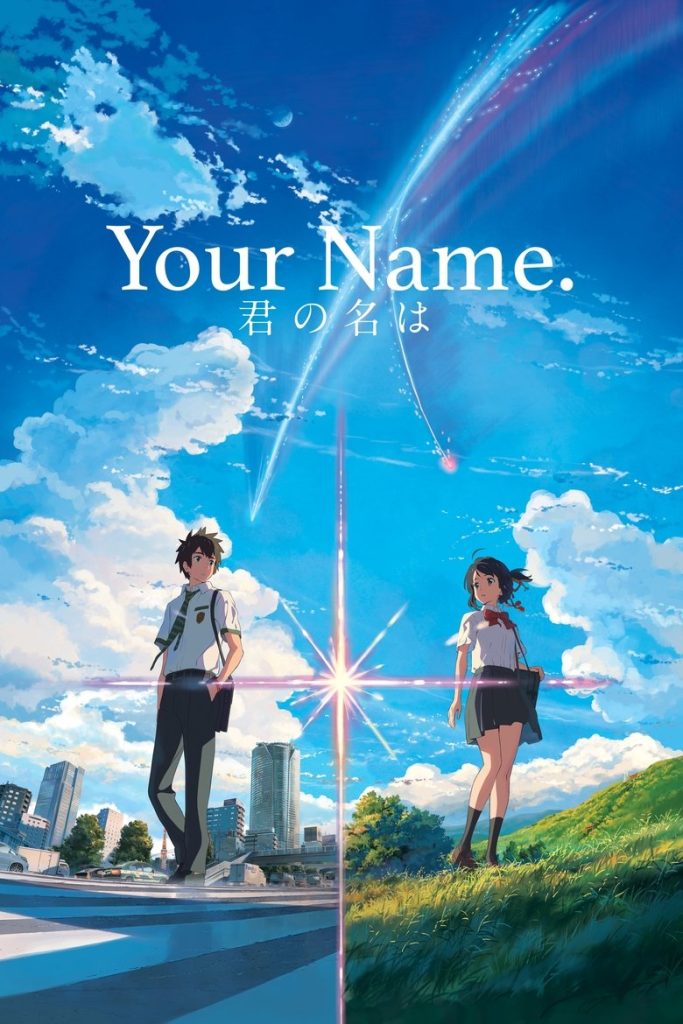
Story overview
This animated film follows two Japanese high school students who mysteriously begin swapping bodies at random intervals. They must navigate each other's lives while trying to understand this supernatural connection. As they communicate through notes and adjust to their unusual situation, they develop a bond despite never having met. The story explores themes of identity, connection, and the impact we have on others' lives.
Parent Guide
A beautifully animated film about connection and identity with mild emotional themes suitable for most children 8+.
Content breakdown
Some mild peril involving natural disasters and characters in dangerous situations, but nothing graphic or intense.
Supernatural elements and some emotional scenes involving separation might be slightly unsettling for very young viewers.
No strong language or inappropriate dialogue.
The body-swapping premise involves characters inhabiting each other's bodies, with some mild references to physical differences but no explicit content.
No depiction of alcohol, drugs, or tobacco use.
Themes of loss, separation, and longing create emotional moments, though handled sensitively.
Parent tips
This film is appropriate for most children ages 8 and up, with its TV-PG rating indicating mild thematic elements. The body-swapping premise provides opportunities to discuss identity, empathy, and how we perceive others. While there are some emotional moments and mild peril, there's no graphic content, strong language, or inappropriate material. The animation is beautiful and the story is engaging, making it a good family viewing option for older children and teens.
Parents should be aware that the film deals with themes of loss and separation that might be emotionally affecting for sensitive viewers. The body-swapping concept involves characters inhabiting each other's physical forms, which could prompt questions about privacy and boundaries. The story's non-linear structure and some supernatural elements might require explanation for younger viewers.
Parent chat guide
For younger children, emphasize the friendship aspect and how the characters help each other. With teens, you can explore deeper themes about identity, fate, and how small actions can significantly impact others. The film provides excellent opportunities to discuss empathy, as the characters literally experience life from another person's viewpoint.
Consider asking about the characters' communication methods and how they build a relationship without meeting. Discuss how the film portrays Japanese culture and school life, which might differ from your child's experiences. The emotional resolution offers chances to talk about coping with difficult feelings and the importance of connections.
Parent follow-up questions
- How would you feel if you woke up as someone else?
- What was your favorite part of the movie?
- How did the boy and girl help each other?
- What colors did you like in the animation?
- Was there anything that surprised you?
- What would be hardest about switching lives with someone?
- How did the characters communicate when they were apart?
- Why do you think they kept switching places?
- What did you learn about Japanese culture from the movie?
- How did the characters show they cared about each other?
- What does the film say about understanding other people's perspectives?
- How did switching bodies help the characters grow?
- What challenges did they face in maintaining their own identities?
- How did the supernatural elements affect the story?
- What did you think about how they solved their problem?
- How does the film explore themes of fate versus choice?
- What commentary does the movie make about modern connections and relationships?
- How does the body-swapping metaphor work for understanding gender or social roles?
- What cultural differences did you notice between the characters' lives?
- How does the film handle emotional themes like loss and longing?
🎭 Story Kernel
At its core, 'Your Name' explores the profound human longing for connection that transcends time, space, and memory. The film isn't just about teenage body-swapping—it's about how our identities are shaped by our connections to others and places. Mitsuha's desire to escape her rural life and Taki's urban loneliness drive them toward each other before they even meet. The comet disaster becomes a metaphor for how personal tragedies can erase entire worlds of meaning, while their struggle to remember each other represents our universal fear of losing what makes us feel truly alive. Their journey suggests that some bonds are so fundamental they can bend reality itself.
🎬 Visual Aesthetics
Makoto Shinkai's visual language creates a breathtaking tension between the intimate and the cosmic. The film's signature 'Shinkai blue' sky acts as both backdrop and character—a constant reminder of the vastness separating the protagonists. Camera movements are deliberately fluid during body-swap sequences, mirroring the disorientation of waking in another life. The comet's trail is rendered with such ethereal beauty that its destructive power becomes even more shocking. Most striking is how rural Itomori is painted with warm, detailed textures while Tokyo appears sleek but impersonal—visualizing why both characters feel incomplete in their own worlds.
🔍 Details & Easter Eggs
💡 Behind the Scenes
Director Makoto Shinkai drew inspiration from a classical Japanese poem about separated lovers. The comet's name, Tiamat, references Mesopotamian mythology about a primordial goddess of chaos. Voice actor Ryunosuke Kamiki recorded Taki's emotional mountain scene in one take while actually crying. The film's stunning backgrounds combine actual locations in Hida, Gifu Prefecture with digital painting—Shinkai's team photographed the area extensively, then enhanced skies and lighting to create the film's magical realism.
Where to watch
Choose region:
- HBO Max
- HBO Max Amazon Channel
- Amazon Video
- Apple TV
- Google Play Movies
- YouTube
- Fandango At Home
Trailer
Trailer playback is unavailable in your region.