
Z-O-M-B-I-E-S (2018)
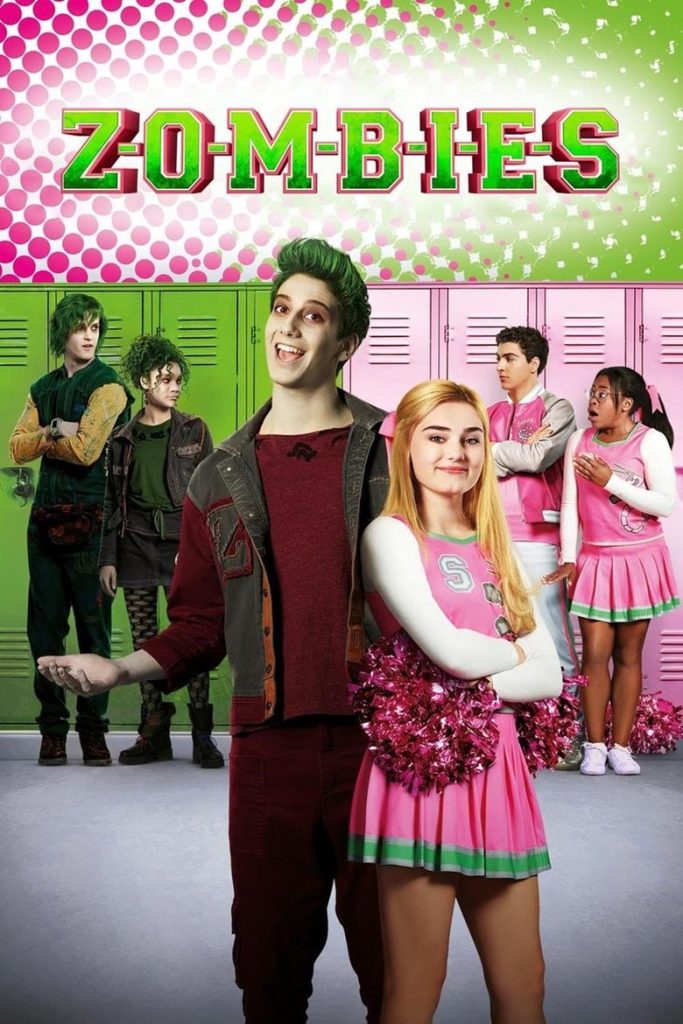
Story overview
Z-O-M-B-I-E-S is a 2018 TV movie that blends fantasy, comedy, and romance. The story follows a world where zombies and humans attend the same high school, exploring themes of acceptance and friendship. It's a lighthearted musical with positive messages about overcoming prejudice and embracing differences.
Parent Guide
Family-friendly musical with positive messages about acceptance and friendship.
Content breakdown
Fantasy elements involving zombies, but portrayed in a comedic, non-threatening way.
Zombie characters might be slightly unsettling for very young children, but are generally friendly and non-scary.
No offensive language.
No sexual content or nudity.
No substance use depicted.
Some moments of social tension and mild conflict, but overall upbeat tone.
Parent tips
This TV-G rated movie is generally appropriate for most children, focusing on positive themes like inclusion and teamwork. Parents should be aware that while it features zombies, they are portrayed in a friendly, non-scary manner typical of Disney Channel productions. The movie includes mild fantasy elements and musical numbers that are upbeat and family-friendly.
Parent chat guide
Parent follow-up questions
- What was your favorite song in the movie?
- How did the characters show they were friends?
- What colors did you see in the movie?
- How did the characters learn to work together?
- What does it mean to be a good friend?
- Why is it important to give people a chance?
- What challenges did the characters face because they were different?
- How did the movie show that appearances can be deceiving?
- What would you do if you saw someone being treated unfairly?
- How does the movie use fantasy elements to discuss real-world issues?
- What messages about social acceptance does the film convey?
- How effective are the musical numbers in delivering the movie's themes?
🎭 Story Kernel
At its core, 'Z-O-M-B-I-E-S' is a thinly veiled allegory for racial integration, using supernatural creatures as stand-ins for marginalized groups. The film explores how fear of 'otherness' is institutionalized through rules (like the Z-Bands suppressing zombie urges) and social segregation (Seabrook's divided zones). The driving force isn't romance between Zed and Addison, but their rebellion against a system that demands assimilation over acceptance. The zombies must suppress their natural green hair and urges to be 'safe,' mirroring real-world pressures on minority groups to conform to dominant cultural norms for basic rights and respect.
🎬 Visual Aesthetics
The film employs a stark visual divide: Seabrook's humans live in a sterile, hyper-saturated world of clean whites and bright blues, representing order and manufactured perfection. In contrast, Zombietown is depicted with muted, earthy tones and gritty textures, suggesting authenticity and raw energy. The camera work during musical numbers emphasizes this clash—human dance sequences are precise and synchronized, while zombie movements are loose, improvisational, and powerful. The green glow of zombie energy versus the pure white light of Seabrook's perfection creates a constant visual tension, only merging in the finale's integrated dance, symbolizing a hard-won harmony.
🔍 Details & Easter Eggs
💡 Behind the Scenes
The film was shot in Toronto, Canada, with the high school scenes filmed at Silverthorn Collegiate Institute. Milo Manheim (Zed) and Meg Donnelly (Addison) performed nearly all their own dance sequences, requiring intensive training in both human and zombie-style movement. The zombie dance style, dubbed 'Zombie Pop,' was specifically choreographed by Christopher Scott to blend classic pop locking with jerky, undead motions. Interestingly, the green slime effects were largely practical on set rather than CGI, giving the actors tangible material to react to during musical numbers.
Where to watch
Choose region:
- Disney Plus
- YouTube TV
- Amazon Video
- Google Play Movies
- YouTube
- Fandango At Home
Trailer
Trailer playback is unavailable in your region.