
Zom 100: Bucket List of the Dead (2023)
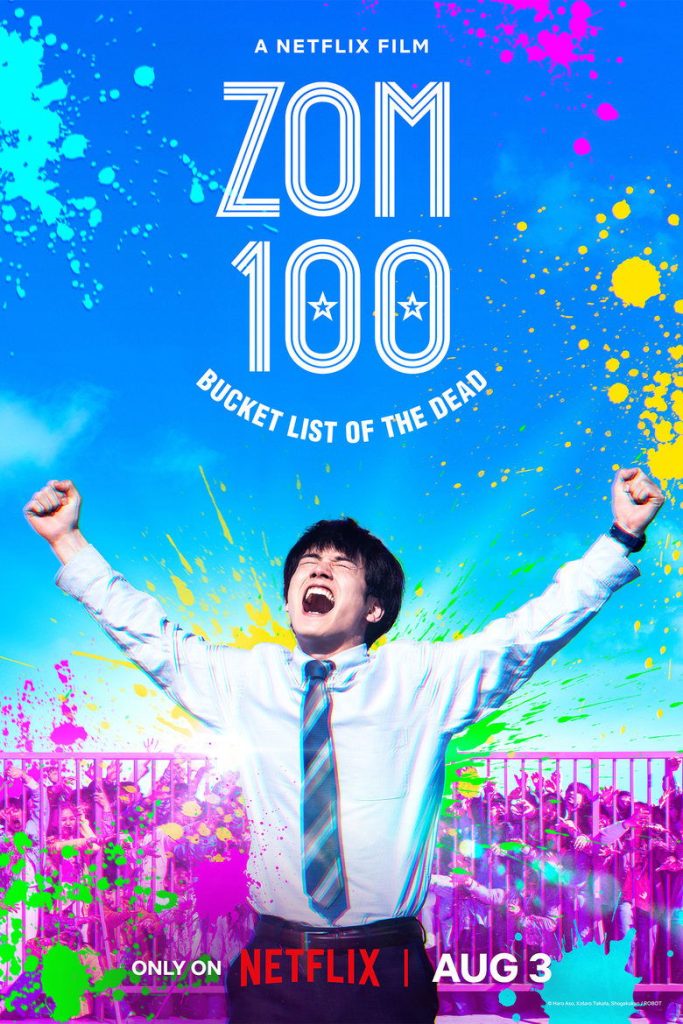
Story overview
A 24-year-old office worker in Tokyo, Akira Tendo, feels trapped in a soul-crushing corporate job where he's overworked and bullied by his boss. When a sudden zombie apocalypse erupts, instead of panicking, he finds unexpected freedom and joy. He creates a 'bucket list' of 100 things to do before becoming a zombie, embracing life with newfound enthusiasm amidst the chaos.
Parent Guide
TV-MA zombie comedy-horror with strong violence, gore, and mature themes. Combines graphic horror elements with dark workplace satire. Not suitable for children under 16 without parental guidance.
Content breakdown
Frequent zombie violence including biting, dismemberment, blood splatter, and gory attacks. Characters use improvised weapons. Some human-on-human peril. Zombie transformations shown with graphic detail. Comic violence mixed with horror elements.
Zombie jump scares, grotesque zombie designs, body horror elements. Tense survival situations. Dark themes of societal collapse. Some disturbing imagery of workplace exploitation portrayed metaphorically through horror.
Some strong language in subtitles (English translation includes occasional profanity). Japanese dialogue with mild cursing. Workplace bullying includes verbal abuse.
Brief suggestive content. Some revealing costumes in party scenes. Mild romantic subplot without explicit content.
Social drinking in scenes. Characters celebrate with alcohol. No drug use depicted.
High-stakes survival scenarios. Themes of existential crisis and workplace trauma. Dark comedy provides relief from tension. Emotional moments about seizing life amidst chaos.
Parent tips
This Japanese zombie comedy-horror film is rated TV-MA for mature audiences. It combines graphic zombie violence with dark workplace satire and themes of existential liberation. While humorous, it contains intense horror elements unsuitable for younger viewers. Parents should preview due to strong violence, gore, and mature themes about corporate burnout and societal collapse.
Parent chat guide
Parent follow-up questions
—
—
- What would you do if you had a 'bucket list' like Akira?
- How do you think the zombies in the movie are different from other monster stories?
- How does the film critique modern corporate culture through horror comedy?
- Do you think Akira's response to the zombie apocalypse is realistic or symbolic? Why?
- What does the movie say about finding purpose in chaotic situations?
🎭 Story Kernel
The film serves as a satirical indictment of Japan's 'black company' culture, where the horror of mindless labor outweighs the terror of the undead. Akira Tendo’s transition from a hollowed-out corporate drone to a vibrant survivor highlights the irony that it takes a societal collapse for an individual to reclaim their humanity. The 'Bucket List' isn't just a gimmick; it is a manifesto of self-actualization. While the zombies represent literal death, the corporate environment represents spiritual death. The narrative explores the liberation found in chaos, suggesting that true life begins only when one stops living for others' expectations. It balances slapstick humor with a poignant critique of modern work-life imbalance, ultimately arguing that finding joy in the mundane—like cleaning a room or eating ramen—is the ultimate act of defiance against a soul-crushing system.
🎬 Visual Aesthetics
Yusuke Ishida utilizes a stark color palette shift to mirror Akira’s psychological state. The opening sequences are drained of color, utilizing oppressive grays and muted tones to reflect the monotony of corporate life. Once the apocalypse hits, the screen explodes into a saturated, neon-drenched aesthetic. The blood is often depicted with vibrant, almost psychedelic hues, distancing the film from traditional gritty horror and leaning into its manga origins. The cinematography employs dynamic, wide-angle shots to capture the scale of the deserted Tokyo, juxtaposed with tight, kinetic action sequences. Symbolism is found in the 'superhero' suit Akira eventually dons, which serves as a visual manifestation of his regained childhood idealism. The contrast between the sterile office environments and the chaotic urban landscapes reinforces the theme of human nature reclaiming space from artificial structures.
🔍 Details & Easter Eggs
💡 Behind the Scenes
The film is a live-action adaptation of the popular manga series written by Haro Aso, who also created 'Alice in Borderland.' Director Yusuke Ishida focused on maintaining the manga's energetic tone while grounding the corporate satire in reality. Lead actor Eiji Akaso reportedly researched the 'salaryman' lifestyle to authentically portray the exhaustion of a 'black company' employee. The production utilized extensive practical effects combined with CGI to bring the diverse zombie types to life. Filming took place across various locations in Tokyo, capturing iconic landmarks in a state of post-apocalyptic decay to heighten the surreal contrast.
Where to watch
Choose region:
- Netflix
- Netflix Standard with Ads
Trailer
Trailer playback is unavailable in your region.