
Zootopia (2016)
Story overview
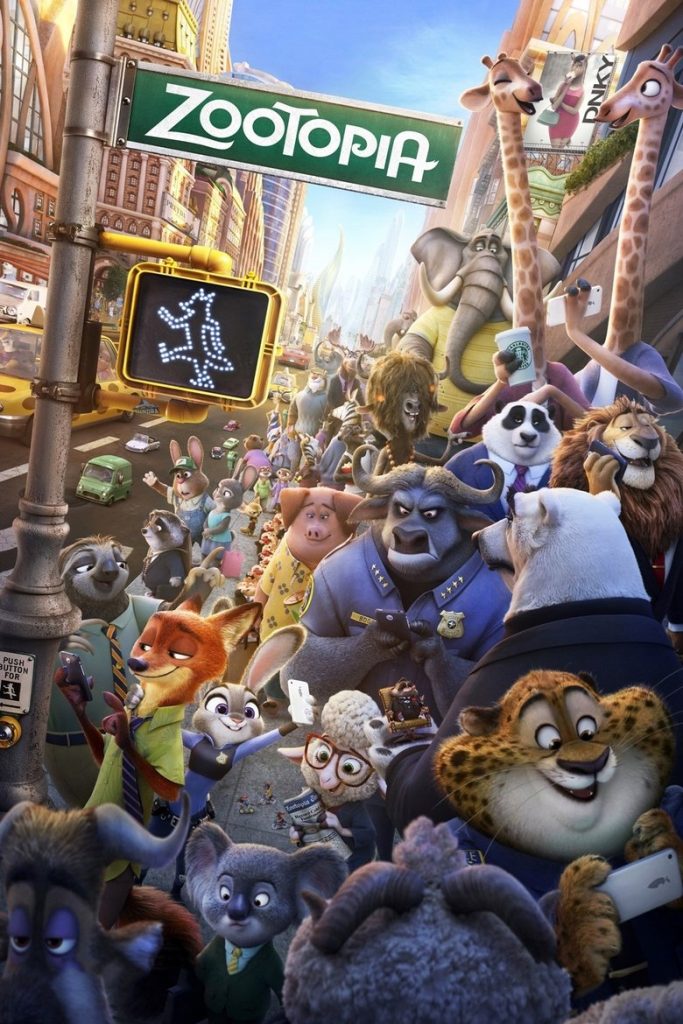
Zootopia is an animated adventure about Judy Hopps, a determined bunny who becomes the first of her kind to join the police force in the diverse animal metropolis of Zootopia. To prove herself, she teams up with a clever fox named Nick Wilde to solve a mysterious case. The film explores themes of prejudice, stereotypes, and pursuing dreams against all odds through its engaging animal characters and vibrant city setting.
Parent Guide
A thoughtful animated film that explores prejudice and stereotypes through animal characters, suitable for most children with some mild intense moments.
Content breakdown
Some chase scenes and mild peril involving characters in danger, but no graphic violence.
A few scenes with tense moments and characters in peril that might be intense for very young viewers.
No offensive language or profanity.
No sexual content or nudity.
No depiction of substance use.
Themes of prejudice, discrimination, and characters facing doubt and rejection create emotional depth.
Parent tips
Zootopia offers excellent opportunities to discuss important social issues with children. The film addresses prejudice, stereotypes, and discrimination through its animal characters, showing how assumptions based on species can be harmful. While generally appropriate for most families, some scenes involve mild peril and emotional intensity that might be challenging for very young viewers.
The movie's central message about overcoming prejudice and working together despite differences provides valuable talking points. Parents should be prepared to discuss how the film's themes relate to real-world diversity and inclusion.
Parent chat guide
Encourage children to think about times they've felt judged or have judged others. Discuss how Judy and Nick overcome their initial prejudices to work together effectively. Relate the animal stereotypes in the film to human stereotypes they might encounter in daily life.
Parent follow-up questions
- What was your favorite animal in the movie?
- How did Judy feel when other animals didn't believe in her?
- What makes a good friend like Nick?
- What did you learn about being kind to others?
- What was the funniest part for you?
- Why do you think some animals didn't trust Judy at first?
- How did Judy and Nick learn to work together?
- What does 'prejudice' mean in this movie?
- Have you ever felt like people didn't believe you could do something?
- What makes Zootopia a special city for all animals?
- How does the movie show that stereotypes can be harmful?
- What challenges did Judy face as the first bunny police officer?
- How does the film address the theme of 'anyone can be anything'?
- What real-world issues does the animal prejudice in Zootopia represent?
- How do the characters grow and change throughout the story?
- How effectively does the film use animal characters to discuss human social issues?
- What commentary does the movie make about institutional bias and systemic prejudice?
- How do the power dynamics between predator and prey species reflect real societal structures?
- What does the film suggest about the relationship between fear and prejudice?
- How does the movie balance entertainment with its social message?
🎭 Story Kernel
At its core, Zootopia explores systemic prejudice through the lens of predator-prey dynamics, cleverly mirroring real-world racial and social tensions. The film's true engine isn't the mystery plot but Judy Hopps' journey from naive idealism to understanding her own unconscious biases. Her initial belief in a meritocratic Zootopia is shattered when she realizes she carries the same stereotypes she fights against. The movie argues that prejudice isn't just overt discrimination but ingrained assumptions that even well-meaning individuals must consciously unlearn. Nick Wilde's arc from cynical con artist to vulnerable partner reveals how systemic bias creates self-fulfilling prophecies that trap individuals in expected roles.
🎬 Visual Aesthetics
Zootopia's visual genius lies in its meticulous scale variations—every district accommodates different animal sizes, creating a tangible world of inequality built into the architecture. The color palette shifts dramatically with location: Sahara Square's warm oranges and yellows contrast with Tundratown's cool blues, visually representing climate-based segregation. Camera angles often emphasize power dynamics—low angles make smaller prey appear vulnerable, while high angles diminish predators. The Nighthowler flowers' purple glow serves as visual shorthand for primal fear, their unnatural color standing out against natural environments to symbolize manufactured hysteria.
🔍 Details & Easter Eggs
💡 Behind the Scenes
Disney animators spent two years researching animal behavior at Animal Kingdom and natural history museums to create authentic movement—the sloths at the DMV move slowly because real sloths metabolize anesthesia slowly, making them difficult to study. Shakira almost turned down the Gazelle role until directors explained the character's activist dimension. The city's transit system was modeled after Toronto's PATH network, where different districts connect underground. Jason Bateman ad-libbed many of Nick's sarcastic lines, including the 'bunnies can call each other cute' exchange.
Where to watch
Choose region:
- Disney Plus
- Amazon Video
- Apple TV
- Google Play Movies
- YouTube
- Fandango At Home
Trailer
Trailer playback is unavailable in your region.